
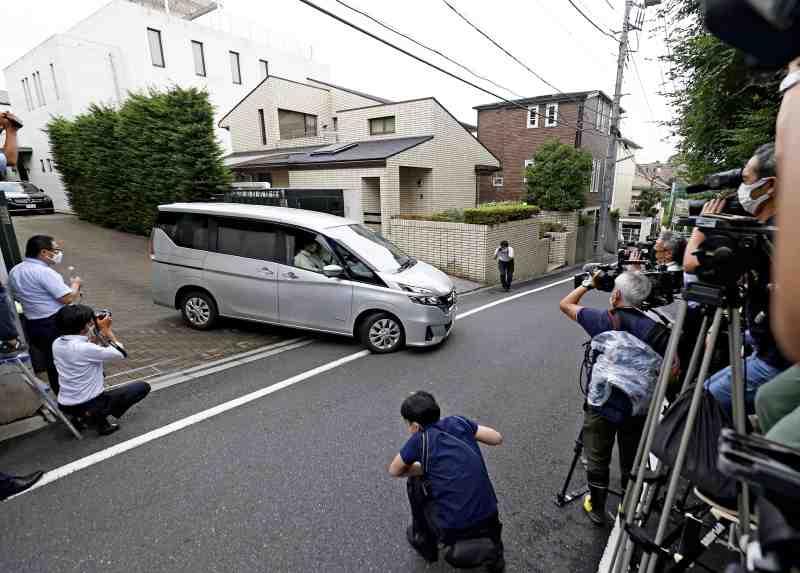
A vehicle of the special investigation squad of the Tokyo District Public Prosecutors Office leaves the home of Haruyuki Takahashi after a search in Setagaya Ward, Tokyo, on July 26.
1:00 JST, August 19, 2022
In the wake of recent arrests connected with last summer’s Tokyo Olympics and Paralympics, there has been a resurfacing of allegations of bribery and corruption relating to previous international sporting events, including other Olympics.
In 2016, it was alleged that the Japanese Olympic Committee (JOC) was involved in the illicit transfer of money to help secure the 2020 Tokyo Games. French prosecution authorities suspected Tsunekazu Takeda — then president of the JOC and head of the now-defunct Tokyo Olympics Bid Committee — was involved in two payments totaling ¥230 million to a Singapore consulting firm before and after Tokyo won the bid in September 2013, conjecturing that the transferred money may have been bribes.
The special investigation squad of the Tokyo District Public Prosecutors Office questioned Takeda in 2017 based on international investigative cooperation arrangements. Takeda, 74, denied the allegations, saying: “I compensated for things proportionately. I did nothing illegal.” Nevertheless, Takeda stepped down as JOC chief in June 2019.
The name of a consulting company represented by Haruyuki Takahashi — a former executive board member of the organizing committee of the Olympics — also came to light with this allegations around that time. Takahashi was arrested Wednesday on suspicion of receiving bribes from Aoki Holdings Inc.
In 2015, it emerged that FIFA vice presidents and others took bribes from corporate executives and others in return for awarding lucrative media and marketing rights to international soccer tournaments in such places as Central America and South America. The U.S. Justice Department indicted those concerned, and Sepp Blatter resigned as FIFA president to take responsibility.
“International sports competitions can have a great economic impact on host countries and sponsor companies as they attract a lot of attention, but such events can also become hotbeds of misconduct as they become more commercial,” said Hisashi Sanada, a sports anthropology professor at the University of Tsukuba. “Unless the ever-expanding scale of these events are put to review, they’ll always be associated with financial allegations, making the events themselves possibly unsustainable,” he said.





Most Read
Popular articles in the past 24 hours
-
Moai Statue Shows Lasting Bond Between Miyagi Pref. Town, Easter ...
-

Milano Cortina 2026: Japan’s Oguri Wins Para Snowboard Silver at ...
-
Japan's Defense Ministry: North Korea Appears to Have Fired Balli...
-

National Intelligence Council: Proposed Body Must Be Utilized To ...
-
Aichi Fisheries Cooperatives Use Smart Tech to Farm Triploid Oyst...
-
Teachers Support Students’ Inquiry Learning behind the Scenes
-
Japan's Lower House Passes Budget Proposal; Could Be Delayed in U...
-
CARTOON OF THE DAY (March 14)
Popular articles in the past week
-

Japan Figure Skating Legend Yuzuru Hanyu Is Proud Disaster Surviv...
-
Govt to Utilize ODA for Ensuring Economic Security; Securing Ener...
-
15 Measles Patients Confirmed in Tokyo in Past 6 Days; 1 May Have...
-
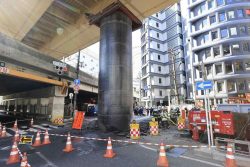
Massive Sewer Pipe Found Jutting Out of Highway in Osaka
-
Japan Govt to Tighten Requirements to Receive Permanent Residency...
-
JR Tokai Breaks Ground on Yamanashi Maglev Station; Will Be Part ...
-
Power Outage Forces About 980 Passengers in Yokohama to Walk to T...
-

Beckoning Cats Get Makeover to Fit Modern Lifestyles with Sleek D...
Popular articles in the past month
-

Producer Behind Pop Group XG Arrested for Cocaine Possession
-

Japan PM Takaichi’s Cabinet Resigns en Masse
-

Man Infected with Measles Reportedly Dined at Restaurant in Tokyo...
-

Videos Plagiarized, Reposted with False Subtitles Claiming ‘Ryuky...
-
Japan Figure Skating Legend Yuzuru Hanyu Is Proud Disaster Surviv...
-

iPS Treatments Pass Key Milestone, but Broader Applications Far f...
-

Sanae Takaichi Elected Prime Minister of Japan; Keeps All Cabinet...
-

Nepal Bus Crash Kills 19 People, Injures 25 Including One Japanes...
Top Articles in Society
-
Producer Behind Pop Group XG Arrested for Cocaine Possession
-
Man Infected with Measles Reportedly Dined at Restaurant in Tokyo Station
-
15 Measles Patients Confirmed in Tokyo in Past 6 Days; 1 May Have Come into Contact with Many in Shibuya
-

Bus Carrying 40 Passengers Catches Fire on Chuo Expressway; All Evacuate Safely
-

Ibaraki Pref.’s 1st Foreign Bus Driver Hired in Tsukuba
JN ACCESS RANKING
-
Producer Behind Pop Group XG Arrested for Cocaine Possession
-
Japan PM Takaichi’s Cabinet Resigns en Masse
-
Man Infected with Measles Reportedly Dined at Restaurant in Tokyo Station
-
Videos Plagiarized, Reposted with False Subtitles Claiming ‘Ryukyu Belongs to China’; Anti-China False Information Also Posted in Japan
-
Japan Figure Skating Legend Yuzuru Hanyu Is Proud Disaster Survivor and Gold Medalist, Vows to Continue Support Efforts