
Imperial Family Has Long History with Horses, Former Racehorses now on Imperial Duties
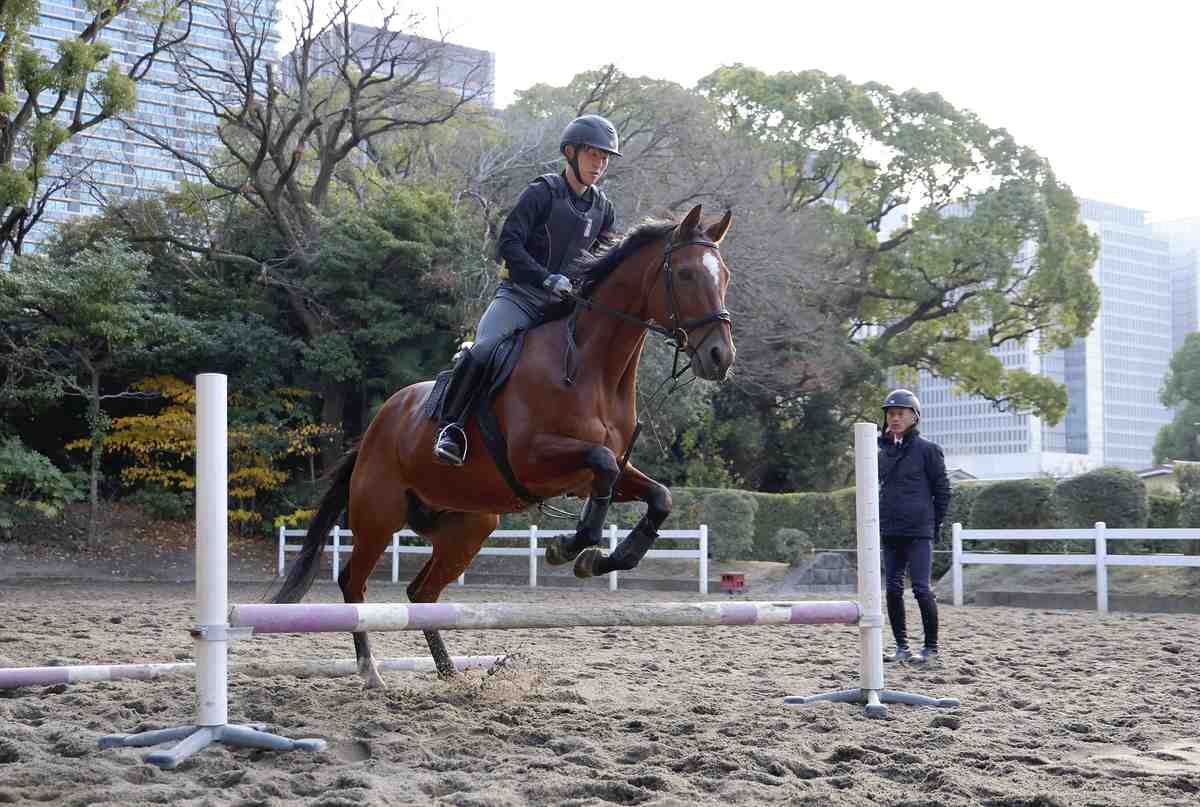
Yukikaze trains on the grounds of the Imperial Palace in Chiyoda Ward, Tokyo, on Dec. 19.
11:44 JST, December 31, 2025
Retired racehorses are having fruitful second careers carrying Imperial family guards.
The Emperor and Empress have a soft spot for the animals. At an Imperial garden party last autumn, the Imperial couple mentioned the names of many racehorses as they chatted with star jockey Yutaka Take, who was one of their guests.
With 2026 being the Year of the Horse, the history of the Imperial family’s relationship with horses has been gaining attention. The history shows that the family has a deep connection with horseracing and that horses have bolstered their international friendships for years.
Obstacle drills
In the morning on Dec. 19, a guard of the Imperial Guard Headquarters was doing drills at an area for practicing dressage on the grounds of the Imperial Palace, which is close to the Otemachi business district in Chiyoda Ward, Tokyo. The guard rode the horse at a steady pace, jumped over obstacles and practiced other techniques.
Yukikaze, the 11-year-old male horse, was fathered by Special Week, which won four G1 races, including two Emperor’s Cup races in spring and autumn in 1999.
“He’s timid and docile,” said Mitsuru Sato, 61, who trains the horse. When Sato raised one of the obstacle bars, Yukikaze changed direction and skirted it. On his second attempt, he managed to clear it.
Yukikaze ran in his first Japan Racing Association race in 2016 under the name Yukino Dream. After eight races without a win, he came to the Imperial barn when he was 5. Now, one of his duties is to escort the carriages carrying newly appointed foreign ambassadors. When the ambassador heads to the Imperial Palace to deliver a letter from their head of state to the Emperor, Yukikaze runs alongside the Imperial horse-drawn carriage carrying the ambassadors, with a guard on his back.
Names of the horses
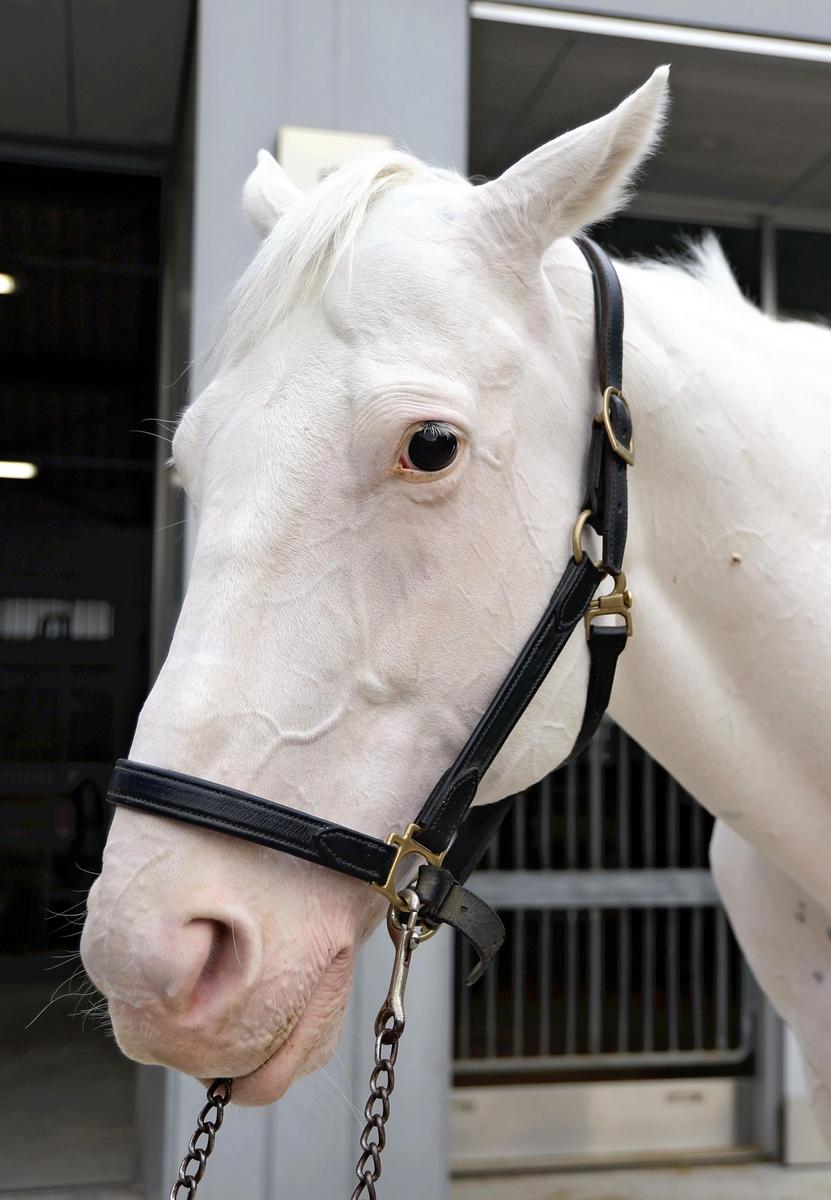
Hakurei
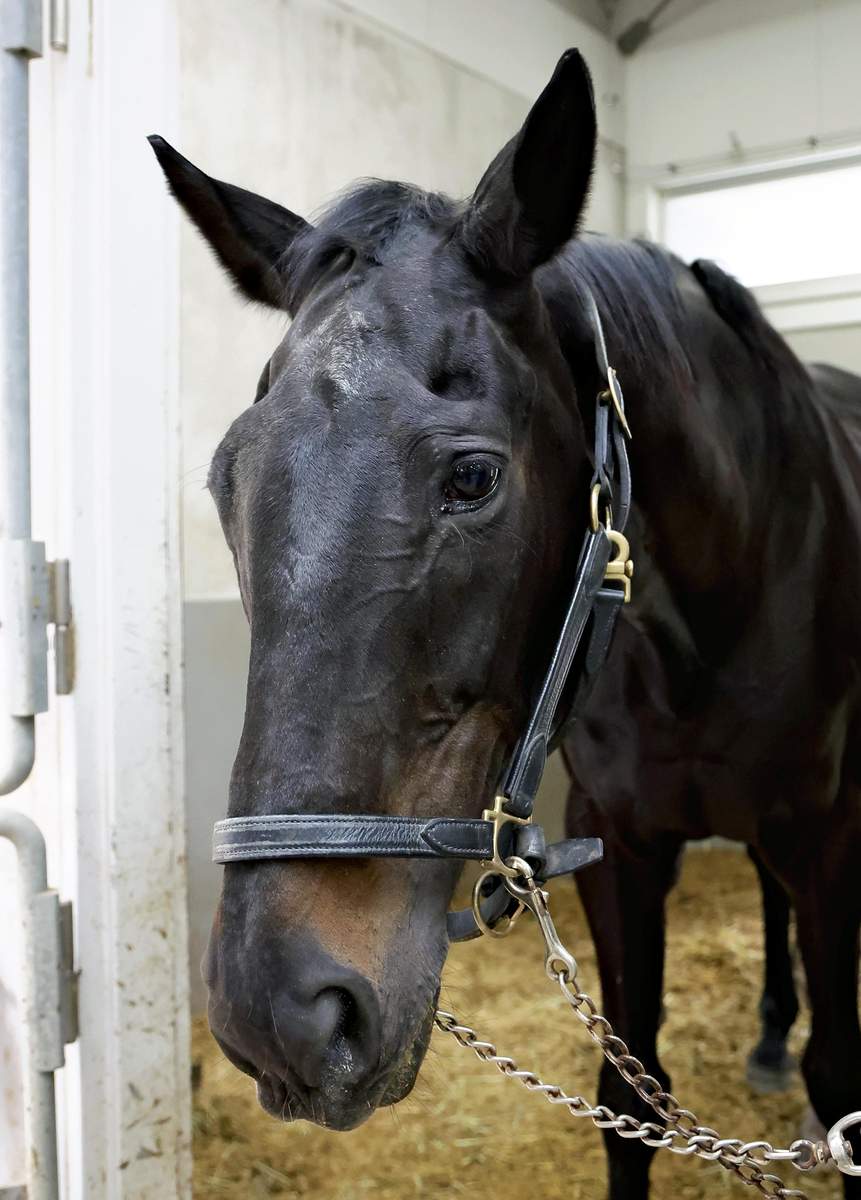
Aokaze
You may also like to read
New Year Drone Show at Funabashi Racecourse in Chiba Pref.; ‘Horse’ Drawn in the Night Sky Ishikawa: Ex-racehorses enjoy new life in retirementTwelve of the 14 horses ridden by Imperial Guards are retired racehorses. They include 9-year-old Hakurei, an ex-racehorse formerly known as Maillot Blanc and cousin of Marga, a 2-year-old white horse drawing much attention in the current horseracing scene. There is also 23-year-old Aokaze, formerly known as Seika Tuba, son of Imperial Cup winner Bubble Gum Fellow.
“The ideal guard horse is one with a docile nature that isn’t fazed by outside changes,” Sato said. “Racehorses grow up around people, so they are suited to the job of trotting on a roadway.”
The Emperor and his family also carefully watch over the horses with interest. At a press conference in February last year, the Emperor said he looks forward to seeing the horses on the grounds of the Imperial Palace during his regular walks. At the garden party, Take talked with the Emperor and Empress about Hakurei, saying, “Many white horses can be a little rough by nature.” The Empress responded that Hakurei “goes pretty much his own way,” and the Emperor said, “Every horse is different.”
The members of the Imperial family enjoy riding horses. The Emperor Emeritus served as the captain of his school’s equestrian society when he was a student of Gakushuin Boys’ Senior High School, and the Emperor and Crown Prince Akishino have been familiar with horses since their childhood.
“I was amazed that [the Emperor and Empress] mentioned the names of many horses so smoothly,” The star jockey said after the party. “I felt that they really love horses.”
Bolstering international friendships
Horses have been used in rituals and events at the Imperial court since ancient times. According to the Equine Museum of Japan in Yokohama, horses had been used as transport for the Emperor since the Meiji era (1868-1912). Emperor Meiji would travel by horse to inspect a wide range of places.
In March 1874, Emperor Meiji saw a horserace for the first time at a temporary Imperial residence in Akasaka, Tokyo. He went on to make more than 50 horseracing-related outings. The Emperor Cup horserace was launched in 1905 when Emperor Meiji gifted a vase bearing the Imperial crest of chrysanthemum to a horseracing course in Yokohama’s Negishi district. The race still takes place every year.
According to the Imperial Household Agency, records of horses being used to take newly appointed ambassadors to Japan to and from the Imperial Palace remain from 1952, seven years after the end of World War II. The ambassadors also have the option to go by car, but most choose the horse-drawn carriage. Apart from Japan, there are only a few countries, such as the United Kingdom and Spain, that use a horse-drawn carriage to take new ambassadors to receive their credentials.
“Emperor Meiji watched modern horse racing, part of Western culture, to demonstrate to those at home and abroad that Japan had modernized,” said Kazuhiko Akinaga, a curator of the equine museum. “Since the Meiji era, the Imperial family has also entertained diplomatic delegations with demonstrations of traditional Japanese horsemanship and horse-riding events. Horses have therefore played an important role in the Imperial family’s international friendships.”


Most Read
Popular articles in the past 24 hours
-

Iran Situation: Japan Must Exert Diplomatic Efforts without Merel...
-
Measles Patient Visited Hospital in Bunkyo Ward, Tokyo, Metropoli...
-
2 Unpublished Early Novellas by Japan's Kenzaburo Oe Discovered, ...
-
Prime Minister Sanae Takaichi to Visit Fukushima Pref. on 15th An...
-
Takayama Among World's Top 10 Most Welcoming Cities for 2026; 2nd...
-
Pass Rate for Overseas Driver's License Conversion Test in Japan ...
-
Former Nomura Securities Employee Given 18-year Prison Sentence f...
-

Bank of Japan and Markets: High Oil Prices Increase Difficulty of...
Popular articles in the past week
-
Milano Cortina 2026: Japanese Gold Medalist Figure Skater Miura S...
-
Tokyo Spends Big on Children, Wins Over Parents
-
Japan’s Miura, Kihara Announce Withdrawal from Figure Skating Wor...
-
Yokohama to Test Out Renewable-Powered Offshore Floating Data Cen...
-
BOJ Keeping Eye on Economy and Takaichi's ‘Proactive Fiscal Polic...
-
Tokyo Measles Patient Traveled to Fukuoka Aboard JAL Planes; Susp...
-
South Korea Tightens Rules on Foreigners Buying Homes in Seoul Me...
-
Japan’s Takaichi Speaks on New U.S. Tariff in Upper House, Says P...
Popular articles in the past month
-

Producer Behind Pop Group XG Arrested for Cocaine Possession
-

Japan PM Takaichi’s Cabinet Resigns en Masse
-

Man Infected with Measles Reportedly Dined at Restaurant in Tokyo...
-

Israeli Ambassador to Japan Speaks about Japan’s Role in the Reco...
-

Videos Plagiarized, Reposted with False Subtitles Claiming ‘Ryuky...
-

Prudential Life Insurance Plans to Fully Compensate for Damages C...
-

Woman with Measles Visited Hospital in Tokyo Multiple Times Befor...
-

iPS Treatments Pass Key Milestone, but Broader Applications Far f...
Top Articles in Society
-
Producer Behind Pop Group XG Arrested for Cocaine Possession
-
Man Infected with Measles Reportedly Dined at Restaurant in Tokyo Station
-
Woman with Measles Visited Hospital in Tokyo Multiple Times Before Being Diagnosed with Disease
-

Bus Carrying 40 Passengers Catches Fire on Chuo Expressway; All Evacuate Safely
-
Tokyo Skytree’s Elevator Stops, Trapping 20 People; All Rescued (Update 1)
JN ACCESS RANKING
-
Producer Behind Pop Group XG Arrested for Cocaine Possession
-
Japan PM Takaichi’s Cabinet Resigns en Masse
-
Man Infected with Measles Reportedly Dined at Restaurant in Tokyo Station
-
Israeli Ambassador to Japan Speaks about Japan’s Role in the Reconstruction of Gaza
-
Videos Plagiarized, Reposted with False Subtitles Claiming ‘Ryukyu Belongs to China’; Anti-China False Information Also Posted in Japan