
Sumo Scene / Former Makuuchi Daiamami Pays Tribute to Home Island of Amami Oshima, One of Sumo’s Heartlands
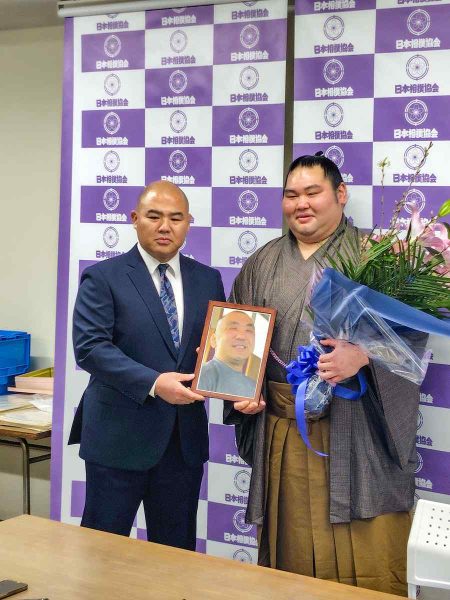
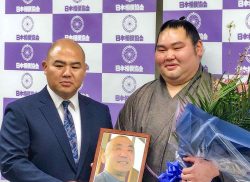
Former makuuchi wrestler Daiamami, right, and sumo elder Chiganoura hold a photograph of the late Akihiro Kiku at Ryogoku Kokugikan in Tokyo on Jan. 20.
10:53 JST, March 4, 2026
There are many areas across Japan that are famed sumo hotspots, known as “sumo-dokoro.” One such location is Amami Oshima Island in Kagoshima Prefecture, which, since the start of this year, has been a topic in sumo discussions.
During the New Year Grand Sumo Tournament in January, 33-year-old Daiamami, an Amami native and a former makuuchi division wrestler, announced his retirement. Reflecting on his career during a press conference, Daiamami spoke of his attachment to his hometown.
“I fought under this ring name because I wanted people to know about Amami Oshima,” he said. “I’m glad so many have come to know about it.”
Amami Oshima has a distinctive local tradition known as “island sumo” that has helped nurture a unique sumo culture. There are rings located at elementary and junior high schools and community centers all across the island, creating an environment that allows children to easily take up the sport.
The popularity of sumo in the broader Amami island chain naturally grew, resulting in the emergence of notable wrestlers such as former yokozuna Asashio, who hailed from Tokunoshima Island.
Just before Daiamami announced his retirement, the sad news arrived of the passing of former amateur yokozuna Akihiro Kiku, a fellow Amami native and revered senior figure who died at the relatively young age of 57.
Though small in stature, Kiku was known for deploying a wide range of techniques. He had won the All-Japan Championship twice, making him famous in the amateur sumo world.
Even though Kiku never entered the professional sumo world, he coached Daiamami and other wrestlers, including Satoyama, who also reached the makuuchi division and is now the sumo elder Chiganoura.
When asked about his late mentor, Daiamami spoke solemnly: “He was truly a huge presence. I feel a big hole in my heart.”
At the conclusion of the news conference, Chiganoura praised Daiamami for his career as he held up a photograph of Kiku. Satoyama and Daiamami once faced each other during their active days, and Daiamami reflected on what it meant for both men to reach the sport’s highest level.
“It’s amazing that two people from a small island could wrestle in the world of grand sumo,” he said.
Another Amami native, Meisei — a former sekiwake now competing in the juryo division — is still active. Daiamami offered encouragement to the one taking up the island’s mantle: “I hope he keeps leading Amami forward and continues to fight hard.”
— Kamimura is a sumo expert.




Most Read
Popular articles in the past 24 hours
-

Strait of Hormuz Closure Shakes Markets; Prolonged Closure Could ...
-

Iran Situation: Japan Must Exert Diplomatic Efforts without Merel...
-
Measles Patient Visited Hospital in Bunkyo Ward, Tokyo, Metropoli...
-
Milano Cortina 2026: Japanese Figure Skater Miura Returns to Home...
-
Takayama Among World's Top 10 Most Welcoming Cities for 2026; 2nd...
-
2 of Japan's Opposition Parties Submit Bill to Revise Political F...
-
Chiba Police to Arrest Japanese National in Midair; Man Accused o...
-
Former Nomura Securities Employee Given 18-year Prison Sentence f...
Popular articles in the past week
-
Milano Cortina 2026: Japanese Gold Medalist Figure Skater Miura S...
-
Tokyo Spends Big on Children, Wins Over Parents
-
Japan’s Miura, Kihara Announce Withdrawal from Figure Skating Wor...
-

Yokohama to Test Out Renewable-Powered Offshore Floating Data Cen...
-
BOJ Keeping Eye on Economy and Takaichi's ‘Proactive Fiscal Polic...
-
Tokyo Measles Patient Traveled to Fukuoka Aboard JAL Planes; Susp...
-
Japan’s Takaichi Speaks on New U.S. Tariff in Upper House, Says P...
-
Nidec Chairman Resigns Amid Accounting Scandal at Major Japanese ...
Popular articles in the past month
-

Producer Behind Pop Group XG Arrested for Cocaine Possession
-

Japan PM Takaichi’s Cabinet Resigns en Masse
-

Man Infected with Measles Reportedly Dined at Restaurant in Tokyo...
-

Israeli Ambassador to Japan Speaks about Japan’s Role in the Reco...
-

Videos Plagiarized, Reposted with False Subtitles Claiming ‘Ryuky...
-

Prudential Life Insurance Plans to Fully Compensate for Damages C...
-

Woman with Measles Visited Hospital in Tokyo Multiple Times Befor...
-

iPS Treatments Pass Key Milestone, but Broader Applications Far f...
Top Articles in Sports
-

Milano Cortina 2026: Figure Skaters Riku Miura, Ryuichi Kihara Pair Win Gold; Dramatic Comeback from 5th Place in SP
-
Milano Cortina 2026: Japanese Gold Medalist Figure Skater Miura Says When Kihara Retires ‘I Retire Too’
-
Milano Cortina 2026: Riku Miura, Ryuichi Kihara Clinch Japan’s 1st Gold in Pairs Figure Skating, Rebounding from Disappointing Short Program
-

Milano Cortina 2026: Kokomo Murase Comes Out on Top After Overcoming Obstacles, Aiming for Greater Heights in Competition
-

Milano Cortina 2026: Japan’s Mari Fukada Wins Gold in Women’s Snowboard Slopestyle; Japan’s Kokomo Murase in Bronze
JN ACCESS RANKING
-
Producer Behind Pop Group XG Arrested for Cocaine Possession
-
Japan PM Takaichi’s Cabinet Resigns en Masse
-
Man Infected with Measles Reportedly Dined at Restaurant in Tokyo Station
-
Israeli Ambassador to Japan Speaks about Japan’s Role in the Reconstruction of Gaza
-
Videos Plagiarized, Reposted with False Subtitles Claiming ‘Ryukyu Belongs to China’; Anti-China False Information Also Posted in Japan