
Tokyo Considers Imposing 3% Hotel Tax to Replace Current Flat Fee System
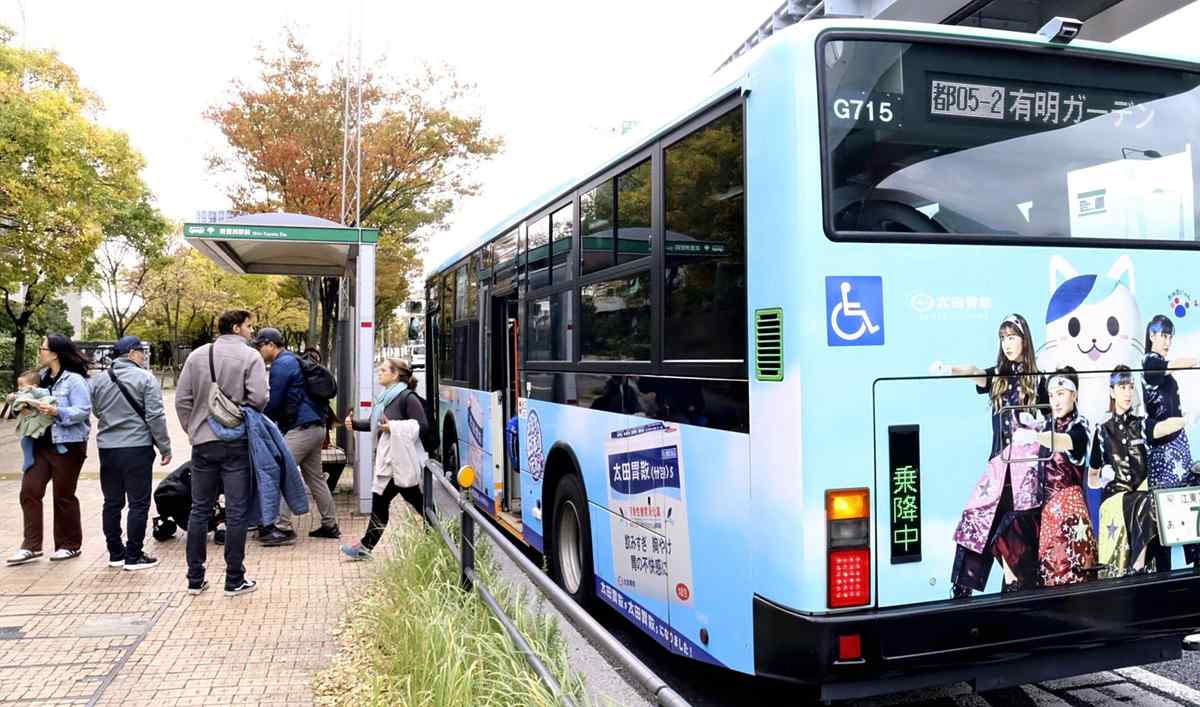
Foreign tourists are seen after alighting from a Tokyo metropolitan bus in Koto Ward, Tokyo, on Nov. 11.
15:44 JST, November 27, 2025
The Tokyo metropolitan government plans to revise its accommodation tax system, changing the current flat-fee charge to a 3% fixed-rate tax levied on accommodation charges.
The revised system is expected to expand the tax base to include minpaku private lodgings and common lodging houses, in addition to hotels and ryokan Japanese-style inns, the government announced Wednesday.
A tax exemption which applies to stays costing less than ¥10,000 will be applied to stays costing less than ¥13,000, per person per night
Tokyo anticipates the revised system will take effect during fiscal 2027, it said.
If implemented, this would be the first major revision since the system was introduced in 2002.
The metropolitan government is seeking public feedback on the plan both online and by mail until Dec. 26. It then intends to submit a bill to amend the ordinance to the metropolitan assembly’s regular session, scheduled for February.
The revision is expected to boost annual revenue from the tax to ¥19 billion, from an estimated ¥6.9 billion for the current fiscal year.
You may also like to read
Japan to Charge Foreigners More for Residence Permits, Looking to Align with Western CountriesSince introducing the system in October 2002, Tokyo has levied a flat tax of ¥100 on stays costing from ¥10,000 but less than ¥15,000, and a ¥200 tax on stays costing ¥15,000 or more, per person per night.
Consequently, this has led to a “tax burden reversal phenomenon,” as noted by the metropolitan tax bureau, in which the tax rate for a ¥100,000 stay is 0.2% compared to 1% for a ¥20,000 stay, resulting in a lower burden for higher-priced rooms.
Tax revenue has been allocated to various tourism measures, including the operation of tourism information centers, promoting Tokyo as a global city and promotional activities both domestically and internationally.
Meanwhile, Tokyo has been facing rising costs, driven by the recent sharp increase in foreign visitors and intensifying global competition.
The ¥6.9 billion accommodation tax revenue estimate only accounts for a little over 20% of the total ¥30.6 billion allocated for tourism measures in the initial budget for the current fiscal year.
By introducing the 3% fixed-rate system, the metropolitan government seeks to secure more revenue for its tourism initiatives. It also aims to ensure fairness in taxation, especially considering the high accommodation charges at foreign-affiliated hotels that have continued to enter the market since before the Tokyo Olympics and Paralympics, which were held in 2021.
The percentage of guests liable for the accommodation tax has risen sharply to 50%, driven by the recent increase in lodging prices, compared with the about 20% envisaged when the system was established.
The percentage of taxable guests is expected to drop to about 30% due to the higher tax-exempt threshold in the revised plan.
The metropolitan government cited various global fixed-rate systems, including Hawaii, which levies a rate of over 10%, and New York, with a 5.875% rate. Domestically, Hokkaido’s Kutchan first implemented a fixed-rate system, also of 2%, in November 2019, which is scheduled to increase to 3% in April next year.
Okinawa Prefecture is also aiming to introduce a 2% fixed-rate system during fiscal 2026.


Related Tags
Most Read
Popular articles in the past 24 hours
-

Strait of Hormuz Closure Shakes Markets; Prolonged Closure Could ...
-

Iran Situation: Japan Must Exert Diplomatic Efforts without Merel...
-
Milano Cortina 2026: Japanese Figure Skater Miura Returns to Home...
-
2 of Japan's Opposition Parties Submit Bill to Revise Political F...
-

Takayama Among World's Top 10 Most Welcoming Cities for 2026; 2nd...
-
Chiba Police to Arrest Japanese National in Midair; Man Accused o...
-

Trump Pursues Iranian Decapitation without a Plan for What Comes ...
-

Bank of Japan and Markets: High Oil Prices Increase Difficulty of...
Popular articles in the past week
-

Milano Cortina 2026: Japanese Gold Medalist Figure Skater Miura S...
-
Tokyo Spends Big on Children, Wins Over Parents
-
Japan’s Miura, Kihara Announce Withdrawal from Figure Skating Wor...
-

Yokohama to Test Out Renewable-Powered Offshore Floating Data Cen...
-
BOJ Keeping Eye on Economy and Takaichi's ‘Proactive Fiscal Polic...
-
Tokyo Measles Patient Traveled to Fukuoka Aboard JAL Planes; Susp...
-
Japan’s Takaichi Speaks on New U.S. Tariff in Upper House, Says P...
-
Nidec Chairman Resigns Amid Accounting Scandal at Major Japanese ...
Popular articles in the past month
-

Producer Behind Pop Group XG Arrested for Cocaine Possession
-

Japan PM Takaichi’s Cabinet Resigns en Masse
-

Man Infected with Measles Reportedly Dined at Restaurant in Tokyo...
-

Israeli Ambassador to Japan Speaks about Japan’s Role in the Reco...
-

Videos Plagiarized, Reposted with False Subtitles Claiming ‘Ryuky...
-

Prudential Life Insurance Plans to Fully Compensate for Damages C...
-

Woman with Measles Visited Hospital in Tokyo Multiple Times Befor...
-

iPS Treatments Pass Key Milestone, but Broader Applications Far f...
Top Articles in Politics
-
Japan PM Takaichi’s Cabinet Resigns en Masse
-

Sanae Takaichi Elected Prime Minister of Japan; Keeps All Cabinet Appointees from Previous Term
-

Japan’s Govt to Submit Road Map for Growth Strategy in March, PM Takaichi to Announce in Upcoming Policy Speech
-

LDP Wins Landslide Victory, Secures Single-party Majority; Ruling Coalition with JIP Poised to Secure Over 300 seats (UPDATE 1)
-

LDP Wins Historic Landslide Victory
JN ACCESS RANKING
-
Producer Behind Pop Group XG Arrested for Cocaine Possession
-
Japan PM Takaichi’s Cabinet Resigns en Masse
-
Man Infected with Measles Reportedly Dined at Restaurant in Tokyo Station
-
Israeli Ambassador to Japan Speaks about Japan’s Role in the Reconstruction of Gaza
-
Videos Plagiarized, Reposted with False Subtitles Claiming ‘Ryukyu Belongs to China’; Anti-China False Information Also Posted in Japan