
Koizumi Pressed by Opposition Leaders Over Rice Policy as Parties Vie for Support from Famers
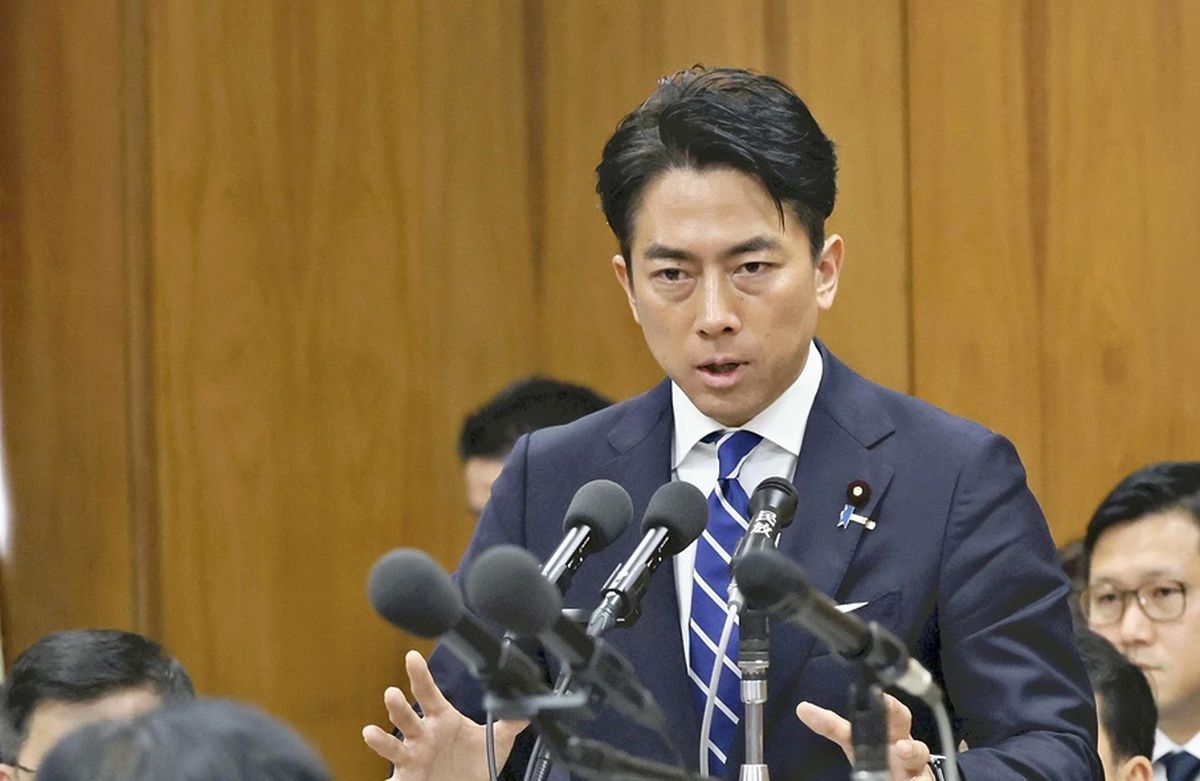
Agriculture minister Shinjiro Koizumi speaks at a House of Representatives committee meeting on Wednesday.
17:55 JST, May 29, 2025
Leaders of three major opposition parties all showed up Wednesday to a House of Representatives committee meeting, where they pressed agriculture minister Shinjiro Koizumi for drastic changes in rice policy.
The leaders appeared to be looking for votes from farmers — a key constituency for the Liberal Democratic Party — in an upcoming House of Councillors election. At the same time, the leaders seemed to be under pressure after Koizumi outlined a series of measures to tackle soaring rice prices.
The meeting of the Committee on Agriculture, Forestry and Fisheries was meant to discuss the ministry’s decision to set a target price for the government’s stockpiled rice of around ¥2,000 per five kilograms, which is below the market value.
“I understand your enthusiasm, but is this a fair price? Isn’t this just a fire sale?” asked Yoshihiko Noda, president of the Constitutional Democratic Party of Japan, at the meeting.
“This is an appropriate price at which to sell old reserve rice,” replied Koizumi. “We hope producers will understand this from the perspective of preventing a decline in rice consumption.”
To secure more farmers, Noda proposed introducing a direct payment system to compensate rice producers if prices for the grain fall below production costs.
Japan Innovation Party co-head Seiji Maehara criticized the government for delaying the release of stockpiled rice by six months despite his party’s urging in August last year, and he also accused the government of “passing the buck to agricultural cooperatives.”
Maehara cited bottlenecks in distribution channels as a cause of the price surge and sought a fundamental review of the distribution system.
“Transparency and proper regulation of the distribution system are one of the issues we need to consider,” said Koizumi.
Yuichiro Tamaki, leader of the Democratic Party for the People, said annual rice production is “400,000 tons less than what it should be,” and argued that “the surging rice prices will be resolved by getting the message out to increase production.”
It is rare for opposition party leaders to appear together at a committee meeting without the prime minister in attendance. They appear to believe that how they respond to rice prices and the supply shortage could have major implications for the upper house election.
Many constituencies where only one seat is up for grabs — which likely will be key to the election’s outcome — are prefectures boasting a high agricultural output. That is why opposition parties are trying to cut into the LDP’s voting bloc by showing the direction of their agricultural policy, while also pressing the government and ruling parties.
However, Koizumi has captured the public’s attention with his savvy gambit of selling stockpiled rice through discretionary contracts.
“The headwinds against the government and ruling parties may lessen if rice prices drop as intended,” said a senior CDPJ official.


Related Tags




Most Read
Popular articles in the past 24 hours
-
Seeking Nuclear Waste Site, Japan Eyes Remote Island of Minami-To...
-

Japan Ministry Asks to Conduct Nuclear Waste Disposal-related Sur...
-

Artisans from Disaster-Hit Areas Work Together to Keep Memories o...
-

Japan Tourist Spot's Capsule Toys Made from Recycled Materials Pr...
-

CARTOON OF THE DAY (March 4)
-

Japan’s Space One Kairos 3rd Flight Rocket Launched, but Mission ...
-

Men Compete in Fierce Tug-of-War for Aomori Festival
-
International Students Experience Sake Brewing in Japan's Akita P...
Popular articles in the past week
-
Tokyo Spends Big on Children, Wins Over Parents
-

South Korea Tightens Rules on Foreigners Buying Homes in Seoul Me...
-
Japan’s Miura, Kihara Announce Withdrawal from Figure Skating Wor...
-
BOJ Keeping Eye on Economy and Takaichi's ‘Proactive Fiscal Polic...
-
Nidec Chairman Resigns Amid Accounting Scandal at Major Japanese ...
-

Strait of Hormuz Closure Shakes Markets; Prolonged Closure Could ...
-
2 Unpublished Early Novellas by Japan's Kenzaburo Oe Discovered, ...
-

Tourists Ignore Safety Barriers Near Famous Zao ‘Snow Monsters’ i...
Popular articles in the past month
-

Producer Behind Pop Group XG Arrested for Cocaine Possession
-

Japan PM Takaichi’s Cabinet Resigns en Masse
-

Man Infected with Measles Reportedly Dined at Restaurant in Tokyo...
-

Israeli Ambassador to Japan Speaks about Japan’s Role in the Reco...
-

Videos Plagiarized, Reposted with False Subtitles Claiming ‘Ryuky...
-

Prudential Life Insurance Plans to Fully Compensate for Damages C...
-

Woman with Measles Visited Hospital in Tokyo Multiple Times Befor...
-

iPS Treatments Pass Key Milestone, but Broader Applications Far f...
Top Articles in Politics
-
Japan PM Takaichi’s Cabinet Resigns en Masse
-

Sanae Takaichi Elected Prime Minister of Japan; Keeps All Cabinet Appointees from Previous Term
-

Japan’s Govt to Submit Road Map for Growth Strategy in March, PM Takaichi to Announce in Upcoming Policy Speech
-

LDP Wins Landslide Victory, Secures Single-party Majority; Ruling Coalition with JIP Poised to Secure Over 300 seats (UPDATE 1)
-

LDP Wins Historic Landslide Victory
JN ACCESS RANKING
-
Producer Behind Pop Group XG Arrested for Cocaine Possession
-
Japan PM Takaichi’s Cabinet Resigns en Masse
-
Man Infected with Measles Reportedly Dined at Restaurant in Tokyo Station
-
Israeli Ambassador to Japan Speaks about Japan’s Role in the Reconstruction of Gaza
-
Videos Plagiarized, Reposted with False Subtitles Claiming ‘Ryukyu Belongs to China’; Anti-China False Information Also Posted in Japan