
Many Candidates in Japan’s Lower House Election Focusing on Economy, Employment, ‘Politics and Money’ Gets Short Shrift
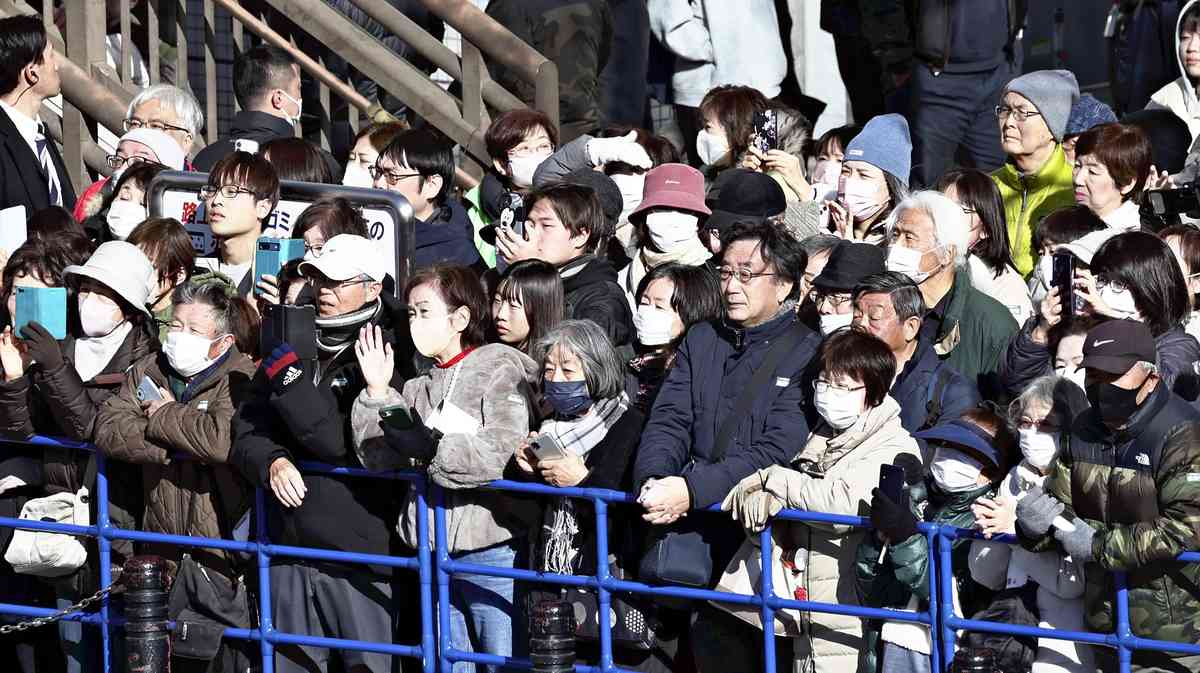
People listen to speeches by a candidate for the House of Representative election and others in Kuki, Saitama Prefecture, on Tuesday.
20:00 JST, February 4, 2026
Many candidates for the House of Representatives election are focusing on “economy and employment” and “support for child-rearing” as key issues in their election campaigning, according to a recent Yomiuri Shimbun survey. The “consumption tax” was also chosen by many candidates.
The survey indicated that candidates of both ruling and opposition parties are focusing their attention on measures against rising prices and the economy.
The survey started from Jan. 20, before official campaigning began. Of 1,285 candidates, 1,251 responded.
“What we must protect is not the government’s coffer but people’s purses,” Prime Minister Sanae Takaichi, who is the president of the ruling Liberal Democratic Party, said in a speech in Higashimatsuyama, Saitama Prefecture, on Tuesday, stressing the significance of “responsible and proactive public finances,” her signature policy.
Traveling around five locations in the prefecture on the day, Takaichi spent much of the time talking about economic policies, without touching on cutting the consumption tax.
Responding to the Yomiuri Shimbun survey, 71% of candidates named “economy and employment” as an issue they hope to discuss in the election campaigning. Respondents were allowed to choose up to three from given choices as issues to discuss in the election.
The largest number of candidates from four parties — namely, the LDP, the Japan Innovation Party, the Centrist Reform Alliance and the Democratic Party for the People — picked “economy and employment.” The four parties are calling for a consumption tax cut by limiting the period or targets, aiming to pump up the economy and alleviate rising prices.
On the other hand, candidates from the Japanese Communist Party, Reiwa Shinsengumi, Genzei Yukoku and the Social Democratic Party picked the “consumption tax.” The four parties are calling for abolishing the consumption tax or lowering the rate to zero in their election pledges. Among candidates from all parties, the fourth largest number, or 33%, picked this issue.
Little discussion on fiscal resources
Respondents’ answers to a question about the government’s economic policies also showed that many candidates put priority on the economy.
Sixty-three percent of the candidates answered that they think the government should prioritize fiscal stimulus to support the economy, including those who said they generally think so. The figure is far more than those who answered that the government should prioritize fiscal reconstruction and reduce the national debt, at 11%, including those who generally think so.
The survey showed that discussions on fiscal resources have failed to deepen. Only 8% of the candidates chose “fiscal policy” as the issue they wish to focus on in their election campaigns.
Sanseito is calling for abolishing the consumption tax and proposing cash benefits for children. Speaking in Sendai on Tuesday, party leader Sohei Kamiya emphasized the party’s stance to prioritize fiscal spending to take measures against the declining birth rate.
“Which is more important — fiscal resources or children? If the number of children declines, it will result in reduced fiscal resources.,” he said. “Children are the ones who produce the country’s fiscal resources in the future.”
“Support for child-rearing” and “pension, health care and nursing care” ranked second among issues that the candidates are focusing on, both at 36%.
Many candidates from the DPFP, which is emphasizing policies targeting the working generation, Sanseito and Team Mirai named “support for child-rearing,” pushing up the overall figure. In addition to 51% of DPFP candidates, 86% of Sanseito and 93% of Team Mirai candidates chose the issue.
The issue of “pension, health care and nursing care” was picked by candidates from many parties calling for reforming social security.
Politics and money
In the latest survey, only 9% of the candidates chose the issue of “politics and money,” which was ranked second at 37% in a similar survey before the lower house election in 2024.
Speaking on a street in Kobe on Tuesday, CRA coleader Yoshihiko Noda criticized the LDP for its decision to allow former lower house lawmakers who failed to properly report income in political funds reports to simultaneously run in constituencies and proportional representation races in the general election.
“[The LDP] is standing its ground, trying to bring all of them back to national politics,” Noda told the audience. However, the criticism seems to be failing to gain momentum.






Most Read
Popular articles in the past 24 hours
-

Artisans from Disaster-Hit Areas Work Together to Keep Memories o...
-

Japan Tourist Spot's Capsule Toys Made from Recycled Materials Pr...
-

Japan’s Space One Kairos 3rd Flight Rocket Launched, but Mission ...
-

Person Apparently Caught in Avalanche on Mt. Kamifurano in Hokkai...
-

NTT Docomo to Discontinue 3G Service in March
-

Space One's No. 3 Kairos Rocket Terminates Mid-Flight
-

LCC Greater Bay Airlines to Launch Regular Service on Fukuoka-Hon...
-

Former Unification Church: Proceed Steadily with Liquidation to P...
Popular articles in the past week
-
Tokyo Spends Big on Children, Wins Over Parents
-

South Korea Tightens Rules on Foreigners Buying Homes in Seoul Me...
-
Japan’s Miura, Kihara Announce Withdrawal from Figure Skating Wor...
-
2 Unpublished Early Novellas by Japan's Kenzaburo Oe Discovered, ...
-

Strait of Hormuz Closure Shakes Markets; Prolonged Closure Could ...
-
Nidec Chairman Resigns Amid Accounting Scandal at Major Japanese ...
-

Tourists Ignore Safety Barriers Near Famous Zao ‘Snow Monsters’ i...
-

Iran Situation: Japan Must Exert Diplomatic Efforts without Merel...
Popular articles in the past month
-

Producer Behind Pop Group XG Arrested for Cocaine Possession
-

Japan PM Takaichi’s Cabinet Resigns en Masse
-

Man Infected with Measles Reportedly Dined at Restaurant in Tokyo...
-

Israeli Ambassador to Japan Speaks about Japan’s Role in the Reco...
-

Videos Plagiarized, Reposted with False Subtitles Claiming ‘Ryuky...
-

Prudential Life Insurance Plans to Fully Compensate for Damages C...
-

Woman with Measles Visited Hospital in Tokyo Multiple Times Befor...
-

iPS Treatments Pass Key Milestone, but Broader Applications Far f...
Top Articles in Politics
-
Japan PM Takaichi’s Cabinet Resigns en Masse
-

Sanae Takaichi Elected Prime Minister of Japan; Keeps All Cabinet Appointees from Previous Term
-

Japan’s Govt to Submit Road Map for Growth Strategy in March, PM Takaichi to Announce in Upcoming Policy Speech
-

LDP Wins Landslide Victory, Secures Single-party Majority; Ruling Coalition with JIP Poised to Secure Over 300 seats (UPDATE 1)
-

LDP Wins Historic Landslide Victory
JN ACCESS RANKING
-
Producer Behind Pop Group XG Arrested for Cocaine Possession
-
Japan PM Takaichi’s Cabinet Resigns en Masse
-
Man Infected with Measles Reportedly Dined at Restaurant in Tokyo Station
-
Israeli Ambassador to Japan Speaks about Japan’s Role in the Reconstruction of Gaza
-
Videos Plagiarized, Reposted with False Subtitles Claiming ‘Ryukyu Belongs to China’; Anti-China False Information Also Posted in Japan