
Japan’s Centrist Reform Alliance Slams Lower House Dissolution, Says Move by Takaichi Lacked Just Cause
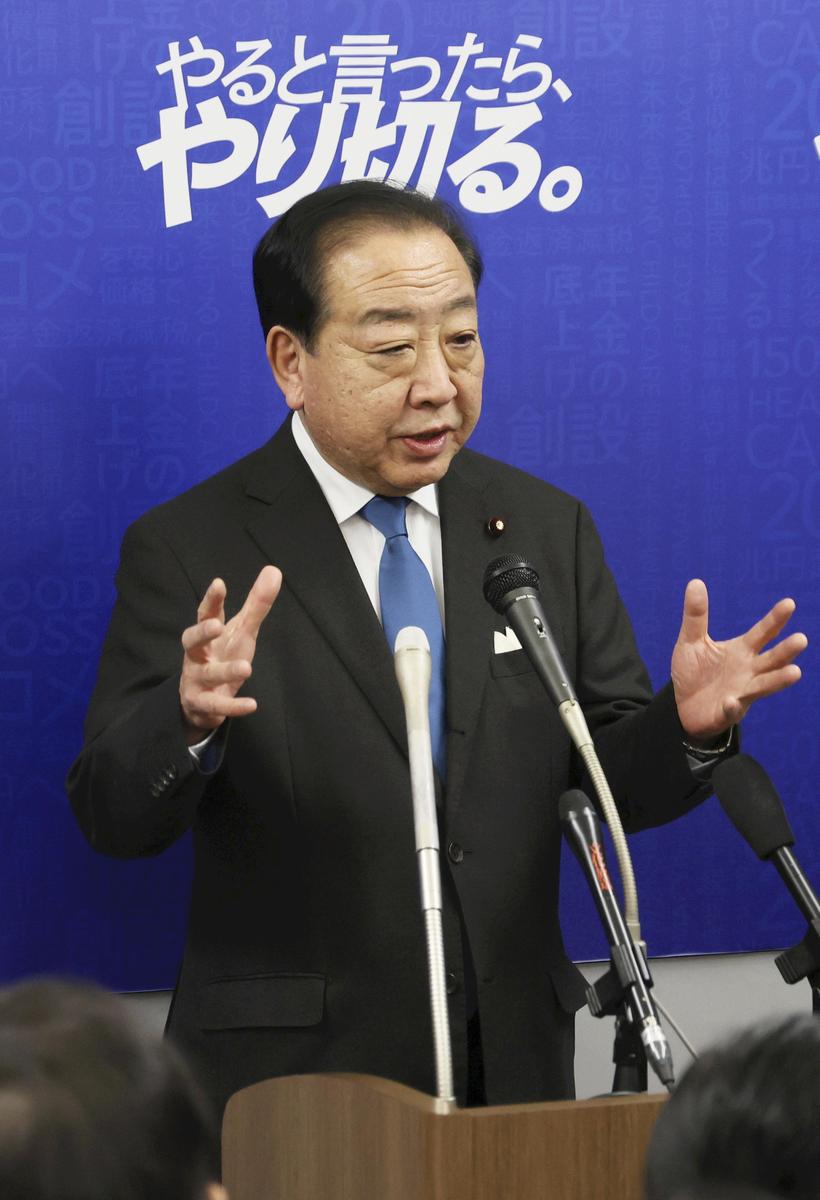
Yoshihiko Noda, coleader of the Centrist Reform Alliance
14:29 JST, January 24, 2026
The Centrist Reform Alliance has criticized Prime Minister Sanae Takaichi’s decision to dissolve the House of Representatives, saying the move lacked just cause.
“I still have serious doubts about whether the timing of the Diet dissolution is truly appropriate,” said CRA coleader Yoshihiko Noda at a party meeting on Friday, taking aim at the prime minister’s judgment.
The dissolution at the very start of the ordinary Diet session has made it nearly impossible to pass the fiscal 2026 budget proposal before the fiscal year ends in March. Concerns are also mounting over the potential impact of heavy snowfall on a mid-winter election campaign.
The CRA intends to capitalize on these issues, centering its campaign on Noda’s framing of the race as a contest between “Me First” and “People First” politics.
The party’s intense focus on questioning the legitimacy of the dissolution appears to reflect the CRA’s frustration over its failure to come up with policies that clearly differentiate it from the ruling coalition.
The Constitutional Democratic Party of Japan and Komeito, which formed the CRA, spent most of their policy coordination meeting talking about national security, energy and constitutional revision, leaving little time for other areas.
The CRA’s campaign pledges, which were released Friday, includes permanently reducing the consumption tax on food items from 8% to zero and introducing a refundable tax credit — a system that combines income tax exemption with cash benefits. However, the Liberal Democratic Party has included both of those measures in its own campaign pledges.
Regarding consumption tax cuts, the CRA vows to make it permanent starting this autumn. To offset the lost revenue, the party proposed establishing a government-backed fund.
Yet, some within the party remain skeptical.
“We’re not sure how much we can effectively communicate these differences in such a short campaign period,” one CRA member said.
With the anticipated “boost” from the new party’s formation still uncertain, the CRA is leaning heavily on two major pillars of support: the Japanese Trade Union Confederation (Rengo), which supports the CDPJ, and the organized Komeito vote centered on its lay Buddhist backing group Soka Gakkai. Both provide reliable vote bases in single-seat constituencies and the proportional representation segment — a prospect welcomed by former CDPJ lawmakers with fragile electoral foundations.
A senior CRA official outlined a strategy of working to attract voters who are not happy with the Takaichi administration as well as those from the two organized voting blocs.
However, the party’s priority of maintaining harmony between the CDPJ and Komeito — evidenced by a joint leadership system led by veterans from both sides — has diluted any sense of political renewal. The party has yet to even name its candidate for the prime ministerial designation election.
To capture swing voters, the CRA must also overcome the fact that it lacks name recognition.
“Having Komeito’s support is encouraging, but we are heading into this fight blind,” said a veteran CDPJ-affiliated lawmaker.


Related Tags




Most Read
Popular articles in the past 24 hours
-

Iran Situation: Japan Must Exert Diplomatic Efforts without Merel...
-

Measles Patient Visited Hospital in Bunkyo Ward, Tokyo, Metropoli...
-
2 Unpublished Early Novellas by Japan's Kenzaburo Oe Discovered, ...
-
Milano Cortina 2026: Japanese Figure Skater Miura Returns to Home...
-

Takayama Among World's Top 10 Most Welcoming Cities for 2026; 2nd...
-
2 of Japan's Opposition Parties Submit Bill to Revise Political F...
-
Chiba Police to Arrest Japanese National in Midair; Man Accused o...
-

Former Nomura Securities Employee Given 18-year Prison Sentence f...
Popular articles in the past week
-
Milano Cortina 2026: Japanese Gold Medalist Figure Skater Miura S...
-

Tokyo Spends Big on Children, Wins Over Parents
-
Japan’s Miura, Kihara Announce Withdrawal from Figure Skating Wor...
-

Yokohama to Test Out Renewable-Powered Offshore Floating Data Cen...
-
BOJ Keeping Eye on Economy and Takaichi's ‘Proactive Fiscal Polic...
-

Tokyo Measles Patient Traveled to Fukuoka Aboard JAL Planes; Susp...
-
Japan’s Takaichi Speaks on New U.S. Tariff in Upper House, Says P...
-
Nidec Chairman Resigns Amid Accounting Scandal at Major Japanese ...
Popular articles in the past month
-

Producer Behind Pop Group XG Arrested for Cocaine Possession
-

Japan PM Takaichi’s Cabinet Resigns en Masse
-

Man Infected with Measles Reportedly Dined at Restaurant in Tokyo...
-

Israeli Ambassador to Japan Speaks about Japan’s Role in the Reco...
-

Videos Plagiarized, Reposted with False Subtitles Claiming ‘Ryuky...
-

Prudential Life Insurance Plans to Fully Compensate for Damages C...
-

Woman with Measles Visited Hospital in Tokyo Multiple Times Befor...
-

iPS Treatments Pass Key Milestone, but Broader Applications Far f...
Top Articles in Politics
-
Japan PM Takaichi’s Cabinet Resigns en Masse
-

Sanae Takaichi Elected Prime Minister of Japan; Keeps All Cabinet Appointees from Previous Term
-

Japan’s Govt to Submit Road Map for Growth Strategy in March, PM Takaichi to Announce in Upcoming Policy Speech
-

LDP Wins Landslide Victory, Secures Single-party Majority; Ruling Coalition with JIP Poised to Secure Over 300 seats (UPDATE 1)
-

LDP Wins Historic Landslide Victory
JN ACCESS RANKING
-
Producer Behind Pop Group XG Arrested for Cocaine Possession
-
Japan PM Takaichi’s Cabinet Resigns en Masse
-
Man Infected with Measles Reportedly Dined at Restaurant in Tokyo Station
-
Israeli Ambassador to Japan Speaks about Japan’s Role in the Reconstruction of Gaza
-
Videos Plagiarized, Reposted with False Subtitles Claiming ‘Ryukyu Belongs to China’; Anti-China False Information Also Posted in Japan