
Japan’s New Political Party Formation Sets Off Alarm Bells in LDP Ahead of Anticipated Lower House Election

The Liberal Democratic Party’s headquarters in Chiyoda Ward, Tokyo.
2:00 JST, January 18, 2026
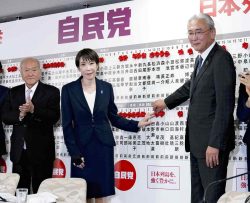
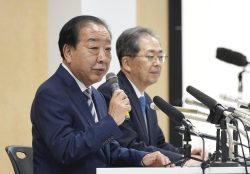
The agreement between Komeito and the Constitutional Democratic Party of Japan to form a new party has set off alarm bells within the ruling Liberal Democratic Party.
Although the LDP-Komeito coalition ended last year, the LDP had quietly been exploring ways to continue collaborating with its former partner. However, it will no longer be able to count on votes raked in by Komeito ahead of an anticipated House of Representatives election, which could have major ramifications for the chances of LDP candidates in some constituencies.
Despite Thursday’s stunning political development, LDP Policy Research Council Chairperson Takayuki Kobayashi avoided directly commenting on the new opposition party.
“We do closely watch the moves of other parties, but the most important thing for us is to figure out what message we want to convey as a political party,” Kobayashi said to reporters in Naha.
Komeito’s decision to create a new party shocked many LDP members. After all, the two parties had a long history of election cooperation, and there had been expectations behind the scenes that some form of cooperation might eventuate for the expected race. Observers believe Komeito can typically deliver 10,000 to 20,000 votes in each single-seat constituency, and losing this chunk of ballots is a cause for alarm within the LDP. “This will have a not insignificant impact in closely contested constituencies,” former Defense Minister Itsunori Onodera told reporters Thursday.
A Yomiuri Shimbun analysis of the results of the previous lower house election in 2024 calculated that if Komeito’s votes had gone to CDPJ candidates instead of LDP candidates, the CDPJ contender would have overtaken their LDP rival in at least 30 constituencies. Almost half of these 30 constituencies were in Tokyo and the surrounding prefectures of Kanagawa, Chiba and Saitama.
The creation of a new party so close to an anticipated election has also sparked some criticism. “A new party of only lower house members brought together right before the lower house election is nothing but an illicit union for election purposes,” a senior LDP official told The Yomiuri Shimbun.
Public support rates for both the CDPJ and Komeito has been consistently low. This reality had one LDP midranking lawmaker playing down the threat posed by the new alliance. “Voters won’t have high expectations for two parties on the wane that have joined forces,” the lawmaker said.
“In an election, votes [for some parties] go up and [for others] go down,” Japan Innovation Party coleader Fumitake Fujita said during a speech in Tokyo on Thursday. “I don’t know whether the CDPJ will garner more votes this time. It’s conducting a grand social experiment.”
DPFP walking its own path
Democratic Party for the People leader Yuichiro Tamaki on Thursday ruled out joining the new party.
“We won’t be involved,” Tamaki said to reporters. “As the election draws closer, I wonder what the public will make of the move by those parties that assume things will work out if they come together.”
The CDPJ and Komeito had urged the DPFP to also participate in the new party, but Tamaki revealed that he had conveyed, through DPFP Secretary General Kazuya Shimba, to the CDPJ side that he intended to turn down that invitation.
The dominant view within the DPFP, which has been performing solidly, was that hastily linking up with other parties would disappoint its supporters. “We’ll go on our own path,” a senior DPFP official said.
The Japanese Communist Party, which previously had advocated electoral cooperation among opposition parties such as the CDPJ through such ways as unifying behind a single candidate, now inevitably will find itself out in the cold.





Most Read
Popular articles in the past 24 hours
-

Strait of Hormuz Closure Shakes Markets; Prolonged Closure Could ...
-

Measles Patient Visited Hospital in Bunkyo Ward, Tokyo, Metropoli...
-

Iran Situation: Japan Must Exert Diplomatic Efforts without Merel...
-

Milano Cortina 2026: Japanese Figure Skater Miura Returns to Home...
-
2 of Japan's Opposition Parties Submit Bill to Revise Political F...
-

Takayama Among World's Top 10 Most Welcoming Cities for 2026; 2nd...
-
Chiba Police to Arrest Japanese National in Midair; Man Accused o...
-

Former Nomura Securities Employee Given 18-year Prison Sentence f...
Popular articles in the past week
-
Milano Cortina 2026: Japanese Gold Medalist Figure Skater Miura S...
-
Tokyo Spends Big on Children, Wins Over Parents
-

Japan’s Miura, Kihara Announce Withdrawal from Figure Skating Wor...
-

Yokohama to Test Out Renewable-Powered Offshore Floating Data Cen...
-

BOJ Keeping Eye on Economy and Takaichi's ‘Proactive Fiscal Polic...
-
Tokyo Measles Patient Traveled to Fukuoka Aboard JAL Planes; Susp...
-
Japan’s Takaichi Speaks on New U.S. Tariff in Upper House, Says P...
-
Nidec Chairman Resigns Amid Accounting Scandal at Major Japanese ...
Popular articles in the past month
-

Producer Behind Pop Group XG Arrested for Cocaine Possession
-

Japan PM Takaichi’s Cabinet Resigns en Masse
-

Man Infected with Measles Reportedly Dined at Restaurant in Tokyo...
-

Israeli Ambassador to Japan Speaks about Japan’s Role in the Reco...
-

Videos Plagiarized, Reposted with False Subtitles Claiming ‘Ryuky...
-

Prudential Life Insurance Plans to Fully Compensate for Damages C...
-

Woman with Measles Visited Hospital in Tokyo Multiple Times Befor...
-

iPS Treatments Pass Key Milestone, but Broader Applications Far f...
Top Articles in Politics
-
Japan PM Takaichi’s Cabinet Resigns en Masse
-

Sanae Takaichi Elected Prime Minister of Japan; Keeps All Cabinet Appointees from Previous Term
-

Japan’s Govt to Submit Road Map for Growth Strategy in March, PM Takaichi to Announce in Upcoming Policy Speech
-

LDP Wins Landslide Victory, Secures Single-party Majority; Ruling Coalition with JIP Poised to Secure Over 300 seats (UPDATE 1)
-

LDP Wins Historic Landslide Victory
JN ACCESS RANKING
-
Producer Behind Pop Group XG Arrested for Cocaine Possession
-
Japan PM Takaichi’s Cabinet Resigns en Masse
-
Man Infected with Measles Reportedly Dined at Restaurant in Tokyo Station
-
Israeli Ambassador to Japan Speaks about Japan’s Role in the Reconstruction of Gaza
-
Videos Plagiarized, Reposted with False Subtitles Claiming ‘Ryukyu Belongs to China’; Anti-China False Information Also Posted in Japan