
New Developments Seen in China’s Maritime Expansion; Japanese Govt Official Urges Calm, Stout Response
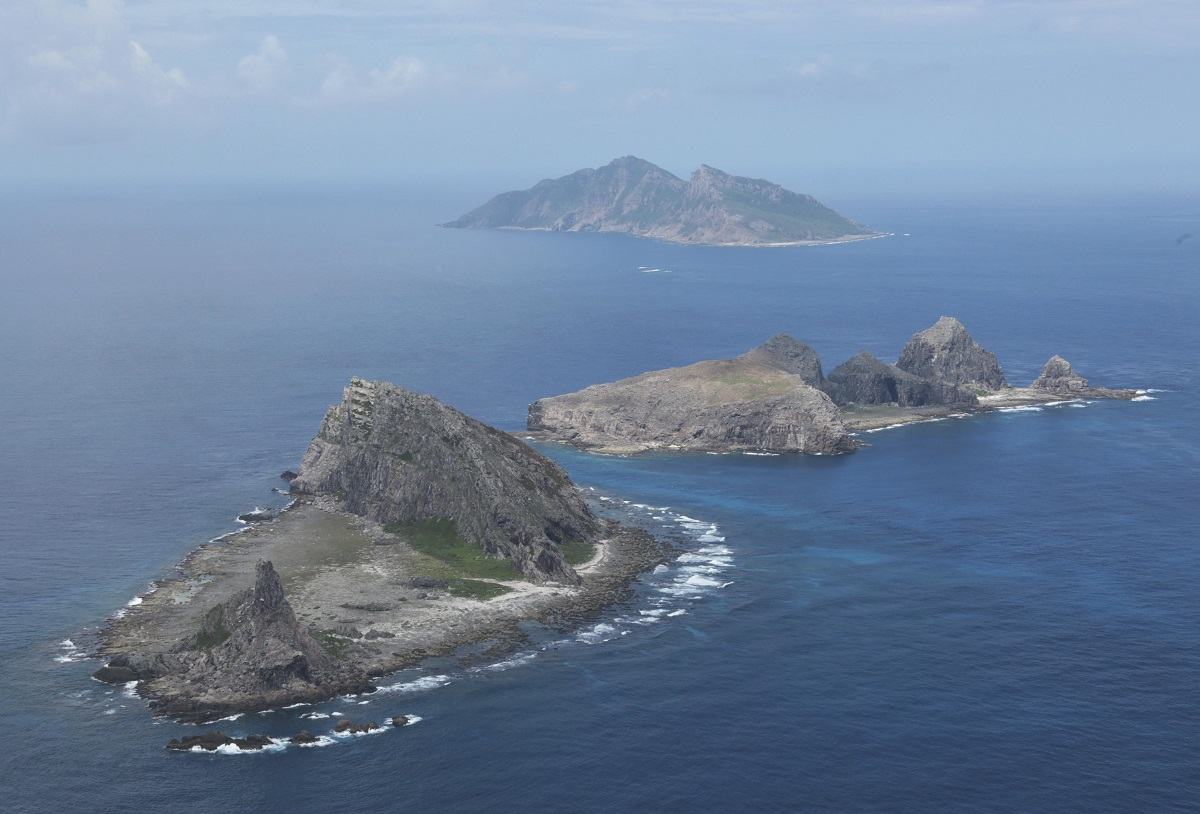
Foreground to background, Minami-Kojima, Kita-Kojima and Uotsuri islands of the Senkaku Islands are seen from a Yomiuri Shimbun plane on Sept. 6, 2013.
15:36 JST, January 2, 2025
China seems to be pursuing a strategy of making a succession of minor changes to territorial issues to create a situation favorable to the country. Its recent activities seen around the Senkaku Islands in Okinawa Prefecture and in the Miyako Strait are believed to be a part of it.
Four heavily armed coast guard vessels were seen sailing in the waters around the Senkaku Islands last month. Joint activities by the Chinese navy and the China Coast Guard were also confirmed in the Miyako Strait located between the main island of Okinawa and Miyako Island.
China’s vessels began to appear frequently around the Senkaku Islands in 2012, when the Japanese government nationalized them. A four-vessel fleet has been seen repeatedly entering the territorial waters since 2016.
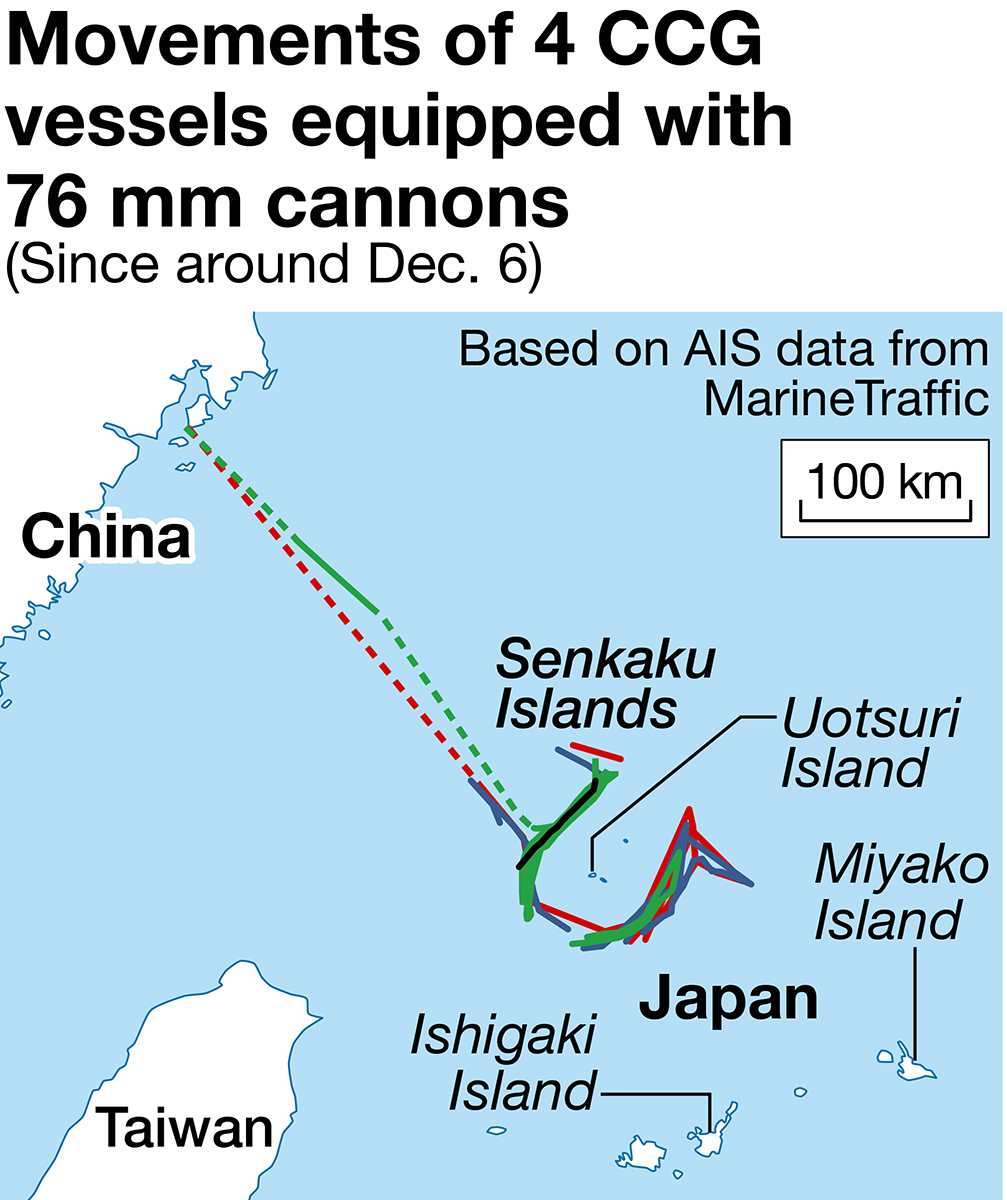
The CCG sailed in Japan’s contiguous zone, a 22-kilometer-wide area outside territorial waters, on a record 355 days in 2024, after doing so on 352 days in 2023.
In addition to the number of activities, their content has also changed. CCG ships have navigated around the Senkakus with the Automatic Identification System (AIS) activated since March 2023, in an apparent display of its effective rule over the area. The CCG has repeatedly named Japanese fishing boats operating off the Senkakus on social media since July 2023, saying it warned them to leave.
The CCG’s 2901, a 10,000-ton class patrol vessel, sailed through the contiguous zone around the Senkakus in June last year. All four ships in the fleet that appears on a daily basis have been armed since that same month, and the four ships that appeared in December were equipped with 76 mm cannons, the same caliber as those on military ships.
The Japan Coast Guard has dispatched more patrol vessels to the waters around the Senkakus to outnumber the CCG vessels.
“We must endure the current situation. It is important to respond calmly and stoutly,” a Japanese government official said. “We will fall into their trap if we respond to the provocations by strengthening armaments on our patrol vessels.”
National Defense Academy Associate Prof. Shinichi Nakazawa said: “CCG vessels use water cannons against Philippine ships in the South China Sea. The bar for using water cannons is comparatively low, but they instead sent ships equipped with large cannons. Such moves suggest its political intention through a display of strength and an attempt to change the status quo in the area around the Senkaku Islands. We need to keep a close eye on whether this trend continues.”






Most Read
Popular articles in the past 24 hours
-

Business Hotels Expanding into Regional Areas in Japan, Aiming to...
-
Milano Cortina 2026: Japan Sees Leap in Olympic Performance Throu...
-

Milano Cortina 2026: Japan's Satoshi Furuno Places 4th in Men's S...
-
Fiji Defense Minister Hopes Japan Will Support Stabilization of P...
-
6 Injured at Naked Festival in Japan’s Okayama Prefecture; Police...
-

Milano Cortina 2026: Speed Skater Takagi Finishes 6th in the 1,50...
-

Milano Cortina 2026: Malinin Highlights Dangers of Social Media i...
-
3rd Japan Pacific Islands Defense Dialogue to Begin in Tokyo on S...
Popular articles in the past week
-

Japan PM Takaichi’s Cabinet Resigns en Masse
-

Man Infected with Measles Reportedly Dined at Restaurant in Tokyo...
-

Sanae Takaichi Elected Prime Minister of Japan; Keeps All Cabinet...
-

Japan's Govt to Submit Road Map for Growth Strategy in March, PM ...
-

Bus Carrying 40 Passengers Catches Fire on Chuo Expressway; All E...
-

Milano Cortina 2026: Figure Skaters Riku Miura, Ryuichi Kihara Pa...
-

Japan, U.S. Name 3 Inaugural Investment Projects; Reached Agreeme...
-
U.S. Firm to Build Training Hub in Fukushima N-plant for Debris R...
Popular articles in the past month
-
Japan PM Takaichi’s Cabinet Resigns en Masse
-

Japan Institute to Use Domestic Commercial Optical Lattice Clock ...
-

Israeli Ambassador to Japan Speaks about Japan’s Role in the Reco...
-
Man Infected with Measles Reportedly Dined at Restaurant in Tokyo...
-

Videos Plagiarized, Reposted with False Subtitles Claiming ‘Ryuky...
-

Man Infected with Measles May Have Come in Contact with Many Peop...
-

Prudential Life Insurance Plans to Fully Compensate for Damages C...
-

Woman with Measles Visited Hospital in Tokyo Multiple Times Befor...
Top Articles in Politics
-
Japan PM Takaichi’s Cabinet Resigns en Masse
-
Sanae Takaichi Elected Prime Minister of Japan; Keeps All Cabinet Appointees from Previous Term
-
Japan’s Govt to Submit Road Map for Growth Strategy in March, PM Takaichi to Announce in Upcoming Policy Speech
-

LDP Wins Historic Landslide Victory
-

LDP Wins Landslide Victory, Secures Single-party Majority; Ruling Coalition with JIP Poised to Secure Over 300 seats (UPDATE 1)
JN ACCESS RANKING
-
Japan PM Takaichi’s Cabinet Resigns en Masse
-
Japan Institute to Use Domestic Commercial Optical Lattice Clock to Set Japan Standard Time
-
Israeli Ambassador to Japan Speaks about Japan’s Role in the Reconstruction of Gaza
-
Man Infected with Measles Reportedly Dined at Restaurant in Tokyo Station
-
Videos Plagiarized, Reposted with False Subtitles Claiming ‘Ryukyu Belongs to China’; Anti-China False Information Also Posted in Japan