

The Prime Minister’s Office
16:48 JST, August 17, 2022
To increase deterrence against North Korea’s missiles, the government plans to place domestic long-range cruise missiles on two naval vessels equipped with the Aegis system it plans to build, it was learned Tuesday.
These missiles are capable of striking land-based targets as the ships will be designed on the expectation that the vessels have “counterattack capability” such as to destroy an enemy’s missile launch site in the name of self-defense.
To keep down construction costs, it has also been settled that the ships will be built using a typical single hull, according to several government sources.
The government decided in December 2020 to build two Aegis system-equipped ships as an alternative to deploying Aegis Ashore, a land-based interceptor system. The government gave up deploying Aegis Ashore due to factors including opposition from the public.
The plan is for the eight existing Aegis-equipped ships of the Maritime Self-Defense Force to operate in such waters as those around the Senkaku Islands of Okinawa Prefecture, while the new Aegis system-equipped ships are expected to be constantly deployed in the Sea of Japan to keep an eye out for ballistic missile launches by North Korea.
The SPY-7 radar for Aegis Ashore will be equipped on the new vessels. The government has already signed a contract to purchase the state-of-the-art radar from a U.S. firm. SM-6 missiles, which can intercept cruise missiles, have also been decided on as equipment for the two ships.
In addition to the advanced radar and missiles, the Aegis system-equipped ships are likely to carry cruise missiles that will be upgraded versions of the Type 12 surface-to-ship missile currently used by the Ground Self-Defense Force. After the upgrades, the missile’s range will extend to about 1,000 kilometers and it will be mounted on naval vessels.
The government will revise three national defense-related documents, including the National Security Strategy, by the end of the year, and has been coordinating its policy so that the Self-Defense Forces will be able to possess counterattack capability.
If the Aegis system-equipped ships are mounted with long-range cruise missiles, it could help the country build up deterrence.
Concerning the hull’s design, however, the government had originally considered constructing the ships with multiple hulls to make them less susceptible to the impact of waves.
Because few actual naval vessels have been developed with multiple hulls and the construction costs of such ships are likely to balloon, the government has decided on a single hull.
The government is expected to announce the newly worked-out plan shortly.
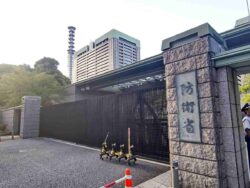
Now that the hull type has been decided, the Defense Ministry hopes to start designing the hull as soon as possible. It plans to include the related outlays for the construction in its budgetary request for fiscal 2023.
It is expected to take more than five years for the new hull to be completed.








Most Read
Popular articles in the past 24 hours
-

Japan’s Major Real Estate Firms Expanding Overseas Businesses to ...
-

Ukrainian Ambassador Closely Watching Japan’s Revision of Defense...
-

Milano Cortina 2026: Sakamoto Serves as Flag Bearer; Japan Earns ...
-

Emperor Turns 66 Ahead of Disaster Milestones
-

Milano Cortina 2026: There Were Cheers across the Country, after ...
-

Luna Sea Drummer Shinya Dies at 56; Powerful Drummer Behind ‘Desi...
-

Milano Cortina 2026: ‘Magical’ Italian Games Close wi...
-

Milano Cortina 2026: Riku-Ryu Duo Stick Together During Closing C...
Popular articles in the past week
-

Japan PM Takaichi’s Cabinet Resigns en Masse
-

Man Infected with Measles Reportedly Dined at Restaurant in Tokyo...
-

Sanae Takaichi Elected Prime Minister of Japan; Keeps All Cabinet...
-

Japan's Govt to Submit Road Map for Growth Strategy in March, PM ...
-

Bus Carrying 40 Passengers Catches Fire on Chuo Expressway; All E...
-

Milano Cortina 2026: Figure Skaters Riku Miura, Ryuichi Kihara Pa...
-

Japan, U.S. Name 3 Inaugural Investment Projects; Reached Agreeme...
-
U.S. Firm to Build Training Hub in Fukushima N-plant for Debris R...
Popular articles in the past month
-
Japan PM Takaichi’s Cabinet Resigns en Masse
-

Japan Institute to Use Domestic Commercial Optical Lattice Clock ...
-

Israeli Ambassador to Japan Speaks about Japan’s Role in the Reco...
-
Man Infected with Measles Reportedly Dined at Restaurant in Tokyo...
-

Videos Plagiarized, Reposted with False Subtitles Claiming ‘Ryuky...
-

Man Infected with Measles May Have Come in Contact with Many Peop...
-

Prudential Life Insurance Plans to Fully Compensate for Damages C...
-

Woman with Measles Visited Hospital in Tokyo Multiple Times Befor...
Top Articles in Politics
-
Japan PM Takaichi’s Cabinet Resigns en Masse
-
Sanae Takaichi Elected Prime Minister of Japan; Keeps All Cabinet Appointees from Previous Term
-
Japan’s Govt to Submit Road Map for Growth Strategy in March, PM Takaichi to Announce in Upcoming Policy Speech
-

LDP Wins Historic Landslide Victory
-

LDP Wins Landslide Victory, Secures Single-party Majority; Ruling Coalition with JIP Poised to Secure Over 300 seats (UPDATE 1)
JN ACCESS RANKING
-
Japan PM Takaichi’s Cabinet Resigns en Masse
-
Japan Institute to Use Domestic Commercial Optical Lattice Clock to Set Japan Standard Time
-
Israeli Ambassador to Japan Speaks about Japan’s Role in the Reconstruction of Gaza
-
Man Infected with Measles Reportedly Dined at Restaurant in Tokyo Station
-
Videos Plagiarized, Reposted with False Subtitles Claiming ‘Ryukyu Belongs to China’; Anti-China False Information Also Posted in Japan