
Japan Tourism / Visiting the Birthplace of Good Luck Daruma Dolls in Takasaki; Traditional, Modern Daruma Available at 100-year-old Store
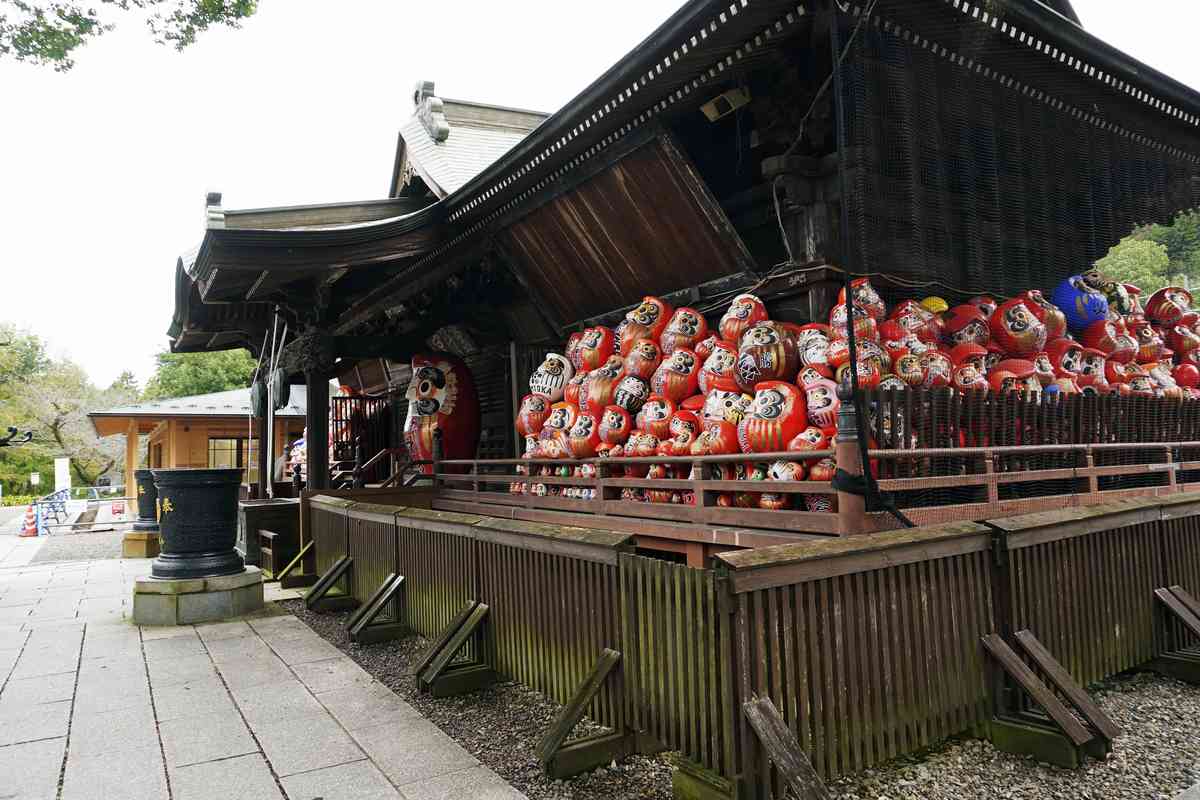
Daruma with both eyes painted are seen at the main hall of Daruma-ji temple.
16:30 JST, January 3, 2025

TAKASAKI, Gunma — A daruma doll is a traditional Japanese craft known as a good luck charm called “Engi daruma.” The eyes of a new daruma are blank. You fill in the right side (the left eye of the daruma) while making a wish or setting a goal, and fill in the other eye when the wish is fulfilled or the goal is achieved.
Daruma are easily recognized by their typical round body and determined, somewhat humorous gaze. They were originally inspired by images of the seated Bodhidharma, the founder of Zen Buddhism.
Like an “Okiagari-koboshi” roly-poly toy, daruma are weighted at the bottom so they always quickly return to an upright position when tilted.
Thanks to this feature they are often described using the Japanese saying “Nanakorobi yaoki.” The encouraging phrase, which literally translates to “seven times down, eight times up,” is interpreted as “If you fail, you can succeed in the end if you keep going” or “There are many ups and downs in our lives.”
I recently visited Takasaki, Gunma Prefecture, which is the birthplace and the largest production base in Japan of daruma.
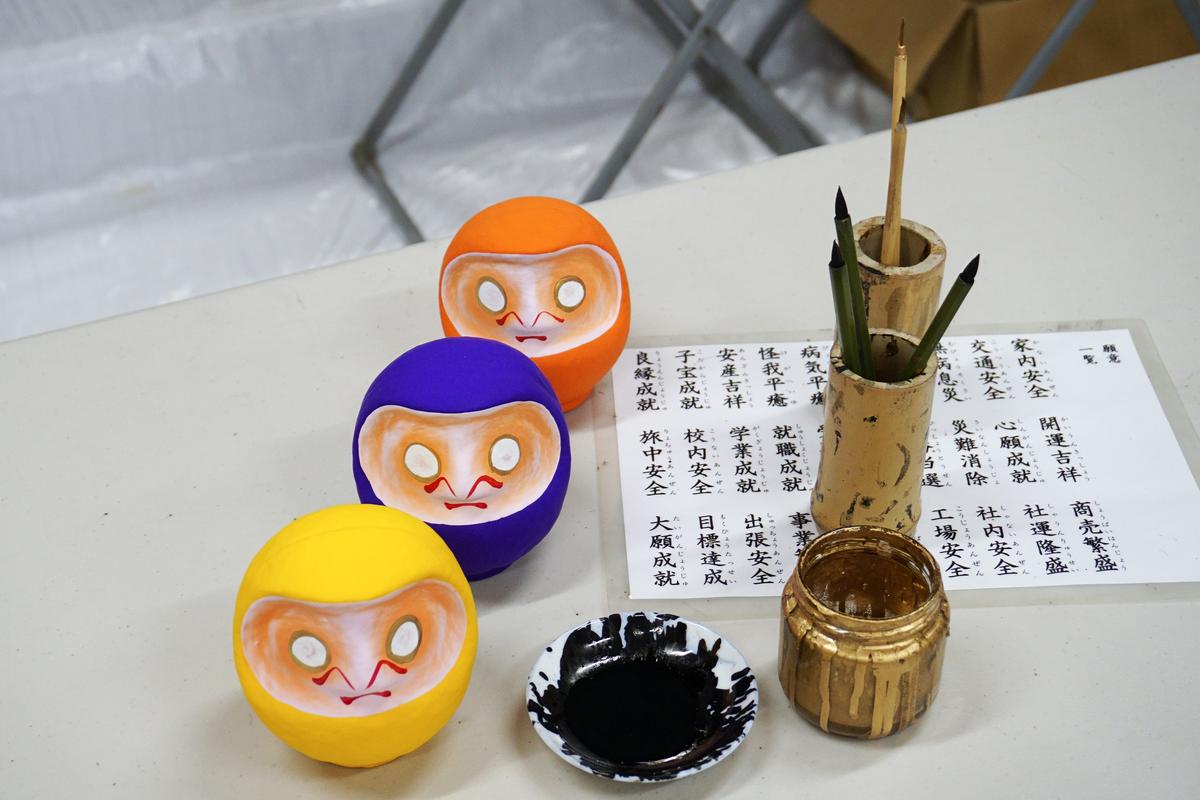
Daruma-ji temple holds daruma painting workshops that let participants draw the faces of daruma and write their wishes on them.
I first checked out the Shorinzan Daruma-ji temple, the origin of daruma as good luck charms. The famous temple belongs to the Obaku school of Zen Buddhism, and was founded in 1697. It is a 30-minute walk from Gunma-Yawata Station on the JR Shinetsu Line.
Isshin Hirose, deputy chief priest of the temple, explained how good luck daruma dolls started.
“About 240 years ago, Mt. Asama explosively erupted, causing a severe famine in the area. To help the suffering people, Togaku, the ninth chief priest of the temple, carved a wooden model based on an image of Bodhidharma sitting in meditation. The image was drawn by Shinetsu, a Zen priest who opened the temple. Togaku then taught Yamagata Tomogoro, a local farmer, how to make papier-mache daruma from the wooden model.”
Hirose added that this is the origin of how daruma began to be sold at the temple’s annual Nanakusa Taisai festival on Jan. 6 and 7.
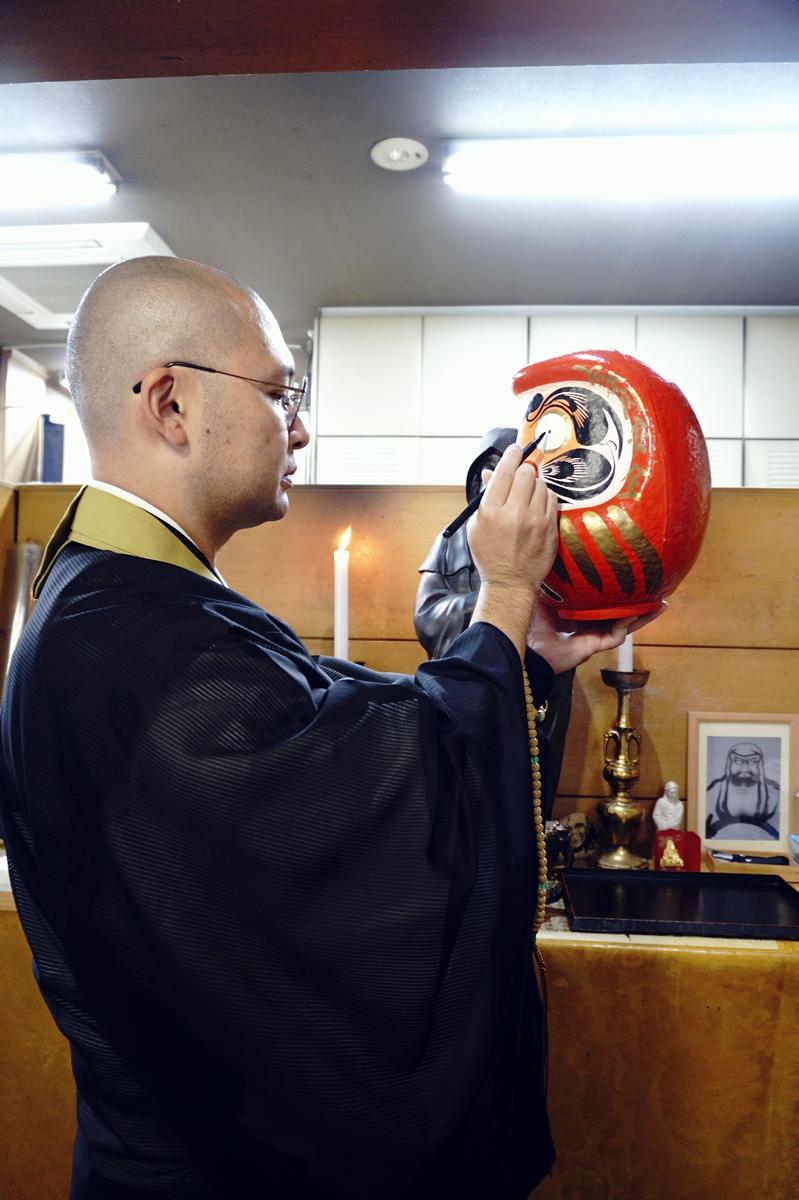
A priest paints the first stroke of the empty left eye of a daruma.
The daruma have been made with prayers and other blessings for the well-being of their future owners and their families.
If you wish, a priest at the temple will paint the first stroke for the left eye of the daruma, leaving you to complete the other eye.
After worshipping at the temple, I went to Daruma no Furusato Daimon-ya, a store that has been making and selling daruma for 100 years.
Upon entering Daimon-ya, I saw many daruma displayed side by side in various sizes and colors, including red, white and yellow.
“Recently, in addition to regular daruma, we make daruma that convey Japanese culture and the four seasons along with daruma for foreign visitors, such as those with Halloween designs,” said Sumikazu Nakata, the fourth-generation head of the family business who currently serves as chairman.
“But their faces always have a crane representing the eyebrows and a turtle representing the beard. It’s our traditional design,” Nakata added. Cranes and turtles are considered auspicious animals.
While daruma are made by a team of craftspeople, only Nakata, who is a designated Gunma prefectural traditional craftsman, draws the eyebrows and beard.
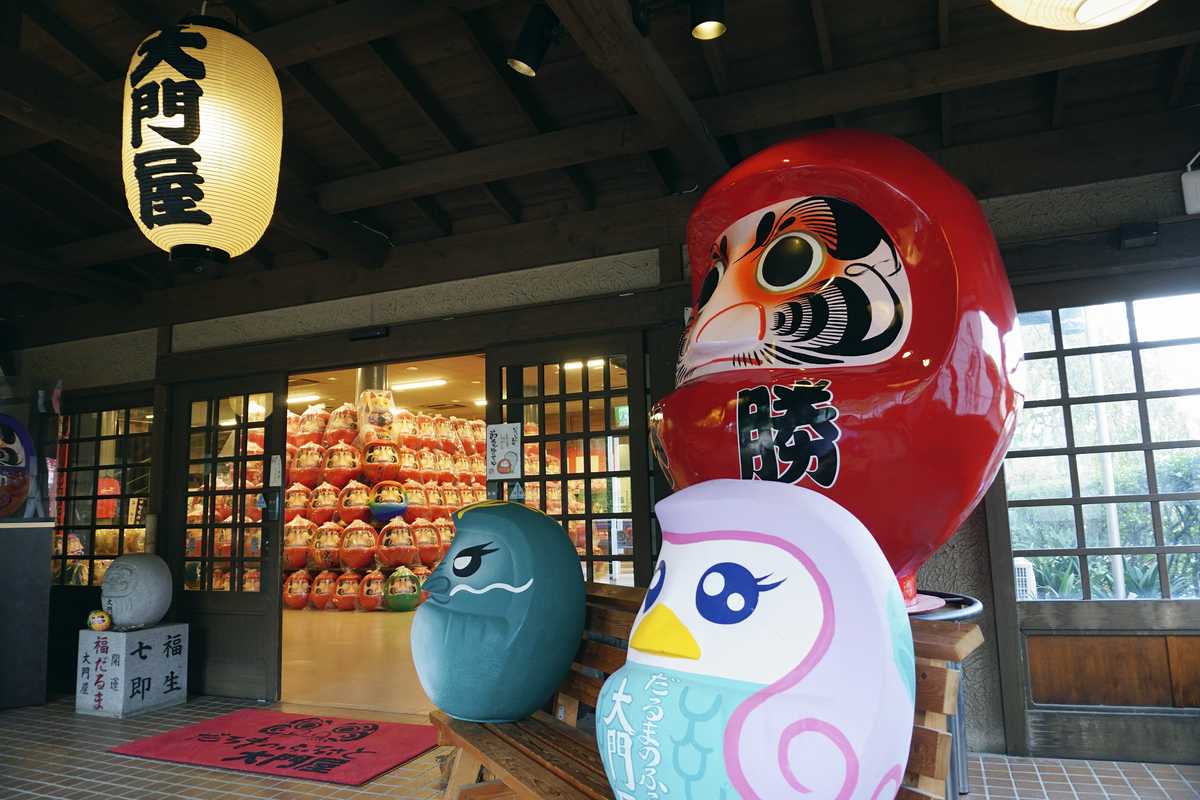
A traditional daruma and a modern Amabie Daruma greet visitors at the entrance of Daimon-ya.
Chihiro Nakata, the fifth-generation head of Daimon-ya, takes a more modern approach. She designed and created the Amabie Daruma, which is based on the amabie, a yokai folklore creature that protects against diseases, which became well-known during the COVID-19 pandemic.
At first, she made Amabie Daruma only at the personal request from her Instagram followers. As they quickly became popular, she started making them in earnest. She has sold 50,000 Amabie Daruma so far, and it has become a signature product of the store.
At the end of the trip, I bought a Daruma bento lunch box, a popular ekiben train station bento of Takasaki Station. On my way home I savored the food, which contained many healthy ingredients based on Daruma-ji temple’s fucha cuisine, traditional vegetarian dishes brought from China.
***
Japan Tourism is presented in collaboration with Ryoko Yomiuri Publication, which publishes Ryoko Yomiuri, a monthly travel magazine. If you are interested in the original Japanese version of this story, click here.






Most Read
Popular articles in the past 24 hours
-

German Journalist Traces Footsteps of Great-Grandfather Who Was P...
-

10 Foreign Tourists Sustain Injuries After Fire at Capsule Hotel ...
-

World Baseball Classic: Venezuela Beats Japan in Nail-biting Back...
-

Rapid Services Resume on JR Chuo Line; Suspension Caused by Accid...
-

Rapid Services on JR Chuo Line Suspended; Accident at Kokubunji S...
-

Zelenskiy Says Ukraine Wants Money, Technology in Return for Midd...
-

World Baseball Classic: Venezuela Beats Japan in Back-and-Forth Q...
-

World Baseball Classic: Red Sox’s Abreu Hits 3-run Homer, Giving ...
Popular articles in the past week
-

Japan Figure Skating Legend Yuzuru Hanyu Is Proud Disaster Surviv...
-
15 Measles Patients Confirmed in Tokyo in Past 6 Days; 1 May Have...
-
Massive Sewer Pipe Found Jutting Out of Highway in Osaka
-

Japan Govt to Tighten Requirements to Receive Permanent Residency...
-
Power Outage Forces About 980 Passengers in Yokohama to Walk to T...
-
JR Tokai Breaks Ground on Yamanashi Maglev Station; Will Be Part ...
-

Parents in Japan to Get Instagram Notifications When Teens Repeat...
-
'World's Oldest Bio-Business' Is Japan's Seed Koji Retailing, Mol...
Popular articles in the past month
-

Producer Behind Pop Group XG Arrested for Cocaine Possession
-

Japan PM Takaichi’s Cabinet Resigns en Masse
-

Man Infected with Measles Reportedly Dined at Restaurant in Tokyo...
-
Japan Figure Skating Legend Yuzuru Hanyu Is Proud Disaster Surviv...
-

iPS Treatments Pass Key Milestone, but Broader Applications Far f...
-

Sanae Takaichi Elected Prime Minister of Japan; Keeps All Cabinet...
-

South Korea Tightens Rules on Foreigners Buying Homes in Seoul Me...
-

Nepal Bus Crash Kills 19 People, Injures 25 Including One Japanes...
Top Articles in Features
-
Japanese Students Use Traditional Pickle to Create Novel Wagashi Confectionery
-

My Spendthrift Mother Constantly Asks Me for Money
-
Kawazu Cherry Blossoms in Full Bloom in Japan’s Shizuoka Pref.; Festival to Be Held through March 8
-

Tourists Ignore Safety Barriers Near Famous Zao ‘Snow Monsters’ in Japan
-
Tottori: 95-Year-Old Japanese Descendent from Philippines Visits Father’s Grave
JN ACCESS RANKING
-
Producer Behind Pop Group XG Arrested for Cocaine Possession
-
Japan PM Takaichi’s Cabinet Resigns en Masse
-
Man Infected with Measles Reportedly Dined at Restaurant in Tokyo Station
-
Japan Figure Skating Legend Yuzuru Hanyu Is Proud Disaster Survivor and Gold Medalist, Vows to Continue Support Efforts
-
iPS Treatments Pass Key Milestone, but Broader Applications Far from Guaranteed