
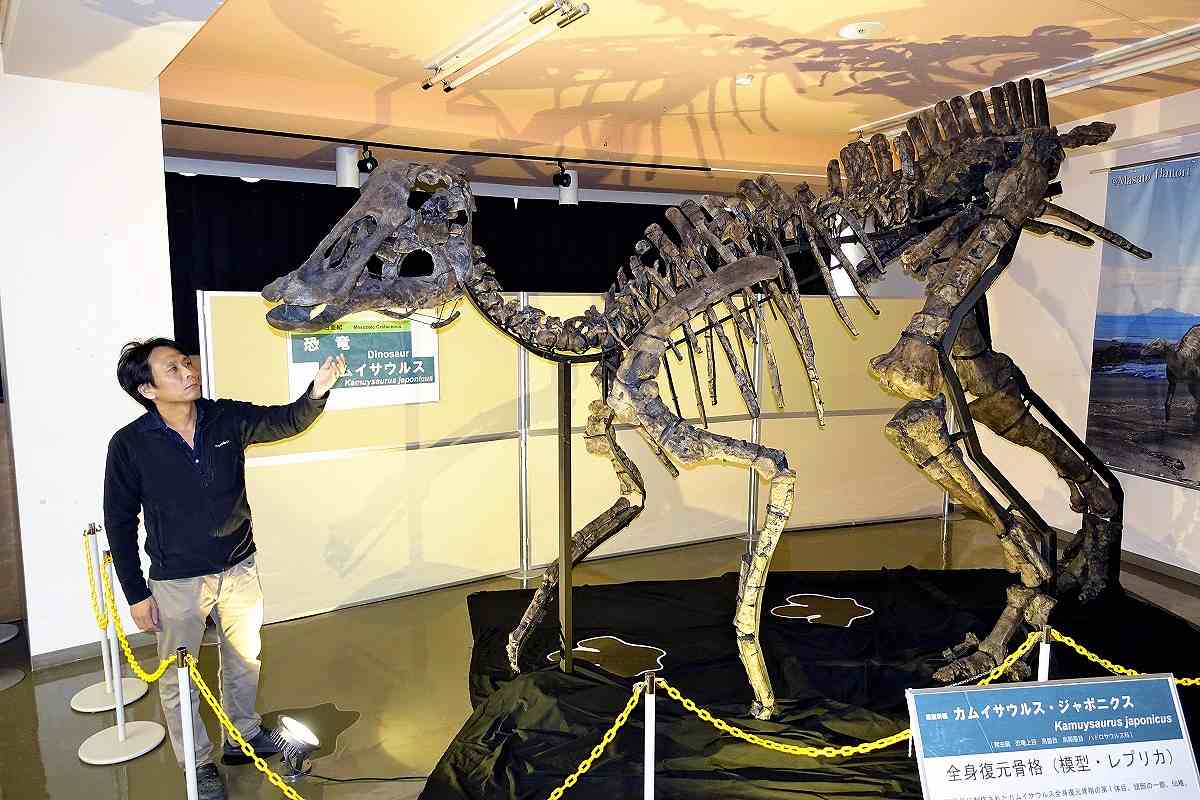
The first Mukawaryu dinosaur replica is exhibited without its tail at the Hobetsu Museum in Mukawa, Hokkaido.
11:21 JST, January 17, 2024
MUKAWA, Hokkaido — The first replica of a dinosaur fossil referred to as Mukawaryu, or dragon of Mukawa, has been exhibited as an incomplete skeleton but is expected to be displayed in its complete state as early as spring 2026 at a new museum to be built in Mukawa, Hokkaido.
Mukawaryu has also been called “The Perfect” because the bones from the whole body were perfectly fossilized. However, the first replica of the fossil was displayed without its tail at the Hobetsu Museum in Mukawa for years due to the small exhibition space.
In 2024, which is the Year of the Dragon, the town is expected to sign a design contract for the new museum.
The Mukawaryu tail fossil was found in the city in April 2003, followed by other parts of its skeleton, until the whole body of the 8-meter-long dinosaur was uncovered. Finding a fossil in such a state is unusual in Japan and officials started referring to it as “The Perfect.”
The first replica was completed in 2019 and was put on display at a special exhibition at the National Museum of Nature and Science, Tokyo in July 2019, where it became an instant hit. Feeling encouraged, the town made a second replica, which was created to lease to other institutions, in 2020.
The second replica was displayed at dinosaur exhibitions both inside and outside Hokkaido. It is currently on display at the Aoao Sapporo aquarium in Sapporo.
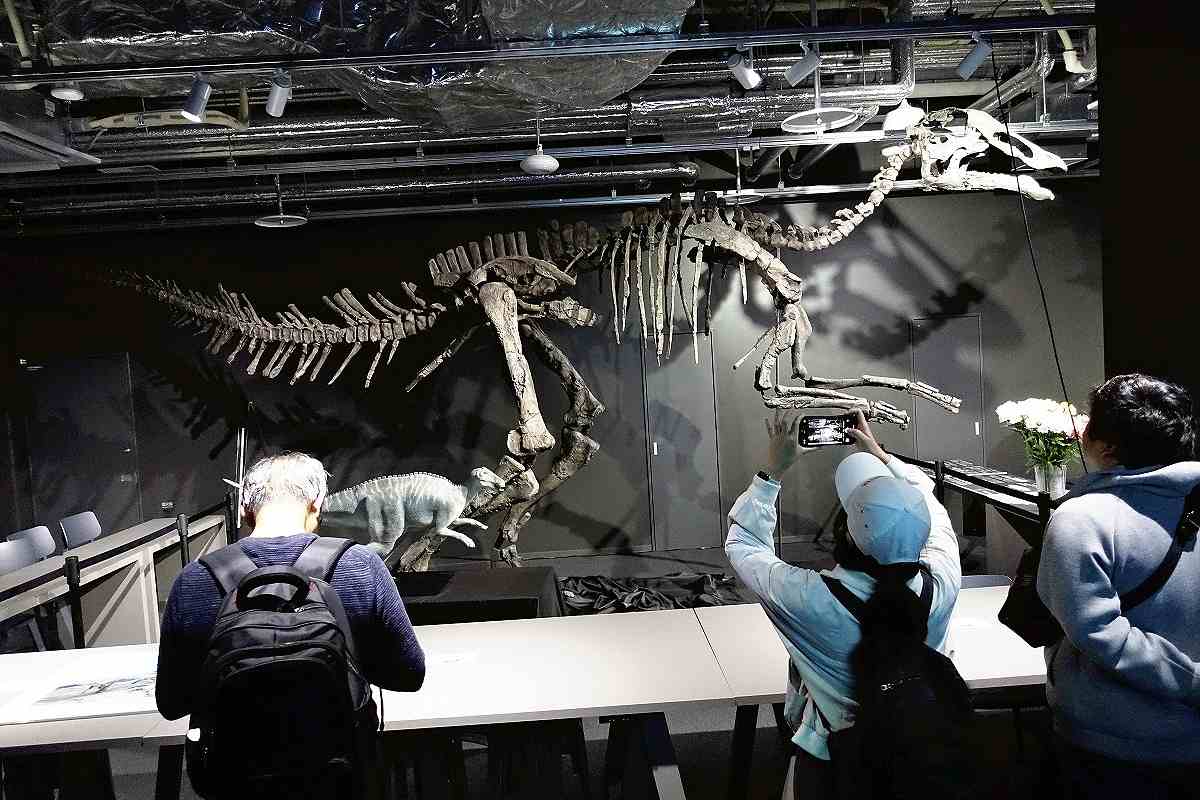
The second Mukawaryu dinosaur replica is displayed at the Aoao Sapporo aquarium in Chuo Ward, Sapporo.
The first replica has been on display in a 99-square-meter room at the Hobetsu Museum. It was known that it would be impossible to display the entire skeleton, so the town planned to redevelop the area around the museum and relocate the first replica in spring 2022 to the new museum. However, Mukawa was affected by the Hokkaido Eastern Iburi Earthquake in September 2018, causing redevelopment plans to be shelved.
The project restarted in 2022, finally taking a step closer to the entire skeleton of the first replica to be displayed, four years later than originally planned.
Mukawaryu is what the fossil is commonly referred to as, but its scientific name is Kamuysaurus japonicus, meaning “Japanese dragon god.” It was determined to be a new species of hadrosaurid in 2019. It is the largest full-body fossil of a dinosaur discovered in Japan, and over 80% of its body in terms of volume was found preserved.


Related Tags





Most Read
Popular articles in the past 24 hours
-

10 Foreign Tourists Sustain Injuries After Fire at Capsule Hotel ...
-

World Baseball Classic: Venezuela Beats Japan in Nail-biting Back...
-

Zelenskiy Says Ukraine Wants Money, Technology in Return for Midd...
-

Rapid Services Resume on JR Chuo Line; Suspension Caused by Accid...
-

Rapid Services on JR Chuo Line Suspended; Accident at Kokubunji S...
-

World Baseball Classic: Venezuela Beats Japan in Back-and-Forth Q...
-

World Baseball Classic: Red Sox’s Abreu Hits 3-run Homer, Giving ...
-

Japan Routs Philippines in AFC Women’s Asian Cup
Popular articles in the past week
-

Japan Figure Skating Legend Yuzuru Hanyu Is Proud Disaster Surviv...
-
15 Measles Patients Confirmed in Tokyo in Past 6 Days; 1 May Have...
-

Massive Sewer Pipe Found Jutting Out of Highway in Osaka
-

Japan Govt to Tighten Requirements to Receive Permanent Residency...
-
Power Outage Forces About 980 Passengers in Yokohama to Walk to T...
-
JR Tokai Breaks Ground on Yamanashi Maglev Station; Will Be Part ...
-

Parents in Japan to Get Instagram Notifications When Teens Repeat...
-

Metal Pipe That Protruded 13 Meters Above Ground in Osaka Sinks B...
Popular articles in the past month
-

Producer Behind Pop Group XG Arrested for Cocaine Possession
-

Japan PM Takaichi’s Cabinet Resigns en Masse
-

Man Infected with Measles Reportedly Dined at Restaurant in Tokyo...
-
Japan Figure Skating Legend Yuzuru Hanyu Is Proud Disaster Surviv...
-

iPS Treatments Pass Key Milestone, but Broader Applications Far f...
-

Sanae Takaichi Elected Prime Minister of Japan; Keeps All Cabinet...
-

South Korea Tightens Rules on Foreigners Buying Homes in Seoul Me...
-

Nepal Bus Crash Kills 19 People, Injures 25 Including One Japanes...
Top Articles in Features
-
Japanese Students Use Traditional Pickle to Create Novel Wagashi Confectionery
-

My Spendthrift Mother Constantly Asks Me for Money
-
Kawazu Cherry Blossoms in Full Bloom in Japan’s Shizuoka Pref.; Festival to Be Held through March 8
-
Tourists Ignore Safety Barriers Near Famous Zao ‘Snow Monsters’ in Japan
-
Tottori: 95-Year-Old Japanese Descendent from Philippines Visits Father’s Grave
JN ACCESS RANKING
-
Producer Behind Pop Group XG Arrested for Cocaine Possession
-
Japan PM Takaichi’s Cabinet Resigns en Masse
-
Man Infected with Measles Reportedly Dined at Restaurant in Tokyo Station
-
Japan Figure Skating Legend Yuzuru Hanyu Is Proud Disaster Survivor and Gold Medalist, Vows to Continue Support Efforts
-
iPS Treatments Pass Key Milestone, but Broader Applications Far from Guaranteed