
Diner in Japan’s Saga Pref. Popular with Regulars; Black Katsudon Dish Evolved from Recipe of Owner’s Mother
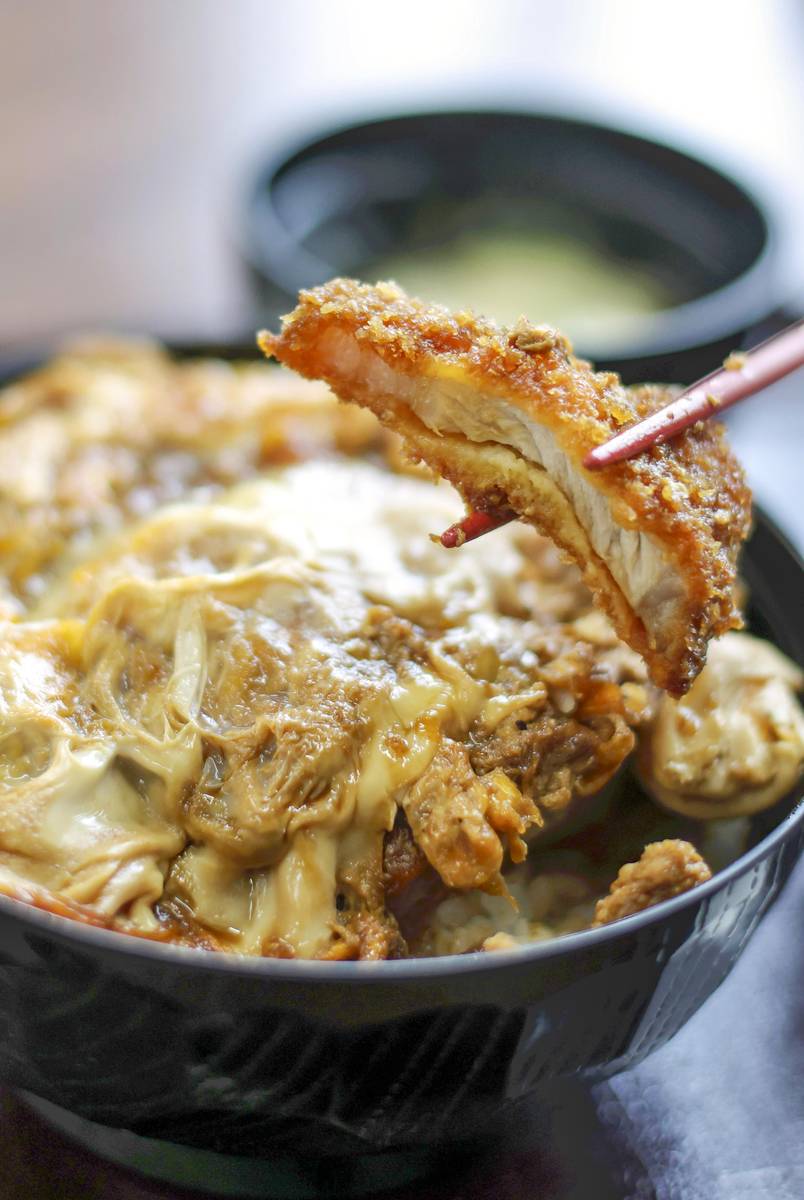
A Katsudon bowl, the most popular dish at Oshokujidokoro Kamiya
11:05 JST, August 24, 2025
TAKEO, Saga — A diner located in Takeo, Saga Prefecture — considered the gateway to the Nishi-Kyushi area and known for its hot springs — attracts customers with its signature katsudon bowl, a refined version of a recipe created by Hatsue Shojimaru’s mother, the founder of the diner.
Customers stream into Oshokujidokoro Kamiya as soon as the doors open at 11 a.m. In the kitchen, 75-year-old Hatsue tells herself, “I have to make [the food] delicious.” Along with her 54-year-old son Takayuki, she begins to skillfully prepare the food.
The national road in front of the restaurant is known as “Champon Kaido,” and there are many eateries in the area that specialize in the dish. Champon is a Chinese-style noodle soup that originated in Nagasaki Prefecture and consists of stir-fried meat and vegetables that are simmered together in a rich, milky broth and served over Chinese noodles.
However, Oshokujidokoro Kamiya’s most popular dish is the katsudon bowl, priced at ¥980, with more than half of all customers ordering it. It is known as “black katsudon” because it is topped with a secret sauce that has a soy sauce base that gives it a dark coloration. When you take a bite, the mellow and gentle sweetness of the sauce exquisitely blends with the soft, runny boiled egg and the crispy pork cutlet.
The pork used for the cutlet is Wakakusu Pork, a specialty of Takeo that is known for its tenderness and lack of odor. Vegetables including onions are also sourced locally, and the rice is carefully cultivated by farmers in the area.
The secret sauce is constantly replenished. Hatsue comes to the diner every day, including on her days off, to top it up, simmering it and leaving it to rest. She spares no effort to bring out the best of the ingredients.
Flood of regular customers
Oshokujidokoro Kamiya was founded in 1964 by Kikue, Hatsue’s 103-year-old mother. The restaurant began life as a Japanese inn and diner that was located at the train station near the diner’s current location.
About 60 years ago, Hatsue’s mother worked from early morning until late at night. The inn and diner were extremely busy with customers, primarily coal miners and construction workers, so Hatsue saw her mother working strenuously.
Hatsue began helping her mother around the time she graduated from junior high school. At 29, she took over running the diner from her mother, who was busy with the inn. Hatsue kept the diner open day and night, even delivering late-night meals to a nearby factory after closing. Although she had help from her sister, who was two years younger, and part-time staff, Hatsue recalls: “My life was just busy, busy, busy. I never even took a trip.”
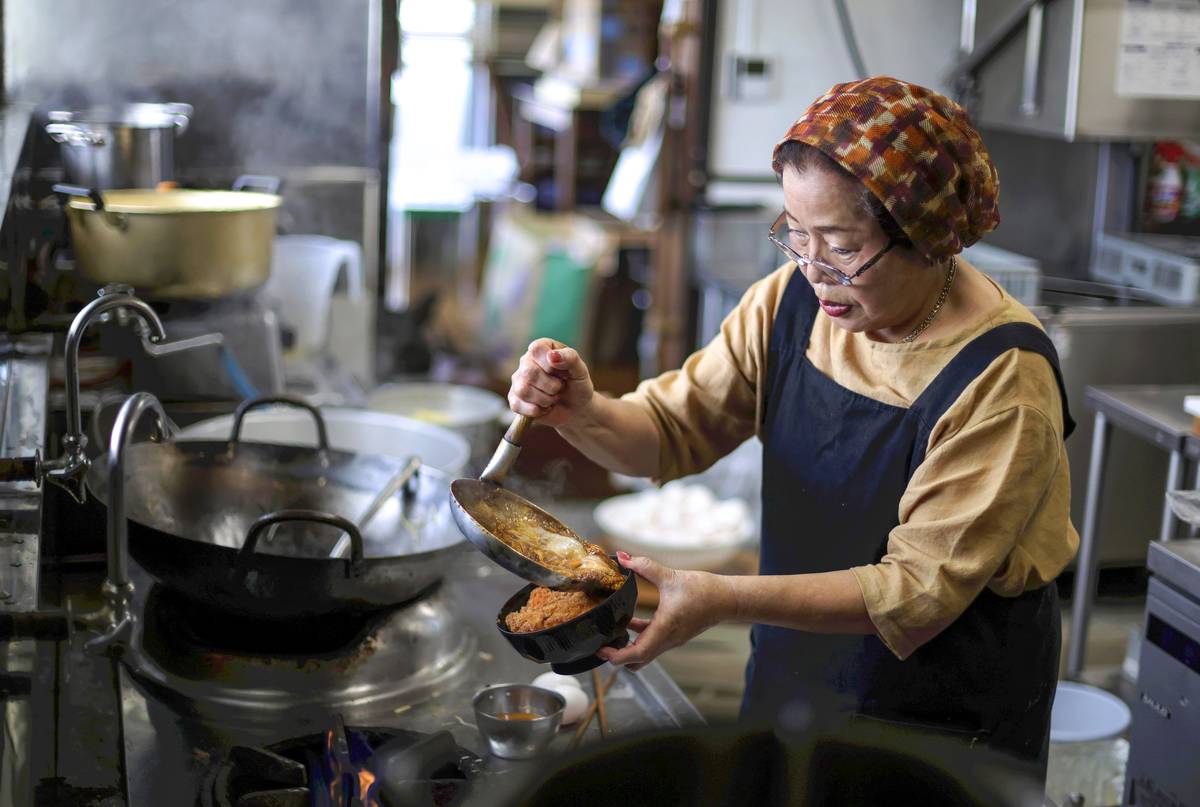
Hatsue Shojimaru prepares a katsudon bowl
Hatsue has maintained the diner and worked to evolve the taste of the dishes. She inherited the katsudon recipe from her mother and evolved it into what it is today through trial and error. “The original flavor was a bit subtle, but I thought a richer flavor would appeal to more people,” she said.
The diner moved to its current location in 1978, which sees a lot of vehicles pass by, so the diner has a steady stream of regular customers.
“The katsudon is addictive. The staff are friendly, the atmosphere is comfortable and I always enjoy coming here,” said a 78-year-old customer from the same city who has been coming to the restaurant for 20 years.
While the diner continued to thrive, the work took a toll. Hatsue’s back and legs reached their limit from being on the move from morning until night. About 10 years ago, she told those around her that she would quit when she turned 70.
At that time, her only son, Takayuki, began helping out at the restaurant, closing his design company to support his mother. Initially, he had no intention of taking over, but the strong encouragement from those around him gave him the resolve to keep the diner open.
Battling major floods
The diner has overcome many hardships. Heavy rains caused the diner to be flooded in 2019 and 2021, which saw the cooking equipment and other items completely submerged. Even the katsudon sauce was washed away. The damage amounted to tens of millions of yen and the restaurant was forced to close for an extended period.
Hatsue almost gave up on rebuilding after repeated disasters left her thinking that the situation was hopeless. However, her regular customers, friends and suppliers rushed to her aid, helping with the cleanup and restoration work. The encouragement she received gave her strength.
“The only reason the restaurant is still open is because of everyone’s support,” she said gratefully.
The diner now only opens during lunchtime at the suggestion of Takayuki, who is concerned about his mother’s health now that she is in her 70s. Even so, Hatsue begins preparations every morning at 8 a.m. Though her body aches at times, hearing customers say “delicious” makes her ecstatic.
On the day I went to the diner, I saw more than 100 people visiting. “It’s more than just tasty food. We want to show our support for this restaurant that has been a key part of our local community for so many years,” said a 41-year-old customer from the same city, who has been coming for over 10 years.
“This restaurant is my life,” said Hatsue. “With my son helping me, I just can’t quit.”
***
My recommendation
Omurice
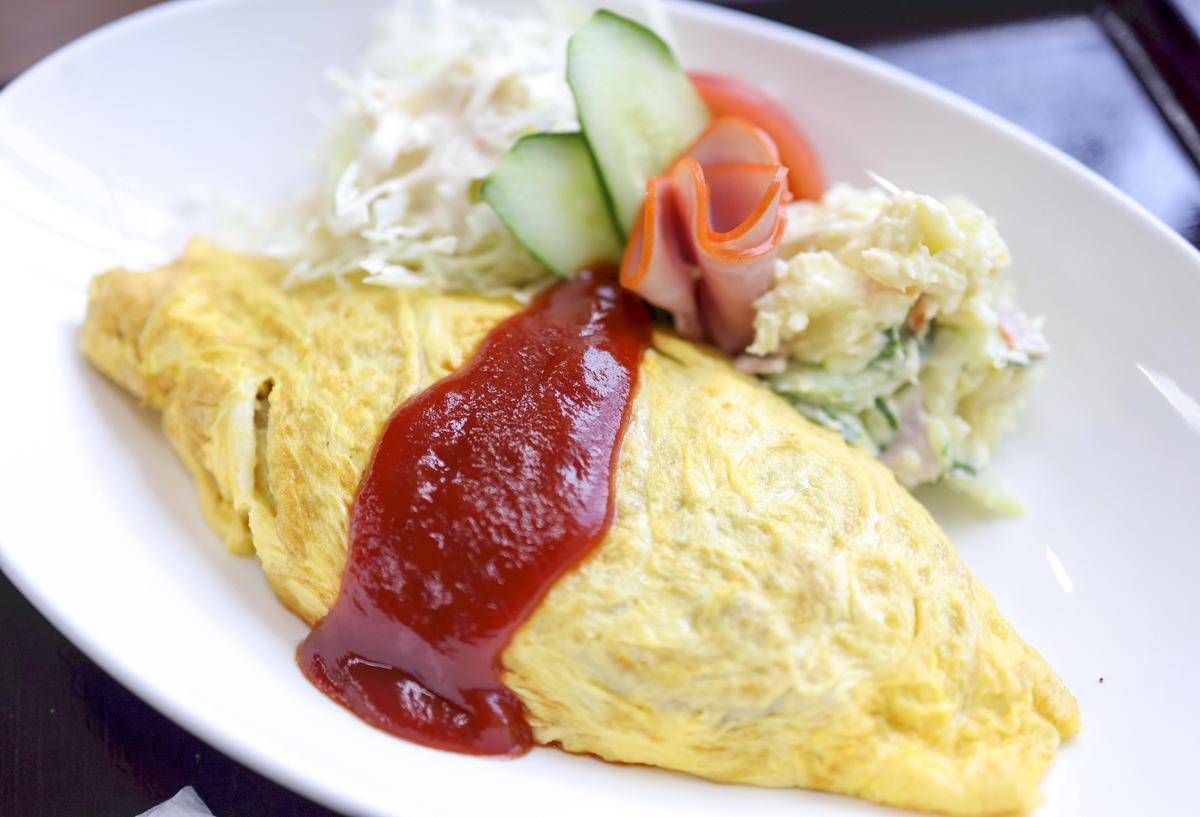
An omurice dish
The champon noodle dish and curry rice are popular choices, but the diner recommends the “omurice,” priced at ¥1,100.
Omurice consists of pork, ham, onions and carrots stir-fried with rice and seasoned with ketchup, all wrapped in a thin omelet.
Hatsue describes it as a very simple dish. “You can also taste the nostalgia of old times,” she said.
The accompanying potato salad is so popular that some people order the omurice just for that. The ham is curled like flower petals and garnished with the potato salad, which children love.
“If there are siblings, I make two or three, so they don’t fight,” said Hatsue.





Most Read
Popular articles in the past 24 hours
-

10 Foreign Tourists Sustain Injuries After Fire at Capsule Hotel ...
-

M4.4 Earthquake Hits Central Japan’s Gunma Pref.; No Tsunami Expe...
-

Japanese Expert on Arab Cuisine Presents Dish with Whole Fish, Cr...
-

Zelenskiy Says Ukraine Wants Money, Technology in Return for Midd...
-

World Baseball Classic: Venezuela Beats Japan in Nail-biting Back...
-

Rapid Services Resume on JR Chuo Line; Suspension Caused by Accid...
-

Rapid Services on JR Chuo Line Suspended; Accident at Kokubunji S...
-

World Baseball Classic: Venezuela Beats Japan in Back-and-Forth Q...
Popular articles in the past week
-

Japan Figure Skating Legend Yuzuru Hanyu Is Proud Disaster Surviv...
-
15 Measles Patients Confirmed in Tokyo in Past 6 Days; 1 May Have...
-

Massive Sewer Pipe Found Jutting Out of Highway in Osaka
-

Japan Govt to Tighten Requirements to Receive Permanent Residency...
-

Power Outage Forces About 980 Passengers in Yokohama to Walk to T...
-

JR Tokai Breaks Ground on Yamanashi Maglev Station; Will Be Part ...
-

Parents in Japan to Get Instagram Notifications When Teens Repeat...
-

Metal Pipe That Protruded 13 Meters Above Ground in Osaka Sinks B...
Popular articles in the past month
-

Producer Behind Pop Group XG Arrested for Cocaine Possession
-

Japan PM Takaichi’s Cabinet Resigns en Masse
-

Man Infected with Measles Reportedly Dined at Restaurant in Tokyo...
-
Japan Figure Skating Legend Yuzuru Hanyu Is Proud Disaster Surviv...
-

iPS Treatments Pass Key Milestone, but Broader Applications Far f...
-

Sanae Takaichi Elected Prime Minister of Japan; Keeps All Cabinet...
-

South Korea Tightens Rules on Foreigners Buying Homes in Seoul Me...
-

Nepal Bus Crash Kills 19 People, Injures 25 Including One Japanes...
Top Articles in Features
-
Japanese Students Use Traditional Pickle to Create Novel Wagashi Confectionery
-

My Spendthrift Mother Constantly Asks Me for Money
-

Kawazu Cherry Blossoms in Full Bloom in Japan’s Shizuoka Pref.; Festival to Be Held through March 8
-
Tourists Ignore Safety Barriers Near Famous Zao ‘Snow Monsters’ in Japan
-
Tottori: 95-Year-Old Japanese Descendent from Philippines Visits Father’s Grave
JN ACCESS RANKING
-
Producer Behind Pop Group XG Arrested for Cocaine Possession
-
Japan PM Takaichi’s Cabinet Resigns en Masse
-
Man Infected with Measles Reportedly Dined at Restaurant in Tokyo Station
-
Japan Figure Skating Legend Yuzuru Hanyu Is Proud Disaster Survivor and Gold Medalist, Vows to Continue Support Efforts
-
iPS Treatments Pass Key Milestone, but Broader Applications Far from Guaranteed