
Japan’s ‘Kokuho’ Craze Shines Spotlight on Classical Performing Arts; Young Women Make up Large Portion of Audiences
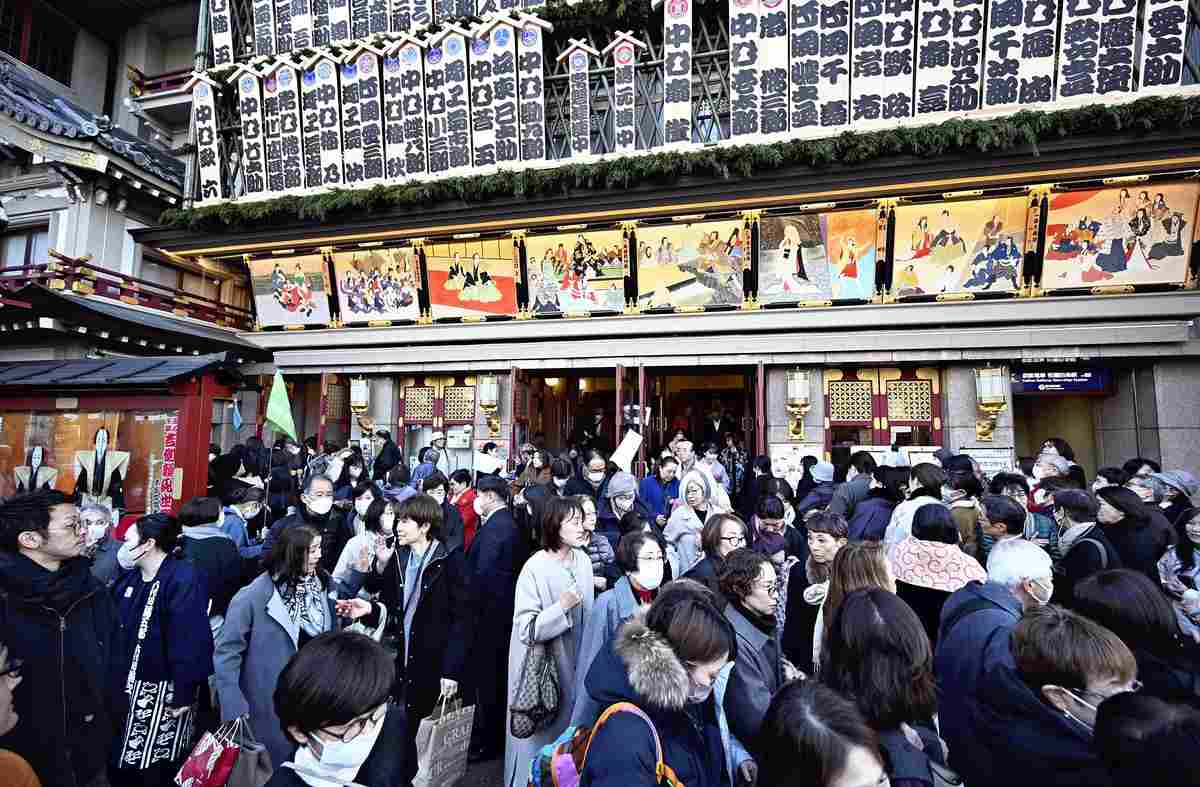
Minamiza Theatre is seen crowded in Higashiyama Ward, Kyoto, on Dec. 16. Many kabuki-goers are young women.
2:00 JST, January 6, 2026
KYOTO — Last year’s Japanese blockbuster film “Kokuho” has inspired people not only to flock to kabuki theaters but also to start taking lessons in nihonbuyo traditional Japanese dance.
The phenomenon has delighted the classical performing arts industry, which hopes to expand its fan base.
Based on Shuichi Yoshida’s novel and directed by Lee Sang-il, “Kokuho” depicts the life of a man born into a yakuza family who dedicates his life to kabuki alongside a fellow actor, who is the heir to a kabuki family. It has become a massive hit since its release in June 2025, breaking the box office record for a Japanese live-action film.
It has already been released in South Korea and Taiwan and is scheduled to hit theaters in North America this year.
You may also like to read
Film ‘Kokuho’ Screened at Tokyo’s Kabukiza Theatre, Historic Hub for Traditional Art Form ‘Kokuho’ Creates Opening for Japan’s Film Industry with Lavish Depiction of KabukiCreating buzz
In October, the Pontocho Kaburenjo theater in Kyoto’s famous Pontocho alley, which is featured in the film, hosted the annual Suimeikai dance performance. Tickets were sold out for three of the event’s four days, and standing-room tickets, which are usually only sold on the final day, were sold on all days to accommodate demand. Women in their 20s and 30s made up a large portion of the audience.
“We’re feeling the ‘Kokuho’ effect,” the event’s organizer said.
Etsuko Fujima, a master instructor of the Yokohama-based Fujima school of nihonbuyo has received about 10 inquiries for trial lessons from people aged 20s to 50s who said they were “influenced by the movie.” Two of them have started taking lessons.
Fujima, who serves as director of The Nihonbuyo Association in Tokyo, said the movie “has become an excellent opportunity for many people to discover kabuki and nihonbuyo and understand their appeal.”
Interest in live kabuki
The number of people going to see kabuki has also increased. More than 10,000 spectators who attended shows at Tokyo’s Kabukiza Theatre in or after July last year are estimated to have been first-time visitors, according to Shochiku Co.
A backstage tour of Kyoto’s Minamiza Theatre organized between July 26 and Aug. 11 saw all five daily slots fill up within days of opening, prompting the organizer to sell additional slots.
Since the October program, Minamiza has featured “Ninin Fuji Musume” (“Two Wisteria Maidens”) and “Sagi Musume” (“The Heron Maiden”), both of which are seen in “Kokuho.” At the theater, young viewers were observed talking about the play after the curtain fell.
A 29-year-old company employee from Nakagyo Ward, Kyoto, saw kabuki in December for the first time after being inspired by the movie.
“The story [in the kabuki] was fascinating and more enjoyable than I thought,” she said. “Knowing that the techniques being performed right before my eyes have been passed down for centuries made me understand the true power of traditional performing arts.”
A 52-year-old female usher who has worked at Minamiza for about 30 years has witnessed a change in the audience since the film’s release.
“I’ve received inquiries over the phone saying like, ‘This is my first time [watching kabuki]. What should I do?’” she said.
In March, Minamiza plans to stage “Sonezaki Shinju Monogatari” (“The Lovers’ Suicide at Sonezaki”). The performance is based on the classic joruri play “Sonezaki Shinju” (also titled “The Love Suicides at Sonezaki” in English), which is performed in a key scene of “Kokuho.”
Performances on some days are already sold out, thanks to the “Kokuho” craze.







Most Read
Popular articles in the past 24 hours
-

Strait of Hormuz Closure Shakes Markets; Prolonged Closure Could ...
-

Iran Situation: Japan Must Exert Diplomatic Efforts without Merel...
-

Measles Patient Visited Hospital in Bunkyo Ward, Tokyo, Metropoli...
-

Milano Cortina 2026: Japanese Figure Skater Miura Returns to Home...
-

Takayama Among World's Top 10 Most Welcoming Cities for 2026; 2nd...
-

2 of Japan's Opposition Parties Submit Bill to Revise Political F...
-
Chiba Police to Arrest Japanese National in Midair; Man Accused o...
-

Former Nomura Securities Employee Given 18-year Prison Sentence f...
Popular articles in the past week
-

Milano Cortina 2026: Japanese Gold Medalist Figure Skater Miura S...
-
Tokyo Spends Big on Children, Wins Over Parents
-

Japan’s Miura, Kihara Announce Withdrawal from Figure Skating Wor...
-

Yokohama to Test Out Renewable-Powered Offshore Floating Data Cen...
-

BOJ Keeping Eye on Economy and Takaichi's ‘Proactive Fiscal Polic...
-
Tokyo Measles Patient Traveled to Fukuoka Aboard JAL Planes; Susp...
-

Japan’s Takaichi Speaks on New U.S. Tariff in Upper House, Says P...
-

Nidec Chairman Resigns Amid Accounting Scandal at Major Japanese ...
Popular articles in the past month
-

Producer Behind Pop Group XG Arrested for Cocaine Possession
-

Japan PM Takaichi’s Cabinet Resigns en Masse
-

Man Infected with Measles Reportedly Dined at Restaurant in Tokyo...
-

Israeli Ambassador to Japan Speaks about Japan’s Role in the Reco...
-

Videos Plagiarized, Reposted with False Subtitles Claiming ‘Ryuky...
-

Prudential Life Insurance Plans to Fully Compensate for Damages C...
-

Woman with Measles Visited Hospital in Tokyo Multiple Times Befor...
-

iPS Treatments Pass Key Milestone, but Broader Applications Far f...
Top Articles in Culture
-

BTS to Hold Comeback Concert in Seoul on March 21; Popular Boy Band Releases New Album to Signal Return
-

Director Naomi Kawase’s New Film Explores Heart Transplants in Japan, Production Involved Real Patients, Families
-

Tokyo Exhibition Offers Inside Look at Impressionism; 70 of 100 Works on ‘Interiors’ by Monet, Others on Loan from Paris
-
Traditional Japanese Silk Hakama Tradition Preserved by Sole Weaver in Sendai
-

Exhibition Featuring Yoshiharu Tsuge’s Manga World Underway in Chofu, Tokyo; Unique, Surreal Works Draw Steady Crowds
JN ACCESS RANKING
-
Producer Behind Pop Group XG Arrested for Cocaine Possession
-
Japan PM Takaichi’s Cabinet Resigns en Masse
-
Man Infected with Measles Reportedly Dined at Restaurant in Tokyo Station
-
Israeli Ambassador to Japan Speaks about Japan’s Role in the Reconstruction of Gaza
-
Videos Plagiarized, Reposted with False Subtitles Claiming ‘Ryukyu Belongs to China’; Anti-China False Information Also Posted in Japan