
Japan’s CRA, DPFP Skip Council Meeting Over Fears of Blame Should Consumption Tax Cut Talks Fail
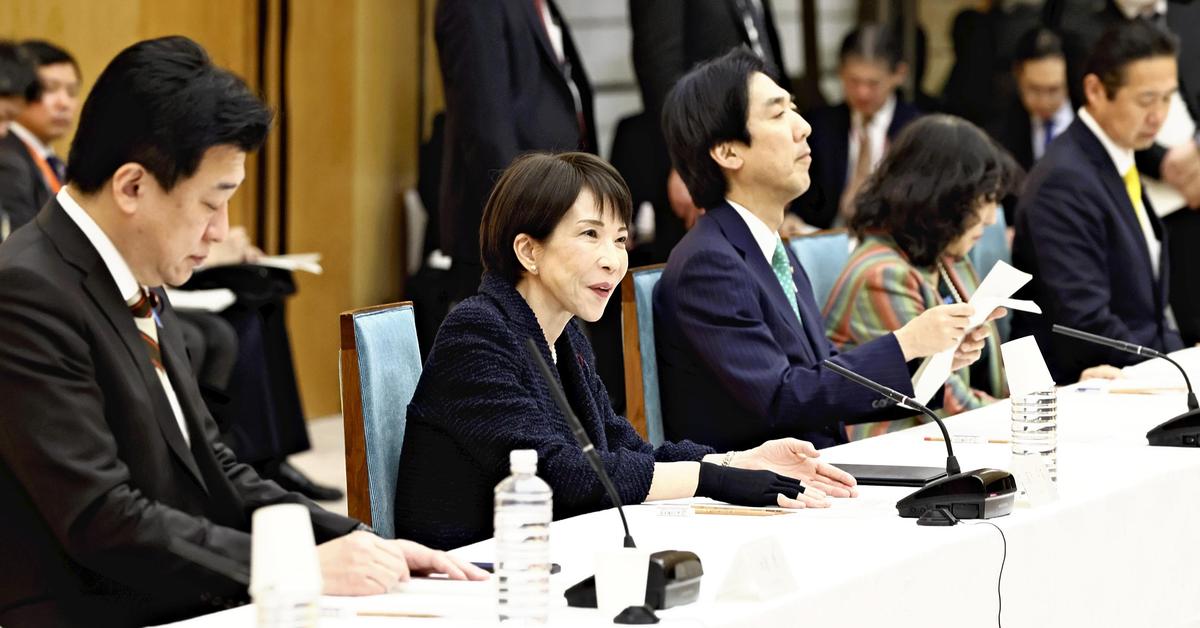
Prime Minister Sanae Takaichi, second from left, speaks during the first meeting of the national council on social security at the Prime Minister’s Office in Tokyo on Thursday.
17:01 JST, February 27, 2026
The Centrist Reform Alliance and the Democratic Party for the People on Thursday did not attend the first meeting of the national council on social security, which is considering measures such as consumption tax cuts.
The parties both made the same decision as they are wary of being blamed should consumption tax cuts fail to materialize. Both parties intend to carefully consider their approach toward future council meetings.
“Unfortunately, we didn’t believe that our participation was likely to lead to reasonable, concrete results,” CRA leader Junya Ogawa told reporters in the Diet building on Thursday, regarding why the party had not attended the meeting.
The CRA supports the introduction of a refundable tax credit system, which combines income tax cuts with benefits, with Ogawa calling its introduction “a goal cherished since the days of the defunct Democratic Party of Japan.” Before the Feb. 8 House of Representatives election, the CRA had shown a positive stance toward participating in the national council, in anticipation that discussions would be focused solely on the refundable tax credit system.
However, when it was reported that the ruling parties would put the issue of eliminating the consumption tax on food items for two years on the agenda for the council meeting, the CRA was immediately wary.
Opposition parties take different stances on the consumption tax. The CRA has called for zero consumption tax on food items, while the DPFP has sought the tax to be uniformly cut to 5%. Team Mirai has voiced opposition to the idea.
“What kind of agreement are they aiming for by gathering parties with such different ideas, ideologies and backgrounds?” Ogawa said.
Motohisa Furukawa, the DPFP’s Diet affairs chief, called for clarifying the nature of the council. “Once it is decided how discussions will proceed over the refundable tax credit with benefits, we want to actively participate in the council,” he told reporters on Thursday. The DPFP, which like the CRA traces its roots to the DPJ, holds a similar position.
During interpellations by party leaders in the lower house on Wednesday, DPFP leader Yuichiro Tamaki raised 10 points of concern regarding consumption tax cuts, such as measures related to the restaurant industry and the securing of new funding sources. Furukawa demanded the government and ruling parties clarify their stance on these issues.
In her policy speech on Feb. 20, Prime Minister Sanae Takaichi stressed, “If we can obtain cooperation from the opposition parties, we will compile an interim summary [on consumption tax cuts] before summer.”
Some DPFP members have expressed caution on this, with one saying: “This stance indicates her intention to shift the blame onto the opposition parties. We can’t fall into this trap.”
Among the opposition camp, there has been strong backlash after the government invited only certain opposition parties to participate in the council. After a lower house plenary session, Sohei Kamiya, leader of Sanseito, which advocates for the abolition of the consumption tax and was not invited to the council, criticized the government, telling reporters, “They say they will listen to other parties, but this is an approach to steer the discussion in their desired direction.”


Related Tags




Most Read
Popular articles in the past 24 hours
-
BOJ Keeping Eye on Economy and Takaichi's ‘Proactive Fiscal Polic...
-

University of Tsukuba Hospital to Introduce Working Dog Next Year...
-
Record 167 Elementary School Students Harmed Via Social Media in ...
-

Japan’s Hikonyan Cat Mascot to Celebrate 20th Birthday with Party...
-

Japan's Kairos Rocket Set to Launch on Sunday After Delays
-

Humbert Humbert: Husband-Wife Vocal Duo Brings Cheerful Singing t...
-
Nidec Chairman Resigns Amid Accounting Scandal at Major Japanese ...
-

Mizuho to Cut Up to 5,000 Administrative Jobs with AI-Driven Oper...
Popular articles in the past week
-

Producer Behind Pop Group XG Arrested for Cocaine Possession
-

iPS Treatments Pass Key Milestone, but Broader Applications Far f...
-

Tokyo Skytree's Elevator Stops, Trapping 20 People; All Rescued (...
-

Nepal Bus Crash Kills 19 People, Injures 25 Including One Japanes...
-
Milano Cortina 2026: Japanese Gold Medalist Figure Skater Miura S...
-

Japan’s Major Real Estate Firms Expanding Overseas Businesses to ...
-

Milano Cortina 2026: Japanese Figure Skater Kaori Sakamoto’...
-

Reciprocal Tariffs Ruled Illegal: Judiciary Would Not Tolerate Pr...
Popular articles in the past month
-
Producer Behind Pop Group XG Arrested for Cocaine Possession
-

Japan PM Takaichi’s Cabinet Resigns en Masse
-

Japan Institute to Use Domestic Commercial Optical Lattice Clock ...
-

Man Infected with Measles Reportedly Dined at Restaurant in Tokyo...
-

Israeli Ambassador to Japan Speaks about Japan’s Role in the Reco...
-

Videos Plagiarized, Reposted with False Subtitles Claiming ‘Ryuky...
-

Man Infected with Measles May Have Come in Contact with Many Peop...
-

Prudential Life Insurance Plans to Fully Compensate for Damages C...
Top Articles in Politics
-
Japan PM Takaichi’s Cabinet Resigns en Masse
-

Sanae Takaichi Elected Prime Minister of Japan; Keeps All Cabinet Appointees from Previous Term
-

Japan’s Govt to Submit Road Map for Growth Strategy in March, PM Takaichi to Announce in Upcoming Policy Speech
-

LDP Wins Historic Landslide Victory
-

LDP Wins Landslide Victory, Secures Single-party Majority; Ruling Coalition with JIP Poised to Secure Over 300 seats (UPDATE 1)
JN ACCESS RANKING
-
Producer Behind Pop Group XG Arrested for Cocaine Possession
-
Japan PM Takaichi’s Cabinet Resigns en Masse
-
Man Infected with Measles Reportedly Dined at Restaurant in Tokyo Station
-
Israeli Ambassador to Japan Speaks about Japan’s Role in the Reconstruction of Gaza
-
Videos Plagiarized, Reposted with False Subtitles Claiming ‘Ryukyu Belongs to China’; Anti-China False Information Also Posted in Japan