
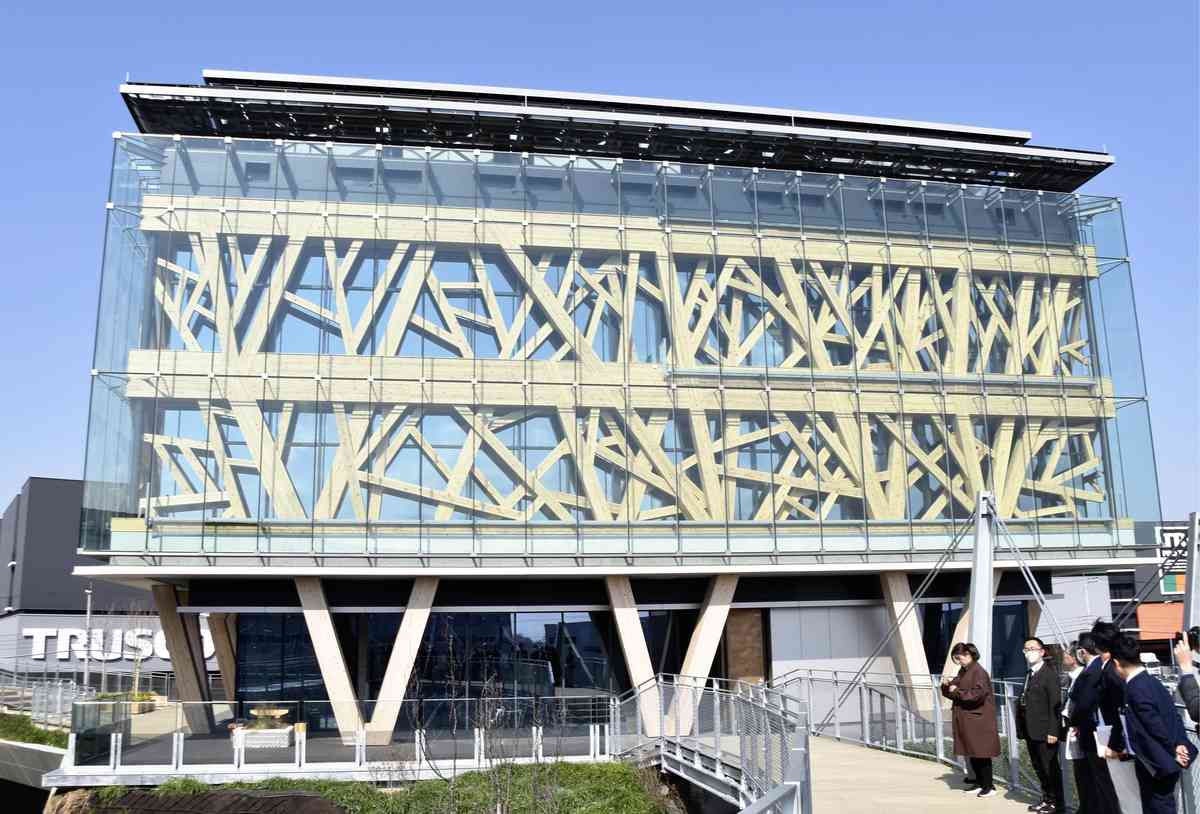
A “zero-carbon building” of Taisei Corp. is seen in Satte, Saitama Prefecture, on Monday.
15:46 JST, February 17, 2026
Taisei Corp. unveiled a building on Monday that can practically achieve net-zero carbon dioxide emissions, including throughout all construction and demolition processes. The “zero-carbon building” built in Satte, Saitama Prefecture, can also address CO2 emissions that come from building materials.
Taisei aims to promote its decarbonization technologies used in the building to attract more customers and increase orders for construction.
The company constructed the four-story building at its research facility in Satte as a hub for decarbonization technology research. According to Taisei, this marks Japan’s first zero-carbon building.
Taisei constructed the building using steel materials made from iron frames, which were collected from demolished buildings and recycled in electric furnaces, as well as concrete that produces low CO2 emissions during manufacturing. The third and fourth floors are made of wood.
Buildings that generate electricity through solar power and other means and consume practically no energy when they are in use are known as Net Zero Energy Buildings.
Zero-carbon buildings, meanwhile, can achieve net-zero CO2 emissions throughout their entire life cycle, including construction and demolition. However, they are said to be significantly more expensive than conventional reinforced concrete buildings.







Most Read
Popular articles in the past 24 hours
-

Milano Cortina 2026: Figure Skaters Riku Miura, Ryuichi Kihara Pa...
-

Young People in Japan Grapple with Social Media Addiction
-
Ruling Coalition Calls for Opposition Participation in ‘National ...
-

Japan’s Updated ‘Free and Open Indo-Pacific’ Initiative to Streng...
-
Takaichi Chats with Tunku Tunku, Interactive Mascot for Internati...
-

Myaku-Myaku Fan Event Held in Osaka; ‘Its Butt is so Cute!’ Says ...
-

Japan’s Nikkei Stock Average Slips as Post-Earnings and Election ...
-

Milano Cortina 2026: Riku Miura and Ryuichi Kihara Win Japan̵...
Popular articles in the past week
-

Videos Plagiarized, Reposted with False Subtitles Claiming ‘Ryuky...
-

Woman with No Overseas Travel History Infected with Measles in Na...
-

Milano Cortina 2026: Kokomo Murase Comes Out on Top After Overcom...
-
CRA Leadership Election Will Center on Party Rebuilding; Lower Ho...
-
Tokyo’s New Record-Breaking Fountain Named ‘Tokyo Aqua Symphony’
-
Crime in Japan Ticks Up for 4th Straight Year
-

Japanese Constitutional Revision Debate Expected to be Revived Af...
-
Milano Cortina 2026: Figure Skaters Riku Miura, Ryuichi Kihara Pa...
Popular articles in the past month
-

Japan Institute to Use Domestic Commercial Optical Lattice Clock ...
-

Israeli Ambassador to Japan Speaks about Japan’s Role in the Reco...
-

Man Infected with Measles May Have Come in Contact with Many Peop...
-

China Eyes Rare Earth Foothold in Malaysia to Maintain Dominance,...
-

Prudential Life Insurance Plans to Fully Compensate for Damages C...
-

Woman with Measles Visited Hospital in Tokyo Multiple Times Befor...
-
Australian Woman Dies After Mishap on Ski Lift in Nagano Prefectu...
-
Foreign Snowboarder in Serious Condition After Hanging in Midair ...
Top Articles in Business
-
Prudential Life Insurance Plans to Fully Compensate for Damages Caused by Fraudulent Actions Without Waiting for Third-Party Committee Review
-
Narita Airport, Startup in Japan Demonstrate Machine to Compress Clothes for Tourists to Prevent People from Abandoning Suitcases
-
JR Tokai, Shizuoka Pref. Agree on Water Resources for Maglev Train Construction
-

KDDI Opens AI Data Center at Former Sharp Plant in Osaka Prefecture; Facility Will Provide Google’s Gemini AI Model for Domestic Users
-

Toyota Motor Group Firm to Sell Clean Energy Greenhouses for Strawberries
JN ACCESS RANKING
-
Japan Institute to Use Domestic Commercial Optical Lattice Clock to Set Japan Standard Time
-
Israeli Ambassador to Japan Speaks about Japan’s Role in the Reconstruction of Gaza
-
Man Infected with Measles May Have Come in Contact with Many People in Tokyo, Went to Store, Restaurant Around When Symptoms Emerged
-
Prudential Life Insurance Plans to Fully Compensate for Damages Caused by Fraudulent Actions Without Waiting for Third-Party Committee Review
-
Woman with Measles Visited Hospital in Tokyo Multiple Times Before Being Diagnosed with Disease