
Japan Prime Minister Takaichi Announces Mulling No Consumption Tax on Food Items for 2 Years
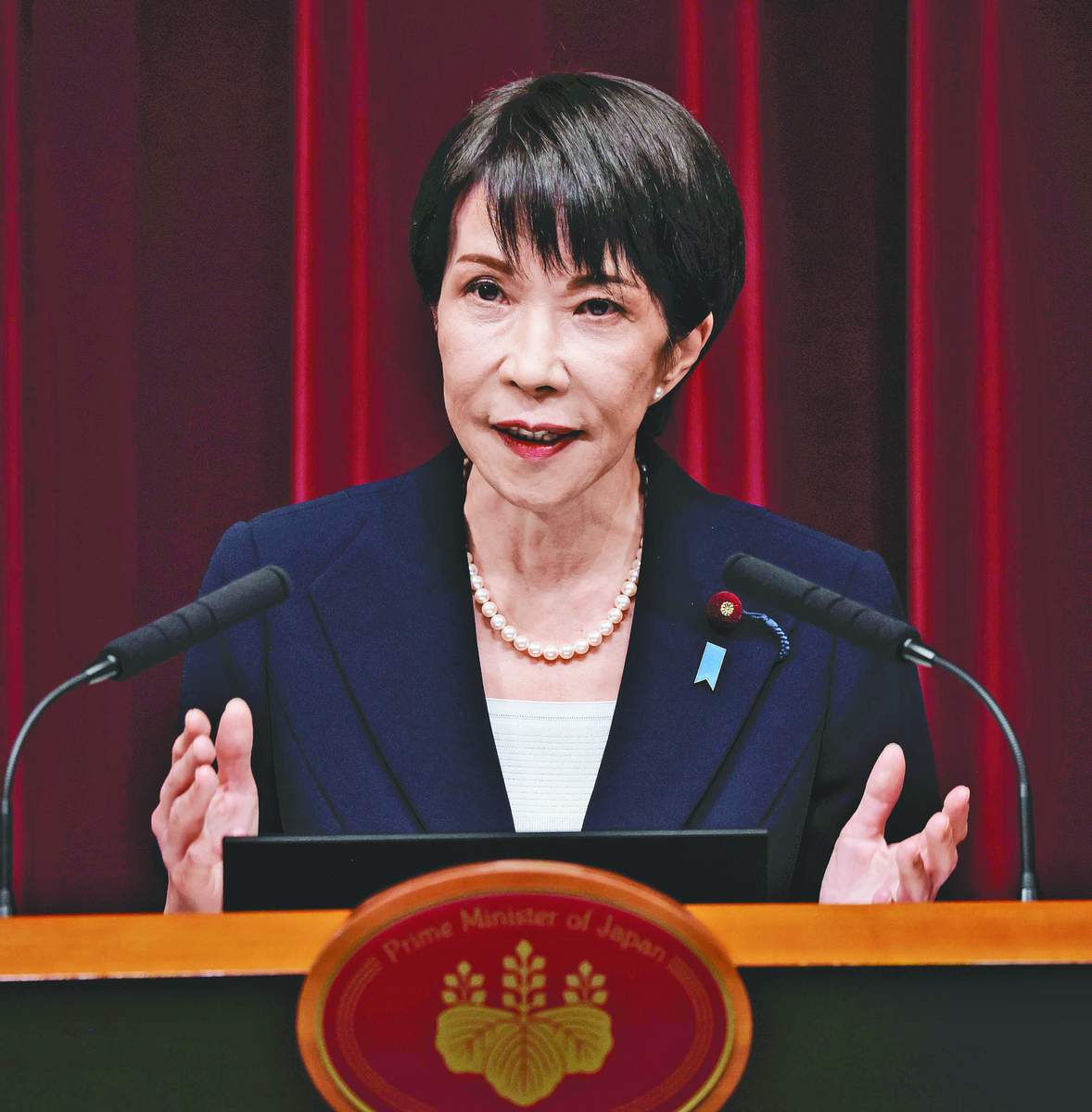
Prime Minister Sanae Takaichi
14:54 JST, January 20, 2026
Prime Minister Sanae Takaichi said at a press conference Monday that she would speed up consideration of a measure to suspend the consumption tax rate on food items for a limited two year period.
It seems that Takaichi, also president of the Liberal Democratic Party, aims to prevent consumption taxes from becoming a point of contention in the upcoming general election, as all of the opposition parties advocate for consumption tax rates to be reduced or abolished.
Takaichi stated that a supra-partisan “national council” for social security reforms, which she plans to establish after the election, will “accelerate discussions on how to achieve [the consumption tax cut], including funding sources and scheduling.”
The coalition agreement signed by the LDP and the Japan Innovation Party last October had only stated that they would “hold discussions for legislative action, including eyeing an option in which [food] will not be subjected to the consumption tax for a limited period of two years.”
The prime minister’s announcement is widely seen as a countermeasure against opposition parties. The Centrist Reform Alliance, a new party formed by the Constitutional Democratic Party of Japan and Komeito, vowed to permanently eliminate the consumption tax on food items in its policy platform announced Monday. Reducing the consumption tax was also a key pillar of the CDPJ and some other opposition parties proposed measures to combat rising prices during campaigning for last summer’s House of Councillors election.
Measures against rising prices are a major public concern. A mid-ranking LDP member said, “The prime minister likely thought that insufficient action could lead to losing support to the opposition parties.”
However, consumption tax revenue is designated for social security funding, and within the LDP, many are deeply cautious about consumption tax cuts.
At the press conference, Takaichi emphasized twice that she will consider how to cover the drop in tax revenue “without relying on special public bonds” or deficit-covering government bonds. She also presented the idea of linking the consumption tax debate with the introduction of a refundable tax credit system, which major opposition parties support.
“The two-year period will serve as a stopgap measure until a refundable tax credit system is introduced,” said a source close to Takaichi


Related Tags



Most Read
Popular articles in the past 24 hours
-

Strait of Hormuz Closure Shakes Markets; Prolonged Closure Could ...
-

Iran Situation: Japan Must Exert Diplomatic Efforts without Merel...
-
Measles Patient Visited Hospital in Bunkyo Ward, Tokyo, Metropoli...
-
Milano Cortina 2026: Japanese Figure Skater Miura Returns to Home...
-

Takayama Among World's Top 10 Most Welcoming Cities for 2026; 2nd...
-
2 of Japan's Opposition Parties Submit Bill to Revise Political F...
-
Chiba Police to Arrest Japanese National in Midair; Man Accused o...
-
Former Nomura Securities Employee Given 18-year Prison Sentence f...
Popular articles in the past week
-
Milano Cortina 2026: Japanese Gold Medalist Figure Skater Miura S...
-
Tokyo Spends Big on Children, Wins Over Parents
-
Japan’s Miura, Kihara Announce Withdrawal from Figure Skating Wor...
-

Yokohama to Test Out Renewable-Powered Offshore Floating Data Cen...
-
BOJ Keeping Eye on Economy and Takaichi's ‘Proactive Fiscal Polic...
-
Tokyo Measles Patient Traveled to Fukuoka Aboard JAL Planes; Susp...
-
Japan’s Takaichi Speaks on New U.S. Tariff in Upper House, Says P...
-
Nidec Chairman Resigns Amid Accounting Scandal at Major Japanese ...
Popular articles in the past month
-

Producer Behind Pop Group XG Arrested for Cocaine Possession
-

Japan PM Takaichi’s Cabinet Resigns en Masse
-

Man Infected with Measles Reportedly Dined at Restaurant in Tokyo...
-

Israeli Ambassador to Japan Speaks about Japan’s Role in the Reco...
-

Videos Plagiarized, Reposted with False Subtitles Claiming ‘Ryuky...
-

Prudential Life Insurance Plans to Fully Compensate for Damages C...
-

Woman with Measles Visited Hospital in Tokyo Multiple Times Befor...
-

iPS Treatments Pass Key Milestone, but Broader Applications Far f...
Top Articles in Politics
-
Japan PM Takaichi’s Cabinet Resigns en Masse
-

Sanae Takaichi Elected Prime Minister of Japan; Keeps All Cabinet Appointees from Previous Term
-

Japan’s Govt to Submit Road Map for Growth Strategy in March, PM Takaichi to Announce in Upcoming Policy Speech
-

LDP Wins Landslide Victory, Secures Single-party Majority; Ruling Coalition with JIP Poised to Secure Over 300 seats (UPDATE 1)
-

LDP Wins Historic Landslide Victory
JN ACCESS RANKING
-
Producer Behind Pop Group XG Arrested for Cocaine Possession
-
Japan PM Takaichi’s Cabinet Resigns en Masse
-
Man Infected with Measles Reportedly Dined at Restaurant in Tokyo Station
-
Israeli Ambassador to Japan Speaks about Japan’s Role in the Reconstruction of Gaza
-
Videos Plagiarized, Reposted with False Subtitles Claiming ‘Ryukyu Belongs to China’; Anti-China False Information Also Posted in Japan