
Japan Seeks to Enhance Defense Capabilities in Pacific as 3 National Security Documents to Be Revised
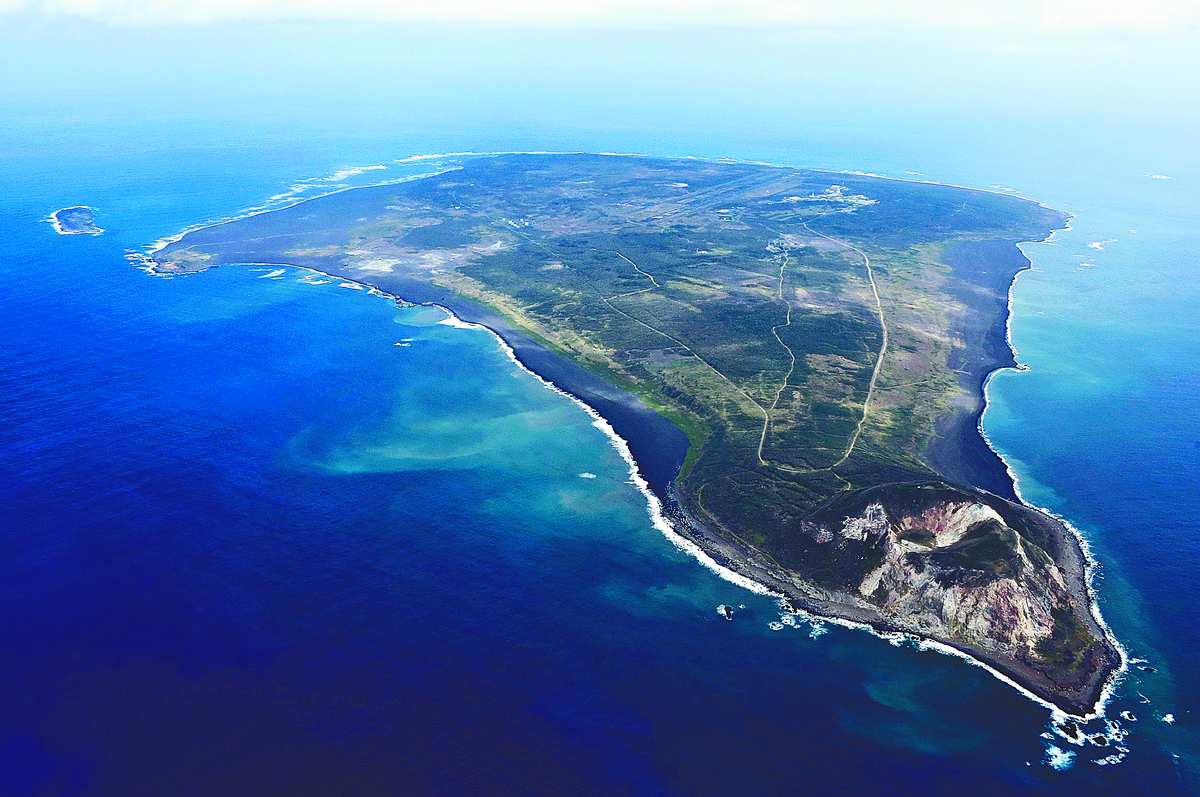
Ioto Island is seen from a Yomiuri Shimbun plane.
17:19 JST, January 11, 2026
The government plans to present the goal of enhancing defense capabilities in the Pacific Ocean as one of the pillars of the three security documents to be revised this year, according to government sources.
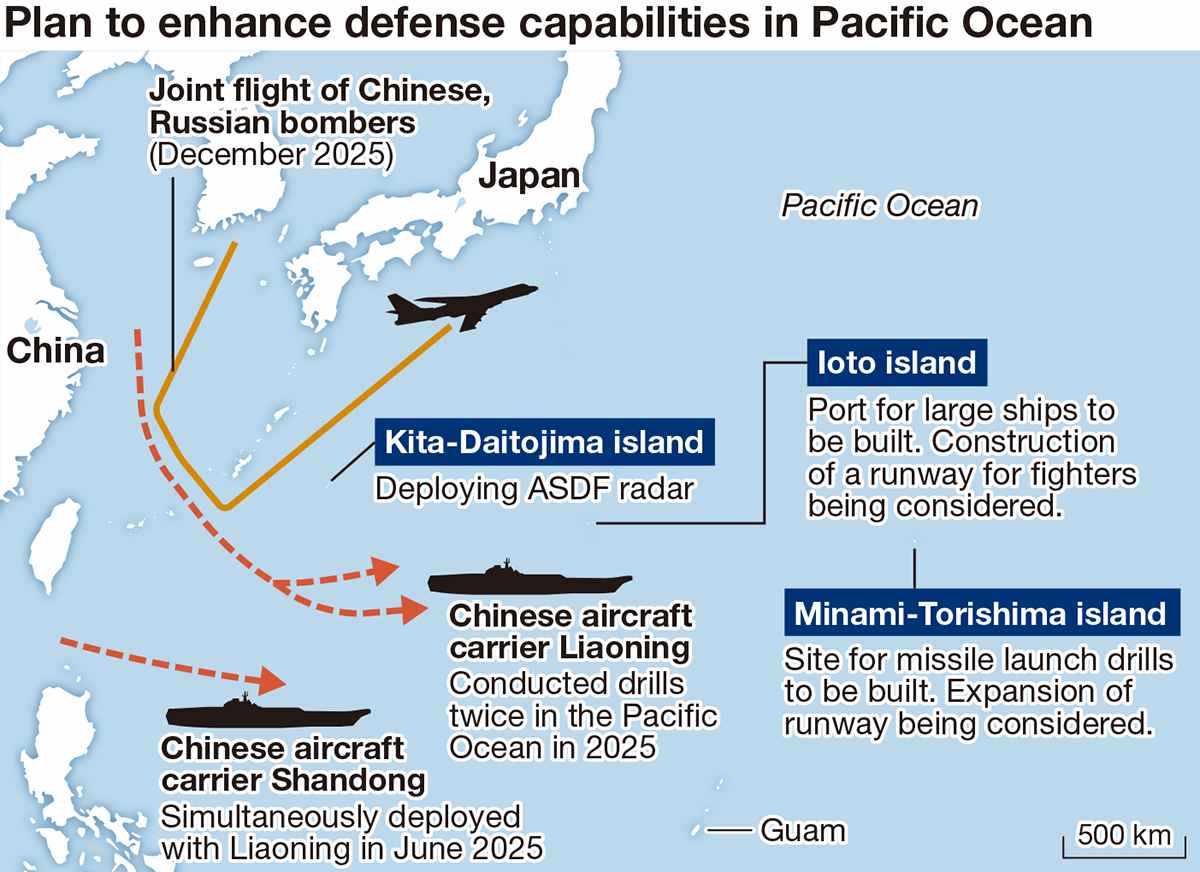
To allow the Self-Defense Forces to act in wider areas of the Pacific Ocean, the government intends to mention the need to build or improve ports, runways and networks of warning and surveillance radar.
The Chinese military has been increasingly active in the Pacific Ocean, which would be an important route for U.S. forces to deploy around Japan and Taiwan, so the government aims to raise the joint countering capabilities of Japan and the United States.
The three documents are the National Security Strategy of Japan, which is a guideline for defense policy; the National Defense Strategy, which indicates goals and measures to achieve them; and the Defense Buildup Program, which stipulates policies for the procurement of defense equipment and the total budget for the purpose.
The government is coordinating opinions, with the aim of stipulating in the Defense Buildup Program the enhancement of defense capabilities in the Pacific Ocean.
Prior to the revision of the three documents, the Defense Ministry newly established an office for the Pacific Ocean defense initiative, to begin full-fledged consideration of practical measures for enhancing defense capabilities in the Pacific Ocean.
The ministry will launch such measures as research for building a port next fiscal year on Tokyo’s Ioto island, also known as Iwo Jima in the United States.
Ioto island is located midway between the Izu Islands and Guam, where U.S. forces have bases, and on the Second Island Chain, which China regards as a strategic military defense line. Members of the Maritime Self-Defense Force and some other government officials are permanently stationed on the island.
Shallow waters extend along the coasts of the island, so large ships can not berth at the shores. By building piers on the shores, the government aims to raise the SDF’s transportation capabilities.
The government will also conduct experiments for building a concrete-made runway in a place which could upheave due to crustal changes.
A government source describes the location of the island as “out of the range of Chinese short-distance ballistic missiles.” Utilizing the geographical advantage, the government aims for stable operations of fighter jets.
On Kita-Daitojima island in Okinawa Prefecture, the government will accelerate a plan to deploy the Air Self-Defense Force’s mobile warning and surveillance radar units.
Tokyo’s Minami-Torishima island, which is the easternmost island of Japan, is important also from the perspective of economic security, because the existence of rare earths was confirmed under the seabed around it.
The government plans to build a test field for long-range missile launches and expand a runway on the island.
The operation of advanced stealth fighters on MSDF vessels that are being modified to have functions of aircraft carriers are also key to improving air defense capabilities.
Japan has built radar networks mainly in the side of the Sea of Japan focusing on North Korea’s missiles.
Therefore, the Pacific Ocean side is called “a vacuum of warning and surveillance.” In the Pacific Ocean, the Chinese military has made remarkable advancements and has become a new threat for Japan.
In June last year, the Chinese military deployed two aircraft carriers simultaneously for the first time. In December, Chinese carrier-borne fighters directed radar toward Air Self-Defense Force aircraft, and Chinese and Russian bombers jointly conducted flights in the direction of Tokyo.
China is hurriedly preparing to project its military power in the Pacific Ocean to prevent U.S. forces from approaching to Taiwan through the Pacific Ocean if a contingency occurs in or around Taiwan.
Improving the SDF’s surveillance capabilities can lead to strengthening deterrence power of the Japan-U.S. alliance.
Defending the Nansei Islands is also important to policies related to China. According to a senior Defense Ministry official, “a remarkable amount of budget and number of personnel are necessary.”



Most Read
Most read in the last 24 hours
-

Tohoku, Hokkaido Tourist Sites Prepare to Evacuate Visitors in Ca...
-

India's Arms Indigenization Quest for Self-Reliance / Desert Dril...
-
26-year-old U.S. National Falls While Climbing Mt. Fuji; Accompan...
-
Japan Passport Fees Going Down to ¥9,000 in July
-

Japanese Side Machida Zelvia Faces Ah-Ahli in Asian Champions Lea...
-
Japan Eyes Trialing Dual-Use Tech Developed by Startups to Promot...
-

Transfer of Defense Equipment: Increase the Number of Like-minded...
-

Charm of Meiji-Era Poet Takuboku Examined from Viewpoint of Donal...
Most read in the last 7 days
-
Earthquake Hits Japan's Tohoku Region; 3-meter Tsunami Warning Is...
-

Trump Extends the Ceasefire with Iran but Keeps the Blockade
-

China, South Korea Object to Japanese PM Takaichi's Ritual Offeri...
-

India's Arms Indigenization Quest for Self-Reliance / New Delhi S...
-

Japan to Ban Use of Portable Chargers on Airplanes from April 24,...
-

¥1,000 Coins to Be Issued to Mark Anniversary of Beginning of Jap...
-

Most Serious Cyberattacks against the UK Now from Russia, Iran an...
-

New Challenges Await as Miura-Kihara Retires; Blade Maker, Ex-Coa...
Most read in the last 30 days
-
Earthquake Hits Japan's Tohoku Region; 3-meter Tsunami Warning Is...
-
Police Find Child's Shoe During Search for Missing Boy in Nantan,...
-
Body Found in Nantan, Kyoto Prefecture, During Search for 11-Year...
-
Cherry Blossoms, Rapeseed Flowers Perform Colorful ‘Duet’ in Niig...
-
Trump Extends the Ceasefire with Iran but Keeps the Blockade
-

Olympic Gold Medal-Winning Figure Skaters Riku-Ryu Announce Retir...
-
Nori Prices Surge in Japan Due to Poor Seaweed Production Amid Ri...
-

Japanese Prime Minister Takaichi Speaks to Pakistani Prime Minist...
Top Articles in Politics
-
India’s Arms Indigenization Quest for Self-Reliance / New Delhi Sticks to Its ‘All-Alignment’ Guns Even after Iran Warship Attack
-
Japan Aims to Enhance Deterrence, Defense Industry by Allowing Exports of Weapons
-

Former Japan PM Murayama’s Farewell Ceremony Held; Former Deputy PM Kono Vows to ‘Carry on Path Toward Peace’
-

Ritsumeikan Asia Pacific University Stripped of Certification for Simplified Visa Procedures Due to Document Failure
-

Japan’s PM Takaichi Seeks to Advance Policies Bearing Her Own ‘Color,’ Eyes Amending Constitution, Building Strong Economy
JN ACCESS RANKING
-
Earthquake Hits Japan’s Tohoku Region; 3-meter Tsunami Warning Issued (Update 1)
-
Police Find Child’s Shoe During Search for Missing Boy in Nantan, Kyoto Prefecture
-
Body Found in Nantan, Kyoto Prefecture, During Search for 11-Year-Old Boy in Area (Update 1)
-
Cherry Blossoms, Rapeseed Flowers Perform Colorful ‘Duet’ in Niigata
-
Trump Extends the Ceasefire with Iran but Keeps the Blockade
Most read in the last 24 hours
-
Tohoku, Hokkaido Tourist Sites Prepare to Evacuate Visitors in Ca...
-
India's Arms Indigenization Quest for Self-Reliance / Desert Dril...
-
26-year-old U.S. National Falls While Climbing Mt. Fuji; Accompan...
-
Japan Passport Fees Going Down to ¥9,000 in July
-
Japanese Side Machida Zelvia Faces Ah-Ahli in Asian Champions Lea...
Most read in the last 7 days
-
Earthquake Hits Japan's Tohoku Region; 3-meter Tsunami Warning Is...
-
Trump Extends the Ceasefire with Iran but Keeps the Blockade
-
China, South Korea Object to Japanese PM Takaichi's Ritual Offeri...
-
India's Arms Indigenization Quest for Self-Reliance / New Delhi S...
-
Japan to Ban Use of Portable Chargers on Airplanes from April 24,...
Most read in the last 30 days
-
Earthquake Hits Japan's Tohoku Region; 3-meter Tsunami Warning Is...
-
Police Find Child's Shoe During Search for Missing Boy in Nantan,...
-
Body Found in Nantan, Kyoto Prefecture, During Search for 11-Year...
-
Cherry Blossoms, Rapeseed Flowers Perform Colorful ‘Duet’ in Niig...
-
Trump Extends the Ceasefire with Iran but Keeps the Blockade