
Beppu, Yufuin Team Up to Create World’s Top Onsen Area; Rival Cities Will Cooperate to Boost Guest Spending, Increase Kyushu Tourism
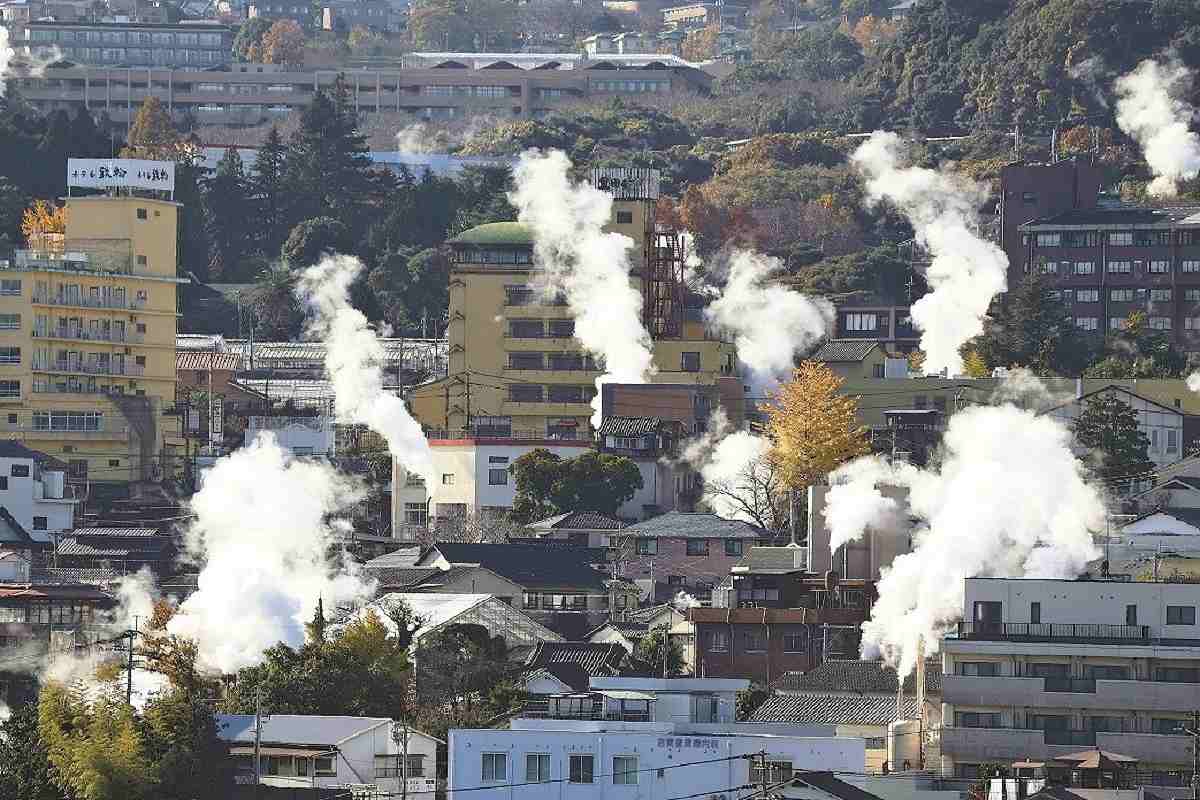
Plumes of steam rise from onsen hot springs in Beppu, Oita Prefecture, on Dec. 6.
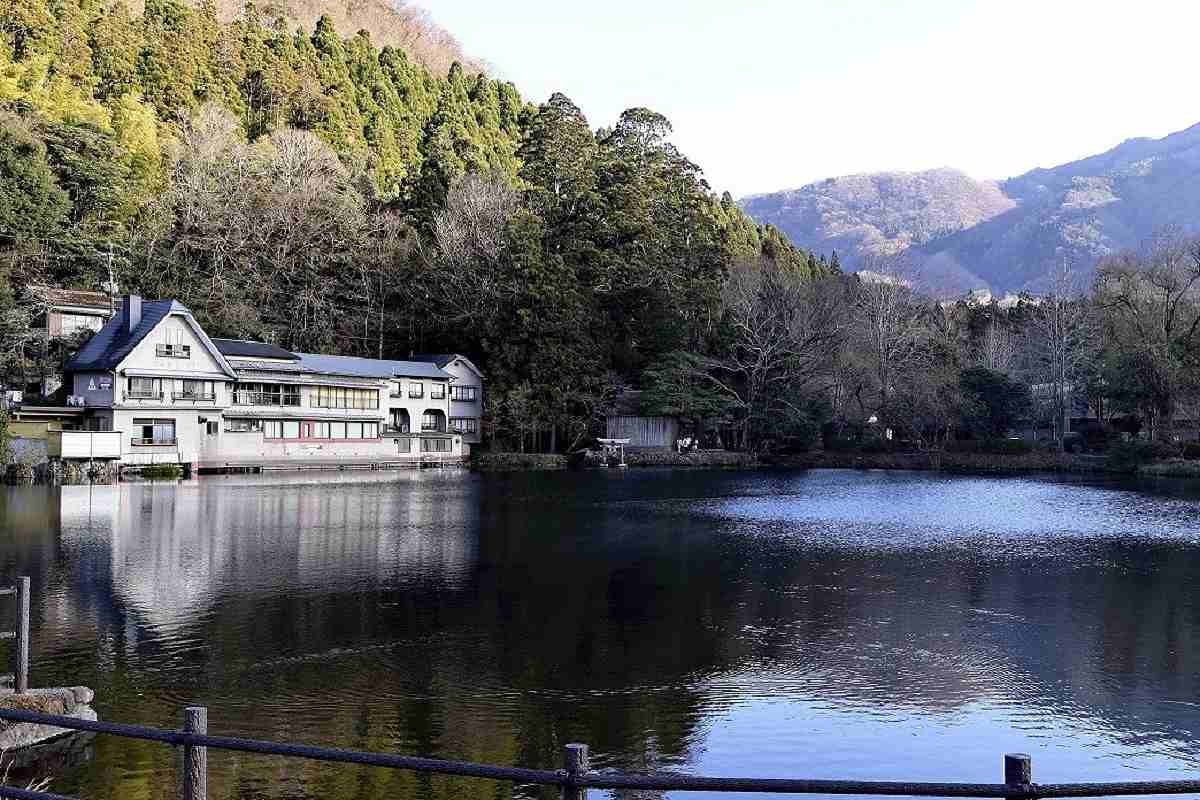
Lake Kinrin, popular with tourists, is seen in Yufu, Oita Prefecture, on Monday.
7:00 JST, December 18, 2025
OITA – Two cities in Oita Prefecture known for their onsen hot spring resorts have agreed to form a partnership aiming to develop the region into the world’s top area for onsen tourism. Beppu City, home to Beppu Onsen, and Yufu City, home to Yufuin Onsen, have apparently overcome their longstanding rivalry to reach the agreement, which was announced on Tuesday and is scheduled to be signed on Dec. 23.
Through joint promotional efforts, the two cities aim to strengthen their appeal to both domestic tourists from the Tokyo metropolitan area and visitors from overseas, and to encourage guests to tour other parts of Kyushu as well.
Beppu first became a major tourist destination thanks to the efforts of entrepreneur Kumahachi Aburaya (1863-1935). It features eight distinct hot spring areas, collectively known as the Beppu Hatto, allowing visitors to enjoy a diverse array of water types.
Meanwhile, Yufuin Onsen, in Yufu, is known for its tranquil atmosphere rich in nature. Although the two cities are geographically adjacent, they each have their own personalities and have long competed with each other for popularity.
In a list of Japan’s most popular onsens, released on Dec. 10 by the Jalan Research Center, operated by Recruit Co., Beppu Onsen ranked second and Yufuin Onsen ranked fifth.
The two popular hot spring destinations have some common challenges: visitors tend to come for short stays, and resorts have difficulty increasing per-guest spending. According to 2019 data on municipalities with famous hot springs, compiled by the Kyushu Economic Research Center, the average length of stay was 1.09 nights for Beppu and 1.11 nights for Yufu, both below the national average of 1.27 nights.
To address these challenges, the cities aim to jointly promote an image of themselves as refreshing retreats for both body and mind, aiming to encourage guests to stay for longer. They also plan to improve their messaging targeted at residents of densely populated Tokyo metropolitan area and affluent people overseas and to strengthen public transportation links between the two cities. They plan to discuss specific details for collaboration.
“We want to attract global demand and lay a foundation that will support wide-area tourism,” Beppu Mayor Yasuhiro Nagano said.
Yufu Mayor Takashige Soma said, “We aim to contribute to enhancing economic ripple effects across all of Kyushu.”






Most Read
Most read in the last 24 hours
-

India's Arms Indigenization Quest for Self-Reliance / New Delhi S...
-

Bonds between Iran, Kikaijima Shine as Concerns Rise over Iranian...
-

Most Serious Cyberattacks against the UK Now from Russia, Iran an...
-

Iran Fires on 3 Ships in the Strait of Hormuz as US Maintains Blo...
-

Trump Envoy Seeks to Replace Iran with Italy in Upcoming World Cu...
-

EU Close to Approving a $106B Loan for Ukraine after Months of De...
-

White Sox Rookie Munetaka Murakami Ties MLB Rookie Record with HR...
-

Airline Company Lufthansa Cuts 20,000 Flights as War Squeezes Fue...
Most read in the last 7 days
-
Earthquake Hits Japan's Tohoku Region; 3-meter Tsunami Warning Is...
-

Trump Extends the Ceasefire with Iran but Keeps the Blockade
-

Olympic Gold Medal-Winning Figure Skaters Riku-Ryu Announce Retir...
-

China, South Korea Object to Japanese PM Takaichi's Ritual Offeri...
-

Japan to Ban Use of Portable Chargers on Airplanes from April 24,...
-
India's Arms Indigenization Quest for Self-Reliance / New Delhi S...
-

¥1,000 Coins to Be Issued to Mark Anniversary of Beginning of Jap...
-
New Challenges Await as Miura-Kihara Retires; Blade Maker, Ex-Coa...
Most read in the last 30 days
-
Earthquake Hits Japan's Tohoku Region; 3-meter Tsunami Warning Is...
-
Police Find Child's Shoe During Search for Missing Boy in Nantan,...
-
Body Found in Nantan, Kyoto Prefecture, During Search for 11-Year...
-
Cherry Blossoms, Rapeseed Flowers Perform Colorful ‘Duet’ in Niig...
-
Trump Extends the Ceasefire with Iran but Keeps the Blockade
-
Olympic Gold Medal-Winning Figure Skaters Riku-Ryu Announce Retir...
-
Nori Prices Surge in Japan Due to Poor Seaweed Production Amid Ri...
-
Japanese Prime Minister Takaichi Speaks to Pakistani Prime Minist...
Top Articles in Features
-
Cherry Blossoms in Full Bloom Draw Crowds in Sendai, Miyagi Pref.; Aquarium Creates Underwater ‘Cherry Blossom Viewing’ Show
-
Cherry Blossom Viewing Season at Peak in Japan’s Kanazawa
-
Cherry Blossoms, Tulips, Snow-Capped Peaks Create Picturesque Scene in Toyama Pref., Japan
-
Cherry Blossom Viewers Enjoy Picnic Under the Trees in Full Bloom in Famous Osaka Spot
-
Cherry Blossom View in Front of Shinkansen Bullet Trains Attracting Visitors in Nagasaki Pref.
JN ACCESS RANKING
-
Earthquake Hits Japan’s Tohoku Region; 3-meter Tsunami Warning Issued (Update 1)
-
Police Find Child’s Shoe During Search for Missing Boy in Nantan, Kyoto Prefecture
-
Body Found in Nantan, Kyoto Prefecture, During Search for 11-Year-Old Boy in Area (Update 1)
-
Cherry Blossoms, Rapeseed Flowers Perform Colorful ‘Duet’ in Niigata
-
Trump Extends the Ceasefire with Iran but Keeps the Blockade
Most read in the last 24 hours
-
India's Arms Indigenization Quest for Self-Reliance / New Delhi S...
-
Bonds between Iran, Kikaijima Shine as Concerns Rise over Iranian...
-
Most Serious Cyberattacks against the UK Now from Russia, Iran an...
-
Iran Fires on 3 Ships in the Strait of Hormuz as US Maintains Blo...
-
Trump Envoy Seeks to Replace Iran with Italy in Upcoming World Cu...
Most read in the last 7 days
-
Earthquake Hits Japan's Tohoku Region; 3-meter Tsunami Warning Is...
-
Trump Extends the Ceasefire with Iran but Keeps the Blockade
-
Olympic Gold Medal-Winning Figure Skaters Riku-Ryu Announce Retir...
-
China, South Korea Object to Japanese PM Takaichi's Ritual Offeri...
-
Japan to Ban Use of Portable Chargers on Airplanes from April 24,...
Most read in the last 30 days
-
Earthquake Hits Japan's Tohoku Region; 3-meter Tsunami Warning Is...
-
Police Find Child's Shoe During Search for Missing Boy in Nantan,...
-
Body Found in Nantan, Kyoto Prefecture, During Search for 11-Year...
-
Cherry Blossoms, Rapeseed Flowers Perform Colorful ‘Duet’ in Niig...
-
Trump Extends the Ceasefire with Iran but Keeps the Blockade