
Taiwan Alarmed by China’s AI-Driven Election Interference; Beijing-Based Firm Reportedly Seeks to Shape Political Narratives with False Social Media Accounts
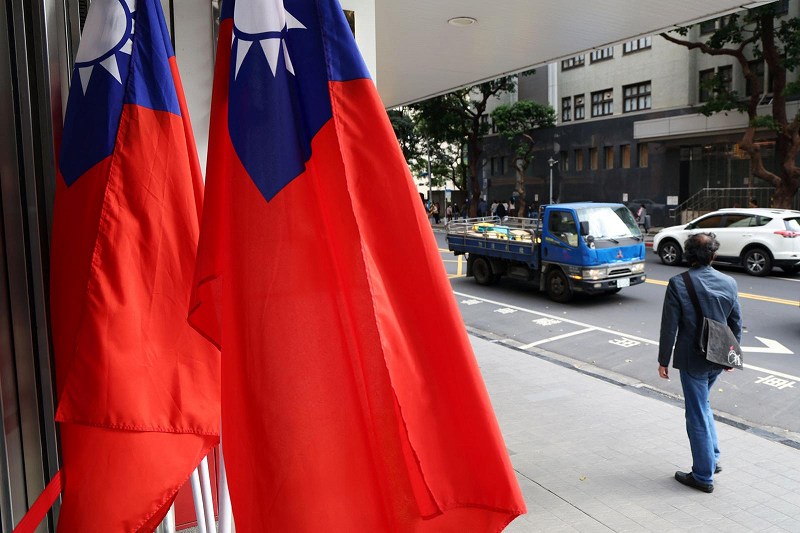
A man walks past Taiwan flags on a street in Taipei on Dec. 29.
7:01 JST, January 7, 2026
With island-wide local elections approaching this year and a presidential election in 2028, Taiwan President Lai Ching-te’s administration is wary of China’s moves to interfere in its elections by manipulating public opinion.
Documents which are believed to have been made for internal use by a Chinese information analysis firm show the advancement of technologies for using generative artificial intelligence to disseminate information whose veracity is difficult to determine.
Last year, the U.S.-based Vanderbilt Institute of National Security obtained and published online the so-called GoLaxy Documents, 400 pages of material. According to the institute, the documents show how the Beijing-based major firm GoLaxy provides technology to sense, analyze and guide public opinion over areas, such as Hong Kong, Taiwan and the U.S.-China issue, of concern to the Communist Party’s leadership.
You may also like to read
China Conducts Landing Drills with Foldable Piers, Likely Readying for Taiwan InvasionAccording to the documents, the company first monitors cyberspace and targets individuals influential in shaping public opinion. It then analyzes the targets’ psychological tendencies, values and language they use, including their regional dialect, before using AI to generate a false persona likely to resonate with them. Using a fabricated social media account, the false persona is believed to influence the targets not only by one-sidedly offering them information but also by engaging in natural conversations with them.
An official with a Taiwan AI industry association said determining the authenticity of fake personas on social media is becoming nearly impossible due to advances in generative AI technology.
You may also like to read
China Appears to Warn Japan, U.S. with Drills Around TaiwanGoLaxy denied a report by The New York Times on the document.
According to sources well-versed in Chinese affairs, the administration of Chinese President Xi Jinping appears to want to prevent Lai from being re-elected. Manipulation of public opinion is expected to further intensify in and after 2026, when the local elections, regarded as a prelude to the presidential election, will be held.
On Dec. 1, strong concern about China’s information war was expressed by participants at a meeting of an advisory committee of Taiwan’s Mainland Affairs Council. Some participants called for strengthened countermeasures against the spread of disinformation in the cyberspace and efforts to keep the public informed about the moves.
Long-standing suspicions
Taiwan’s elections are consistently shadowed by claims of Chinese interference, reflecting long-standing suspicions of past public opinion manipulation.
Allegations have surfaced that organizations affiliated with the Chinese military might have used methods such as manipulating public opinion to intervene in the November 2018 mayoral election in the Taiwan city of Kaohsiung, which was won by pro-China Kuomintang party member Han Kuo-yu, who is now Taiwan’s legislative speaker.

In October 2025, three audio files containing recorded conversations between two men were leaked onto the internet.
Security authorities who analyzed the files estimate that the conversation took place before the 2018 Kaohsiung mayoral election, and that the speakers were a director at the 56th Research Institute — a body then under Chinese Army’s Strategic Support Force — and the head of a Beijing-based information analysis firm.
The Strategic Support Force was launched as a specialized military branch handling operations in the cyber and space domains as part of reforms announced by the administration of Chinese President Xi Jinping in early 2016. The institute is the military’s largest computer research facility and specializes in areas such as information security.
Following a 2024 reorganization, the Strategic Support Force was disbanded, and the institute was integrated into the newly formed Cyberspace Force.
The man believed to be the director stated: “This election is critical. They say [Han] won’t make it, but he will win in the end.”
In response, the man believed to be the company executive said: “Our ‘data capacity’ is growing. We currently have between 5.8 and 6 million Facebook accounts in Taiwan, and we will expand that number to 10 million.”
Although election interference was not mentioned directly in the conversation, the authorities believe the presumed director conveyed the military’s intention to intervene and ensure Han’s victory, and requested the company’s cooperation.
The recordings also featured remarks suggesting that the presumed director would prepare a total of 20 million yuan (about ¥440 million) in operational funds for influence campaigns targeting the 2018 local elections, including the Kaohsiung mayoral race, and the 2020 presidential election.
Taiwan’s ruling Democratic Progressive Party had held the Kaohsiung mayoral post for about 20 years leading up to 2018, but Han scored a stunning upset victory. At the time, his win was shadowed by allegations of online manipulation, fueled by a suspicious and unprecedented surge in internet search traffic related to his campaign.







Most Read
Popular articles in the past 24 hours
-

Strait of Hormuz Closure Shakes Markets; Prolonged Closure Could ...
-

Measles Patient Visited Hospital in Bunkyo Ward, Tokyo, Metropoli...
-

Iran Situation: Japan Must Exert Diplomatic Efforts without Merel...
-

Milano Cortina 2026: Japanese Figure Skater Miura Returns to Home...
-

2 of Japan's Opposition Parties Submit Bill to Revise Political F...
-

Takayama Among World's Top 10 Most Welcoming Cities for 2026; 2nd...
-

Chiba Police to Arrest Japanese National in Midair; Man Accused o...
-

Former Nomura Securities Employee Given 18-year Prison Sentence f...
Popular articles in the past week
-

Milano Cortina 2026: Japanese Gold Medalist Figure Skater Miura S...
-

Tokyo Spends Big on Children, Wins Over Parents
-

Japan’s Miura, Kihara Announce Withdrawal from Figure Skating Wor...
-

Yokohama to Test Out Renewable-Powered Offshore Floating Data Cen...
-

BOJ Keeping Eye on Economy and Takaichi's ‘Proactive Fiscal Polic...
-

Tokyo Measles Patient Traveled to Fukuoka Aboard JAL Planes; Susp...
-
Japan’s Takaichi Speaks on New U.S. Tariff in Upper House, Says P...
-

Nidec Chairman Resigns Amid Accounting Scandal at Major Japanese ...
Popular articles in the past month
-

Producer Behind Pop Group XG Arrested for Cocaine Possession
-

Japan PM Takaichi’s Cabinet Resigns en Masse
-

Man Infected with Measles Reportedly Dined at Restaurant in Tokyo...
-

Israeli Ambassador to Japan Speaks about Japan’s Role in the Reco...
-

Videos Plagiarized, Reposted with False Subtitles Claiming ‘Ryuky...
-

Prudential Life Insurance Plans to Fully Compensate for Damages C...
-

Woman with Measles Visited Hospital in Tokyo Multiple Times Befor...
-

iPS Treatments Pass Key Milestone, but Broader Applications Far f...
Top Articles in World
-
Israeli Ambassador to Japan Speaks about Japan’s Role in the Reconstruction of Gaza
-
Videos Plagiarized, Reposted with False Subtitles Claiming ‘Ryukyu Belongs to China’; Anti-China False Information Also Posted in Japan
-

Nepal Bus Crash Kills 19 People, Injures 25 Including One Japanese National
-

China, India Tapping into Promising African Market; Beijing Announces Tariff Cuts, Both Countries Aim to Expand Exports
-

Ukrainian Ambassador Closely Watching Japan’s Revision of Defense Export Rules, Hopes for Future Arms Support
JN ACCESS RANKING
-
Producer Behind Pop Group XG Arrested for Cocaine Possession
-
Japan PM Takaichi’s Cabinet Resigns en Masse
-
Man Infected with Measles Reportedly Dined at Restaurant in Tokyo Station
-
Israeli Ambassador to Japan Speaks about Japan’s Role in the Reconstruction of Gaza
-
Videos Plagiarized, Reposted with False Subtitles Claiming ‘Ryukyu Belongs to China’; Anti-China False Information Also Posted in Japan