
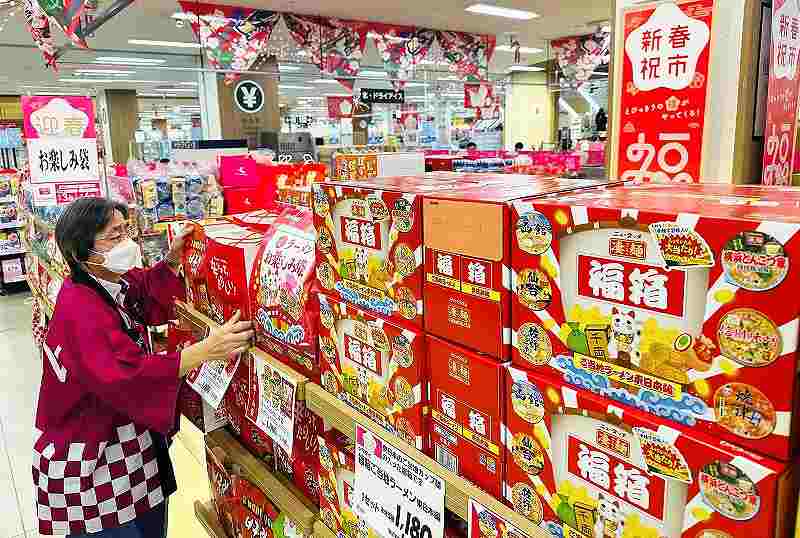
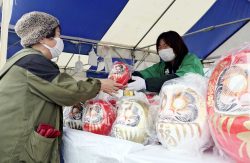
A shop clerk stacks fukubukuro lucky bags on a shelf at an Aeon mall in Itabashi Ward, Tokyo.
13:35 JST, December 27, 2022
Supermarkets and department stores have started stacking shelves with fukubukuro “lucky bags” ahead of the New Year holiday period, when shops traditionally hold sales that attract hordes of customers.
In a year when surging prices have hit household budgets, retailers have rolled out their sales deals early, in an apparent effort to attract bargain hunters.
Aeon Retail Co. started selling bags and boxes filled with bargains at about 360 outlets on Monday.
According to the company, most of its outlets removed Christmas decorations after business hours on Sunday and started setting up special corners for lucky bags on Monday morning.
Before the coronavirus pandemic, hordes of shoppers used to descend on department stores over the New Year holiday period, but many shops now offer online reservations for lucky bags to prevent overcrowding.
Matsuya Ginza in Chuo Ward, Tokyo, is another retailer that has got a head start on fukubukuro sales, with shoppers able to buy bargain bags containing women’s accessories and other items ahead of the New Year.



Most Read
Popular articles in the past 24 hours
-
Milano Cortina 2026: Japanese Gold Medalist Figure Skater Miura S...
-

Yokohama to Test Out Renewable-Powered Offshore Floating Data Cen...
-
Japan’s Takaichi Speaks on New U.S. Tariff in Upper House, Says P...
-

Takeshima Day: Persistently Demanding Resolution from South Korea...
-
Japanese Watermelon Shipments Starts in Leading Production Distri...
-

Milano Cortina 2026: Team Japan Disbands at Ceremony in Tokyo as ...
-

Ishinomaki Man Plush Toy Offers Hope to Children in Times of Disa...
-
Japan Authorities Begin On-site Inspection of Japanese Microsoft ...
Popular articles in the past week
-

Producer Behind Pop Group XG Arrested for Cocaine Possession
-

iPS Treatments Pass Key Milestone, but Broader Applications Far f...
-

Japan, U.S. Name 3 Inaugural Investment Projects; Reached Agreeme...
-
Tokyo Skytree's Elevator Stops, Trapping 20 People; All Rescued (...
-

Japan’s Major Real Estate Firms Expanding Overseas Businesses to ...
-

Baby Monkey Punch Captures Hearts at Chiba Pref. Zoo, on Social M...
-
Milano Cortina 2026: Japanese Gold Medalist Figure Skater Miura S...
-

Milano Cortina 2026: Japanese Figure Skater Kaori Sakamoto’...
Popular articles in the past month
-
Producer Behind Pop Group XG Arrested for Cocaine Possession
-

Japan PM Takaichi’s Cabinet Resigns en Masse
-

Japan Institute to Use Domestic Commercial Optical Lattice Clock ...
-

Man Infected with Measles Reportedly Dined at Restaurant in Tokyo...
-

Israeli Ambassador to Japan Speaks about Japan’s Role in the Reco...
-

Videos Plagiarized, Reposted with False Subtitles Claiming ‘Ryuky...
-

Man Infected with Measles May Have Come in Contact with Many Peop...
-

Prudential Life Insurance Plans to Fully Compensate for Damages C...
Top Articles in Society
-
Producer Behind Pop Group XG Arrested for Cocaine Possession
-
Man Infected with Measles Reportedly Dined at Restaurant in Tokyo Station
-
Man Infected with Measles May Have Come in Contact with Many People in Tokyo, Went to Store, Restaurant Around When Symptoms Emerged
-

Woman with Measles Visited Hospital in Tokyo Multiple Times Before Being Diagnosed with Disease
-
Australian Woman Dies After Mishap on Ski Lift in Nagano Prefecture
JN ACCESS RANKING
-
Producer Behind Pop Group XG Arrested for Cocaine Possession
-
Japan PM Takaichi’s Cabinet Resigns en Masse
-
Man Infected with Measles Reportedly Dined at Restaurant in Tokyo Station
-
Israeli Ambassador to Japan Speaks about Japan’s Role in the Reconstruction of Gaza
-
Videos Plagiarized, Reposted with False Subtitles Claiming ‘Ryukyu Belongs to China’; Anti-China False Information Also Posted in Japan