
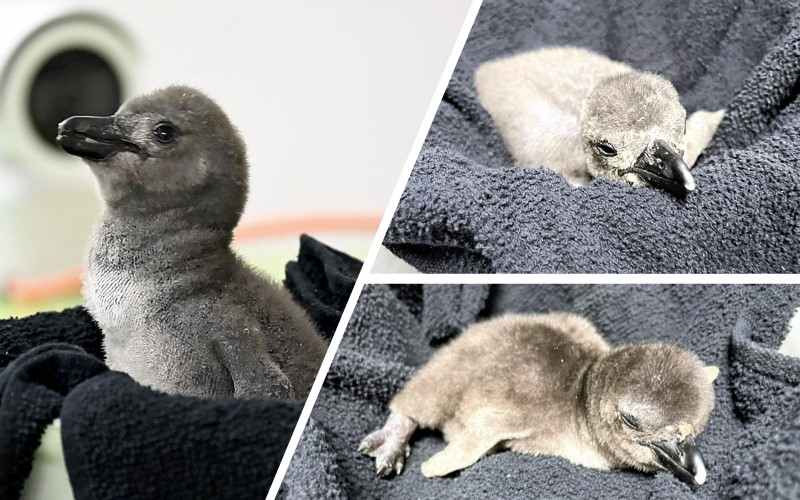
Left: The first Cape penguin baby recently born at the Kyoto Aquarium
Top right: The second baby
Bottom right: The third baby
16:34 JST, December 25, 2022
KYOTO — Three cute and fluffy Cape penguins were born in succession recently at the Kyoto Aquarium.
Cape penguins usually breed from October to March every year.
The first of the three babies was born to mother Hachi and father Bukko. The egg was laid on Oct. 20, and it hatched on Nov. 26. The second baby was also born to the same parents, with the egg laid on Oct. 23 and it hatched on Nov. 30.
The third baby was born to mother Shichijo and father Maru. The egg was laid on Oct. 26, and it hatched on Dec. 4.
Their gender is not yet known.
The penguins at the aquarium in Kyoto’s Shimogyo Ward are named after the city’s streets. The aquarium will give such names to the babies later.
The first baby is being raised by aquarium staff, but the other two have been seen publicly receiving food from their parents in their nests and peeking out from under their parents’ bellies.
At the age of about 70 days, the penguins are expected to become about the same size as adults and their fluffy fur will have fallen out.
“I hope people will watch these babies grow up, which can only be seen now,” an aquarium official said.



Most Read
Popular articles in the past 24 hours
-
Milano Cortina 2026: Japanese Gold Medalist Figure Skater Miura S...
-

Yokohama to Test Out Renewable-Powered Offshore Floating Data Cen...
-
Japan’s Takaichi Speaks on New U.S. Tariff in Upper House, Says P...
-

Takeshima Day: Persistently Demanding Resolution from South Korea...
-
Japanese Watermelon Shipments Starts in Leading Production Distri...
-
Milano Cortina 2026: Team Japan Disbands at Ceremony in Tokyo as ...
-
Ishinomaki Man Plush Toy Offers Hope to Children in Times of Disa...
-
Japan Authorities Begin On-site Inspection of Japanese Microsoft ...
Popular articles in the past week
-

Producer Behind Pop Group XG Arrested for Cocaine Possession
-

iPS Treatments Pass Key Milestone, but Broader Applications Far f...
-

Japan, U.S. Name 3 Inaugural Investment Projects; Reached Agreeme...
-

Tokyo Skytree's Elevator Stops, Trapping 20 People; All Rescued (...
-

Japan’s Major Real Estate Firms Expanding Overseas Businesses to ...
-

Baby Monkey Punch Captures Hearts at Chiba Pref. Zoo, on Social M...
-
Milano Cortina 2026: Japanese Gold Medalist Figure Skater Miura S...
-

Milano Cortina 2026: Japanese Figure Skater Kaori Sakamoto’...
Popular articles in the past month
-
Producer Behind Pop Group XG Arrested for Cocaine Possession
-

Japan PM Takaichi’s Cabinet Resigns en Masse
-

Japan Institute to Use Domestic Commercial Optical Lattice Clock ...
-

Man Infected with Measles Reportedly Dined at Restaurant in Tokyo...
-

Israeli Ambassador to Japan Speaks about Japan’s Role in the Reco...
-

Videos Plagiarized, Reposted with False Subtitles Claiming ‘Ryuky...
-

Man Infected with Measles May Have Come in Contact with Many Peop...
-

Prudential Life Insurance Plans to Fully Compensate for Damages C...
Top Articles in Society
-
Producer Behind Pop Group XG Arrested for Cocaine Possession
-
Man Infected with Measles Reportedly Dined at Restaurant in Tokyo Station
-
Man Infected with Measles May Have Come in Contact with Many People in Tokyo, Went to Store, Restaurant Around When Symptoms Emerged
-

Woman with Measles Visited Hospital in Tokyo Multiple Times Before Being Diagnosed with Disease
-

Australian Woman Dies After Mishap on Ski Lift in Nagano Prefecture
JN ACCESS RANKING
-
Producer Behind Pop Group XG Arrested for Cocaine Possession
-
Japan PM Takaichi’s Cabinet Resigns en Masse
-
Man Infected with Measles Reportedly Dined at Restaurant in Tokyo Station
-
Israeli Ambassador to Japan Speaks about Japan’s Role in the Reconstruction of Gaza
-
Videos Plagiarized, Reposted with False Subtitles Claiming ‘Ryukyu Belongs to China’; Anti-China False Information Also Posted in Japan