
Number of Short-Term Foreign Visitors Involved in Scams in Japan Triples, Fraud Schemes, Investment Fraud Top Activities
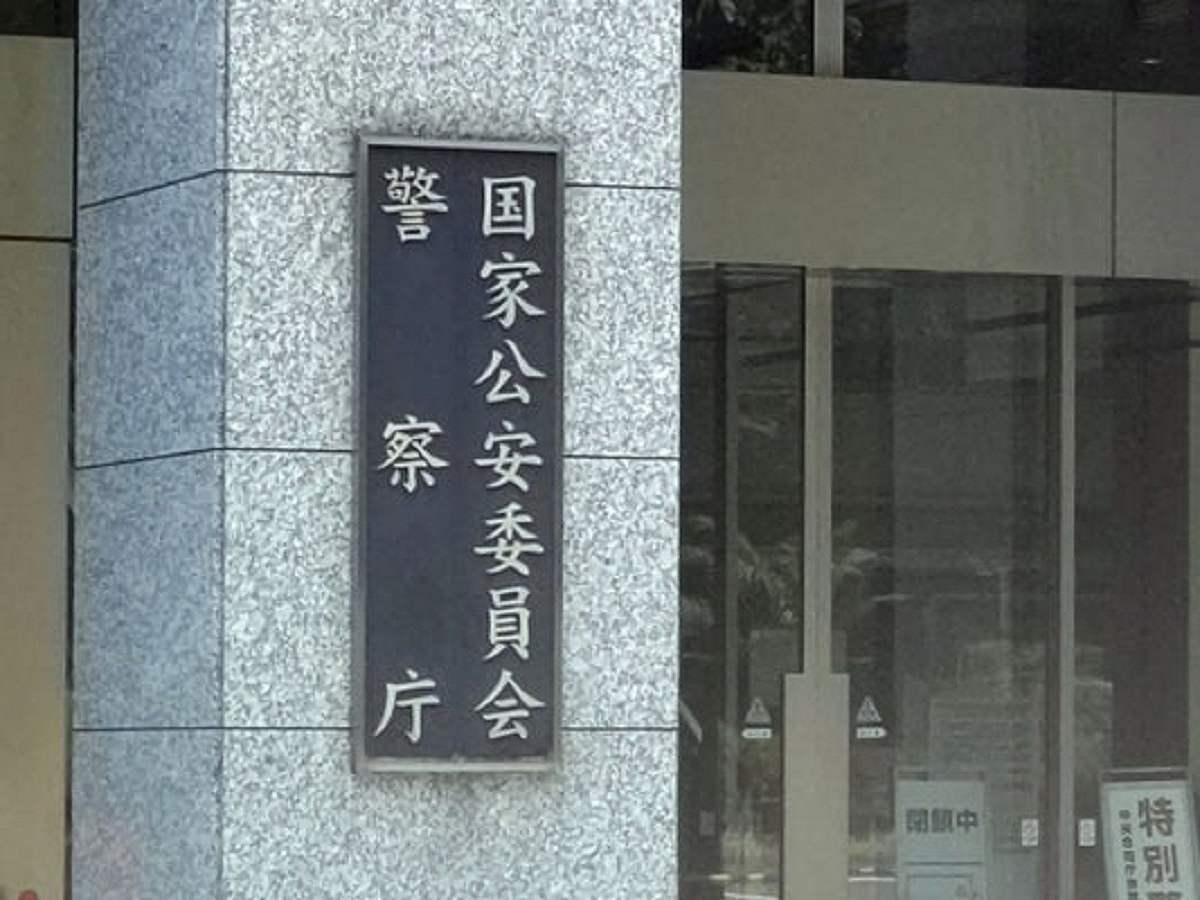
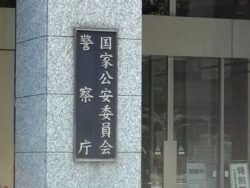
The National Police Agency in Tokyo
15:48 JST, January 8, 2026
The number of foreigners exposed for involvement in fraud during short-term stays in Japan reached 59 from January to October last year, nearly tripling compared to the same period in the previous year, The Yomiuri Shimbun has learned from National Police Agency data.
The number is a provisional figure.
Amid intensified crackdowns on scam bases in Southeast Asia, Chinese-affiliated “anonymous and fluid criminal groups,” known as “tokuryu” in Japanese, are suspected of repeatedly using a hit-and-run tactic: sending a “receiver” to collect money from victims and then having them immediately return to their country.
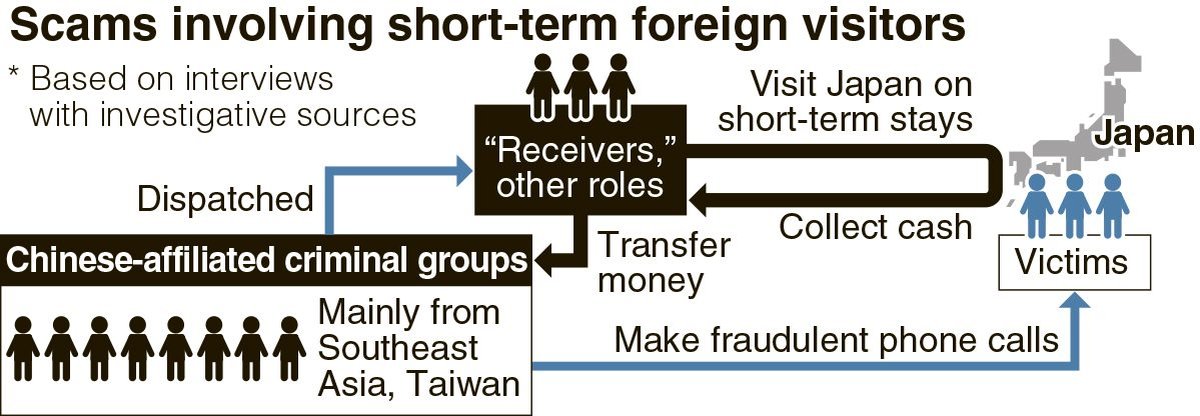
Scam bases operated by Chinese-affiliated tokuryu groups are scattered throughout Southeast Asia. While a large base in Myanmar and facilities in other locations were raided last year, criminals are continuing to act. The NPA plans to newly designate investigators in charge of tokuryu scam cases in Southeast Asia and strengthen cooperation with each country.
According to a tally by the NPA, the breakdown of the 59 individuals was as follows: 42 were involved in fraud schemes such as fake police scams, up 23 from the same period in 2024, and 17 were involved in social media-based investment fraud or romance scams, up 16.
By country and region, 34 individuals were from Malaysia, 22 from China and Taiwan, and one each from South Korea, Vietnam and Singapore.
By role, 50 individuals were “receivers,” who collect money, while others acted as cash transporters. They came to Japan lured by offers on social media to perform work such as “transporting goods in Japan.”
The NPA believes that, following the crackdown on scam bases, some Chinese-linked tokuryu groups have intensified their use of this method as a quick way to collect cash.
A “relay method” involving multiple intermediaries for the collection of cash is spreading. The move suggests that criminal organizations may be broadly recruiting individuals from overseas to secure personnel who work at the grassroots level.
According to reports from organizations such as the United Nations and the International Criminal Police Organization, fraud bases scattered across Southeast Asia launder hundreds of billions of dollars annually through underground banks and similar channels.
Criminal organizations are refining their tactics by adopting advanced technologies, including automated calling services, translation software and generative AI.
Within Japan, recruiters exist who receive compensation from Chinese-linked organizations to send “callers” — people who make phone calls to deceive victims — to overseas scam hubs. Such hubs often control workers through violence, raising concern about human trafficking.





Most Read
Popular articles in the past 24 hours
-

Iran Situation: Japan Must Exert Diplomatic Efforts without Merel...
-

Measles Patient Visited Hospital in Bunkyo Ward, Tokyo, Metropoli...
-

2 Unpublished Early Novellas by Japan's Kenzaburo Oe Discovered, ...
-

Prime Minister Sanae Takaichi to Visit Fukushima Pref. on 15th An...
-

Milano Cortina 2026: Japanese Figure Skater Miura Returns to Home...
-

Takayama Among World's Top 10 Most Welcoming Cities for 2026; 2nd...
-
Pass Rate for Overseas Driver's License Conversion Test in Japan ...
-
Former Nomura Securities Employee Given 18-year Prison Sentence f...
Popular articles in the past week
-

Milano Cortina 2026: Japanese Gold Medalist Figure Skater Miura S...
-

Tokyo Spends Big on Children, Wins Over Parents
-

Japan’s Miura, Kihara Announce Withdrawal from Figure Skating Wor...
-

Yokohama to Test Out Renewable-Powered Offshore Floating Data Cen...
-

BOJ Keeping Eye on Economy and Takaichi's ‘Proactive Fiscal Polic...
-

Tokyo Measles Patient Traveled to Fukuoka Aboard JAL Planes; Susp...
-

Japan’s Takaichi Speaks on New U.S. Tariff in Upper House, Says P...
-

Nidec Chairman Resigns Amid Accounting Scandal at Major Japanese ...
Popular articles in the past month
-

Producer Behind Pop Group XG Arrested for Cocaine Possession
-

Japan PM Takaichi’s Cabinet Resigns en Masse
-

Man Infected with Measles Reportedly Dined at Restaurant in Tokyo...
-

Israeli Ambassador to Japan Speaks about Japan’s Role in the Reco...
-

Videos Plagiarized, Reposted with False Subtitles Claiming ‘Ryuky...
-

Prudential Life Insurance Plans to Fully Compensate for Damages C...
-

Woman with Measles Visited Hospital in Tokyo Multiple Times Befor...
-

iPS Treatments Pass Key Milestone, but Broader Applications Far f...
Top Articles in Society
-
Producer Behind Pop Group XG Arrested for Cocaine Possession
-
Man Infected with Measles Reportedly Dined at Restaurant in Tokyo Station
-
Woman with Measles Visited Hospital in Tokyo Multiple Times Before Being Diagnosed with Disease
-

Bus Carrying 40 Passengers Catches Fire on Chuo Expressway; All Evacuate Safely
-

Tokyo Skytree’s Elevator Stops, Trapping 20 People; All Rescued (Update 1)
JN ACCESS RANKING
-
Producer Behind Pop Group XG Arrested for Cocaine Possession
-
Japan PM Takaichi’s Cabinet Resigns en Masse
-
Man Infected with Measles Reportedly Dined at Restaurant in Tokyo Station
-
Israeli Ambassador to Japan Speaks about Japan’s Role in the Reconstruction of Gaza
-
Videos Plagiarized, Reposted with False Subtitles Claiming ‘Ryukyu Belongs to China’; Anti-China False Information Also Posted in Japan