
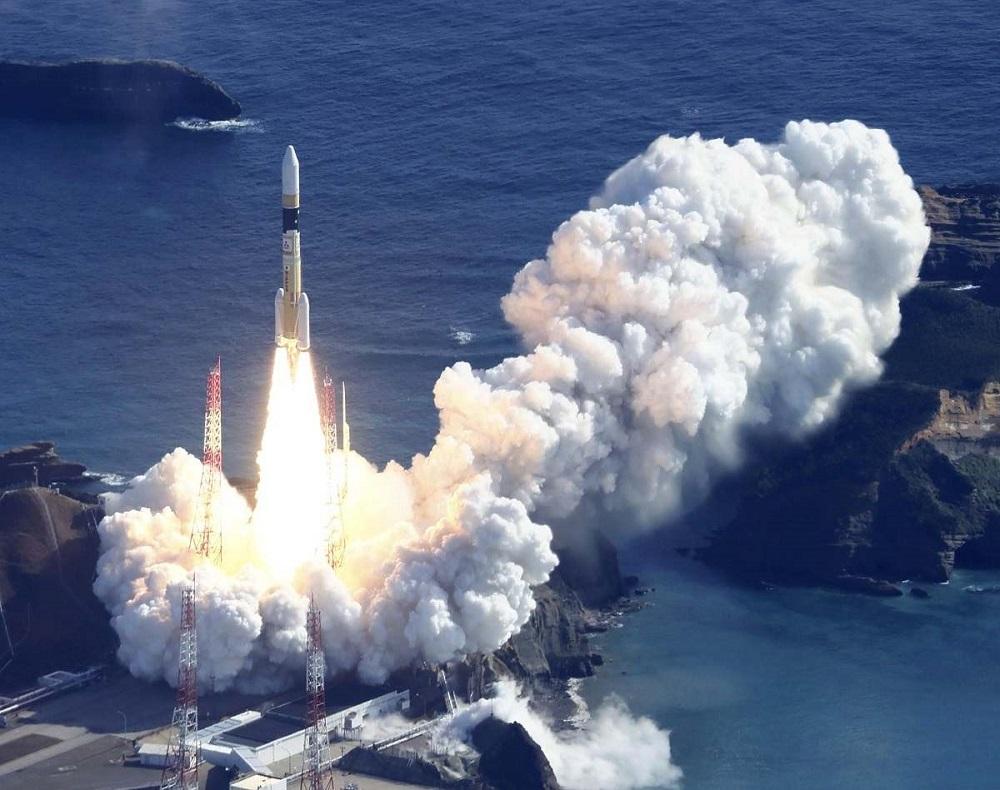
The H2A Launch Vehicle No. 46 is seen at Tanegashima Space Center in Minamitane, Kagoshima Prefecture, on Jan. 26.
14:49 JST, March 31, 2023
The takeoff of Japan’s H2A Launch Vehicle No. 47, which was scheduled for May, has been pushed back to at least summer, according to multiple government sources.
The decision was made because the H2A mainstay rocket uses the same componentry thought to have malfunctioned in the H3 rocket that failed in its maiden launch earlier this month, the sources said Thursday.
The Japan Aerospace Exploration Agency’s launch of the small Epsilon-6 rocket in October 2022 also ended in failure, and no timeframe has been set for that rocket’s successor to lift off. The delay in the H2A program leaves JAXA in the unusual situation of being unable to launch any of Japan’s three main rockets.
The H2A launch vehicle had been scheduled to blast off from Tanegashima Space Center in Kagoshima Prefecture with a payload including JAXA’s SLIM lunar lander. The next launch window will be in summer or later, due to factors including the rocket’s trajectory to the moon, according to the sources.
The H3’s second-stage engine failed to ignite minutes after liftoff on March 7, forcing JAXA to send a destruct command to the rocket. Investigations conducted so far have found that excess current in the H3’s engine’s electrical system appears to have caused the malfunction. The H2A and H3 rockets have virtually identical electrical systems in their second-stage engines, so JAXA officials decided to delay the launch until the details of the malfunction have been pinpointed.
The H2A series is planned to run up to H2A Launch Vehicle No. 50, and the remaining rockets are scheduled to carry payloads including the government’s information gathering satellite. There are concerns that delays in uncovering the cause of the H3’s malfunction also could affect the remaining H2A rocket launches.




Most Read
Popular articles in the past 24 hours
-
Pass Rate for Overseas Driver's License Conversion Test in Japan ...
-

Milano Cortina 2026: Ceremony for Winter Paralympic Torch Relay T...
-

WBC to Begin: All the Pieces are in Place for Japan’s Second Stra...
-
Tokyo High Court Upholds Unification Church Dissolution Order
-

How Trump Assassination Attempts Played into His Decision to Atta...
-

PM Sanae Takaichi: Iran Situation Won’t Immediately Affect Electr...
-

Japanese Speedskater Takagi Announces Retirement
-

Trump's Asian Allies Fear Iran War Will Sap Defenses against Chin...
Popular articles in the past week
-
Tokyo Spends Big on Children, Wins Over Parents
-

Japan’s Miura, Kihara Announce Withdrawal from Figure Skating Wor...
-
BOJ Keeping Eye on Economy and Takaichi's ‘Proactive Fiscal Polic...
-

South Korea Tightens Rules on Foreigners Buying Homes in Seoul Me...
-
Tokyo Measles Patient Traveled to Fukuoka Aboard JAL Planes; Susp...
-
Nidec Chairman Resigns Amid Accounting Scandal at Major Japanese ...
-
Tourists Ignore Safety Barriers Near Famous Zao ‘Snow Monsters’ i...
-

Strait of Hormuz Closure Shakes Markets; Prolonged Closure Could ...
Popular articles in the past month
-

Producer Behind Pop Group XG Arrested for Cocaine Possession
-

Japan PM Takaichi’s Cabinet Resigns en Masse
-

Man Infected with Measles Reportedly Dined at Restaurant in Tokyo...
-

Israeli Ambassador to Japan Speaks about Japan’s Role in the Reco...
-

Videos Plagiarized, Reposted with False Subtitles Claiming ‘Ryuky...
-

Prudential Life Insurance Plans to Fully Compensate for Damages C...
-

Woman with Measles Visited Hospital in Tokyo Multiple Times Befor...
-

iPS Treatments Pass Key Milestone, but Broader Applications Far f...
Top Articles in Science & Nature
-
iPS Treatments Pass Key Milestone, but Broader Applications Far from Guaranteed
-
Record 700 Startups to Gather at SusHi Tech Tokyo in April; Event Will Center on Themes Like Artificial Intelligence and Robotics
-
iPS Cell Products for Parkinson’s, Heart Disease OK’d for Commercialization by Japan Health Ministry Panel
-

Japan to Ban Use of Power Banks on Airplanes
-
Kairos Rocket Launch Postponed
JN ACCESS RANKING
-
Producer Behind Pop Group XG Arrested for Cocaine Possession
-
Japan PM Takaichi’s Cabinet Resigns en Masse
-
Man Infected with Measles Reportedly Dined at Restaurant in Tokyo Station
-
Israeli Ambassador to Japan Speaks about Japan’s Role in the Reconstruction of Gaza
-
Videos Plagiarized, Reposted with False Subtitles Claiming ‘Ryukyu Belongs to China’; Anti-China False Information Also Posted in Japan