
Japan Postpones Ending Japan-S. Korea Continental Shelf Agreement; Holds Off to Keep Ties Despite Project’s Lack of Progress
7:00 JST, June 23, 2025
The government has decided to postpone the notification of terminating the Japan-South Korea continental shelf agreement, which governs joint continental shelf oil development by the two countries, according to multiple sources close to the government.
While from Sunday it becomes possible for Japan to make the notification, the government has decided to hold off following South Korea’s request to maintain the agreement. Japan will carefully consider how to handle the agreement while keeping a close eye on the foreign and security policies of South Korean President Lee Jae-myung’s administration, inaugurated earlier this month.
The agreement entered into force on June 22, 1978, and remains in effect for 50 years, until 2028, after which it will be indefinitely effective unless either country notifies of the termination of the agreement. Notification should be given three years in advance, meaning Japan can give it from Sunday.
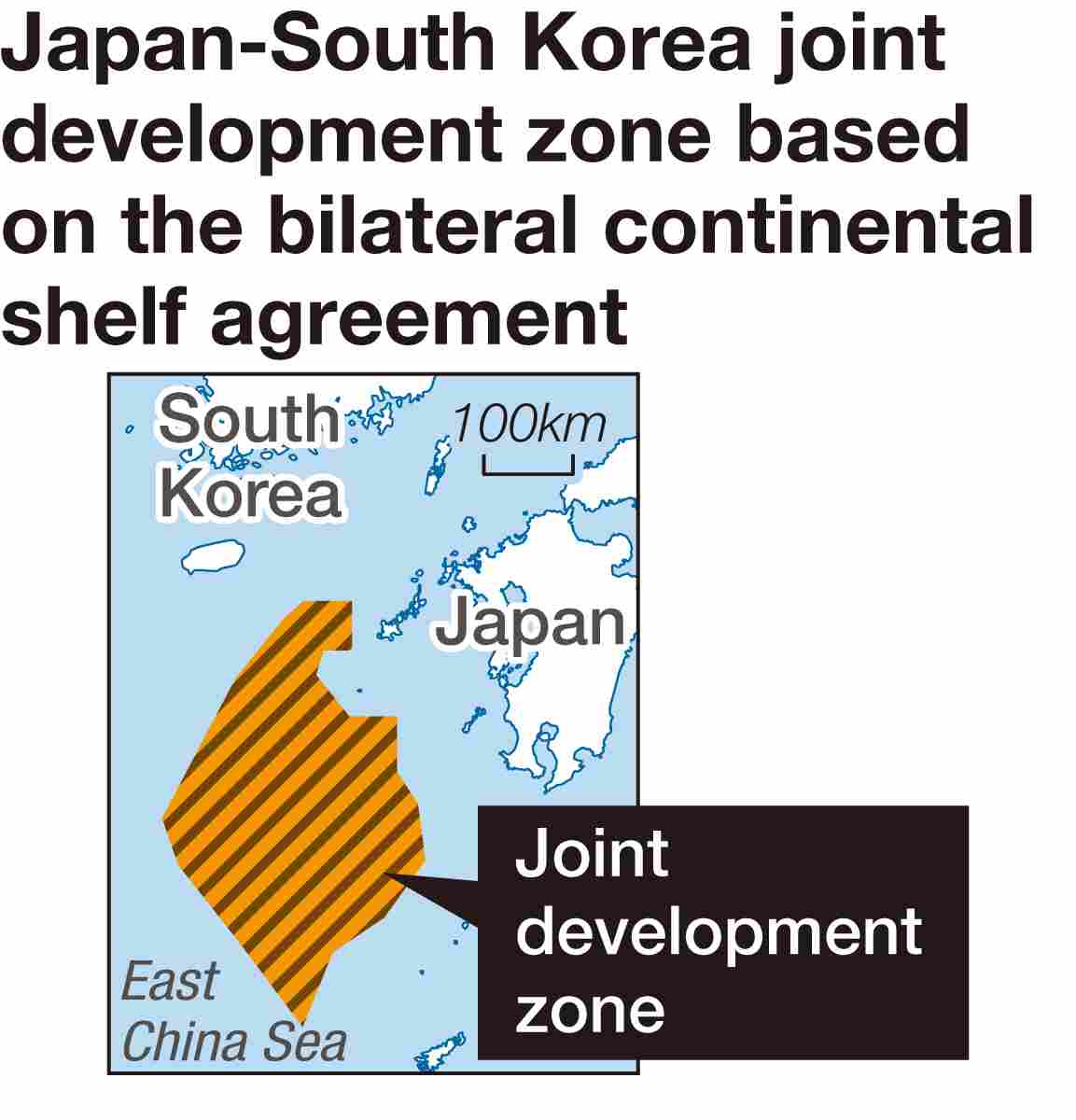
Under the agreement, Japan and South Korea have established a joint development zone in the East China Sea off the southwest coast of Kyushu, where the boundaries of the continental shelf between the two countries have not yet been defined. Both have been looking into any existing oil and natural gas reserves in the area. However, no significant resources have been found and the joint project has made little progress so far.
Over the past five decades, the international community’s view on the continental shelf has changed. According to recent international precedents, Japan may be able to delineate the boundary more advantageously than before. For that reason, the government has been considering the handling of the agreement, including the possibility of immediately giving the notification of termination on Sunday.
In South Korea, however, expectations for oil development remain high and Seoul calls for Tokyo to maintain the agreement. In light of the strategic importance of trilateral security cooperation between Japan, the United States and South Korea, and the fact that this year marks the 60th anniversary of the normalization of diplomatic relations between Japan and South Korea, the government has decided not to immediately notify the termination of the agreement and to keep the issue under consideration.







Most Read
Popular articles in the past 24 hours
-

Tokyo Skytree's Elevator Stops, Trapping 20 People; All Rescued (...
-

Japan’s Major Real Estate Firms Expanding Overseas Businesses to ...
-

Ukrainian Ambassador Closely Watching Japan’s Revision of Defense...
-

Milano Cortina 2026: Sakamoto Serves as Flag Bearer; Japan Earns ...
-
Emperor Turns 66 Ahead of Disaster Milestones
-

Milano Cortina 2026: There Were Cheers across the Country, after ...
-

Luna Sea Drummer Shinya Dies at 56; Powerful Drummer Behind ‘Desi...
-

Milano Cortina 2026: Riku-Ryu Duo Stick Together During Closing C...
Popular articles in the past week
-

Japan PM Takaichi’s Cabinet Resigns en Masse
-

Man Infected with Measles Reportedly Dined at Restaurant in Tokyo...
-

Sanae Takaichi Elected Prime Minister of Japan; Keeps All Cabinet...
-

Japan's Govt to Submit Road Map for Growth Strategy in March, PM ...
-

Bus Carrying 40 Passengers Catches Fire on Chuo Expressway; All E...
-

Milano Cortina 2026: Figure Skaters Riku Miura, Ryuichi Kihara Pa...
-

Japan, U.S. Name 3 Inaugural Investment Projects; Reached Agreeme...
-

U.S. Firm to Build Training Hub in Fukushima N-plant for Debris R...
Popular articles in the past month
-
Japan PM Takaichi’s Cabinet Resigns en Masse
-

Japan Institute to Use Domestic Commercial Optical Lattice Clock ...
-

Israeli Ambassador to Japan Speaks about Japan’s Role in the Reco...
-
Man Infected with Measles Reportedly Dined at Restaurant in Tokyo...
-

Videos Plagiarized, Reposted with False Subtitles Claiming ‘Ryuky...
-

Man Infected with Measles May Have Come in Contact with Many Peop...
-

Prudential Life Insurance Plans to Fully Compensate for Damages C...
-

Woman with Measles Visited Hospital in Tokyo Multiple Times Befor...
Top Articles in Politics
-
Japan PM Takaichi’s Cabinet Resigns en Masse
-
Sanae Takaichi Elected Prime Minister of Japan; Keeps All Cabinet Appointees from Previous Term
-
Japan’s Govt to Submit Road Map for Growth Strategy in March, PM Takaichi to Announce in Upcoming Policy Speech
-

LDP Wins Historic Landslide Victory
-

LDP Wins Landslide Victory, Secures Single-party Majority; Ruling Coalition with JIP Poised to Secure Over 300 seats (UPDATE 1)
JN ACCESS RANKING
-
Japan PM Takaichi’s Cabinet Resigns en Masse
-
Japan Institute to Use Domestic Commercial Optical Lattice Clock to Set Japan Standard Time
-
Israeli Ambassador to Japan Speaks about Japan’s Role in the Reconstruction of Gaza
-
Man Infected with Measles Reportedly Dined at Restaurant in Tokyo Station
-
Videos Plagiarized, Reposted with False Subtitles Claiming ‘Ryukyu Belongs to China’; Anti-China False Information Also Posted in Japan