
Japan Presses U.S. to Scrap 25% Auto Tariffs as Ishiba Refuses Partial Trade Deal; No Deal Without ‘Total Rollback’
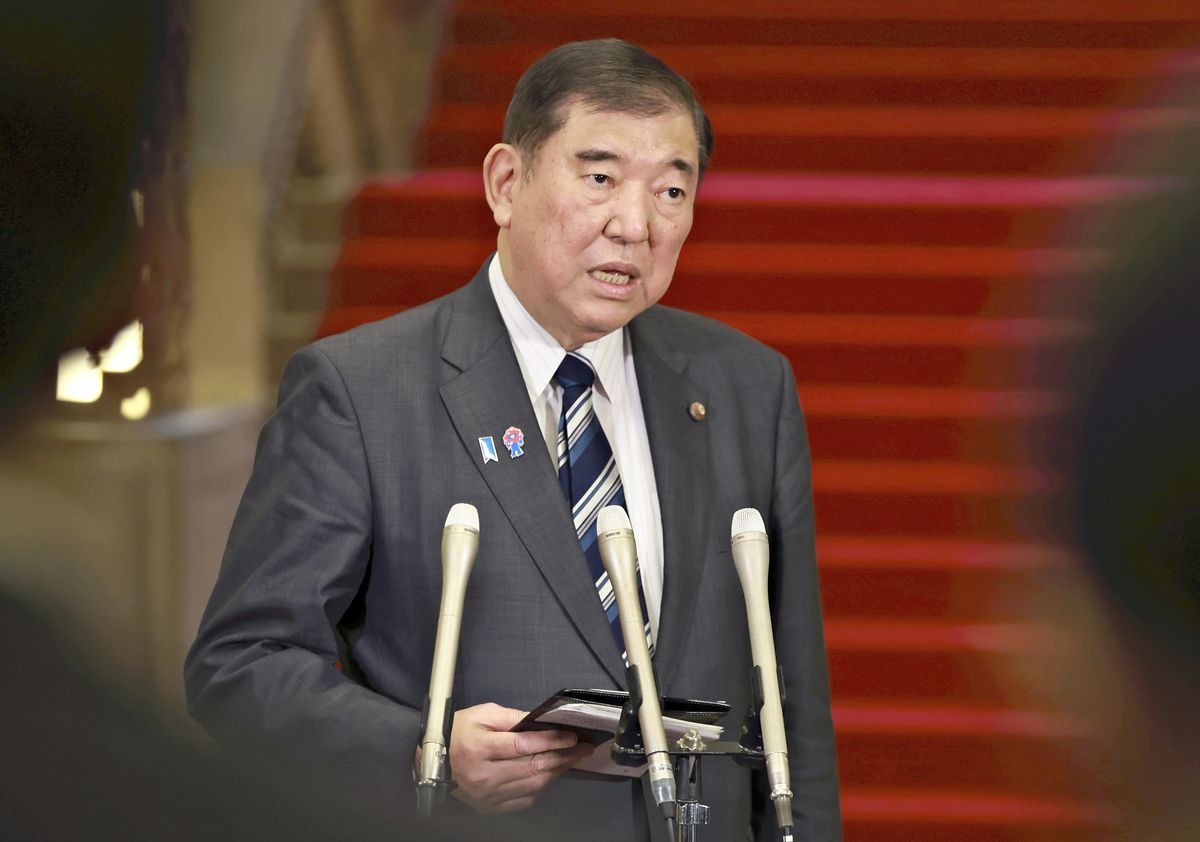
Prime Minister Shigeru Ishiba speaks to reporters at the Prime Minister’s Residence on Saturday.
12:49 JST, May 4, 2025
The government decided Saturday to continue to press the United States to review its extra tariffs on Japanese automobiles during bilateral talks aimed at scrapping the Trump administration’s tariff measures.
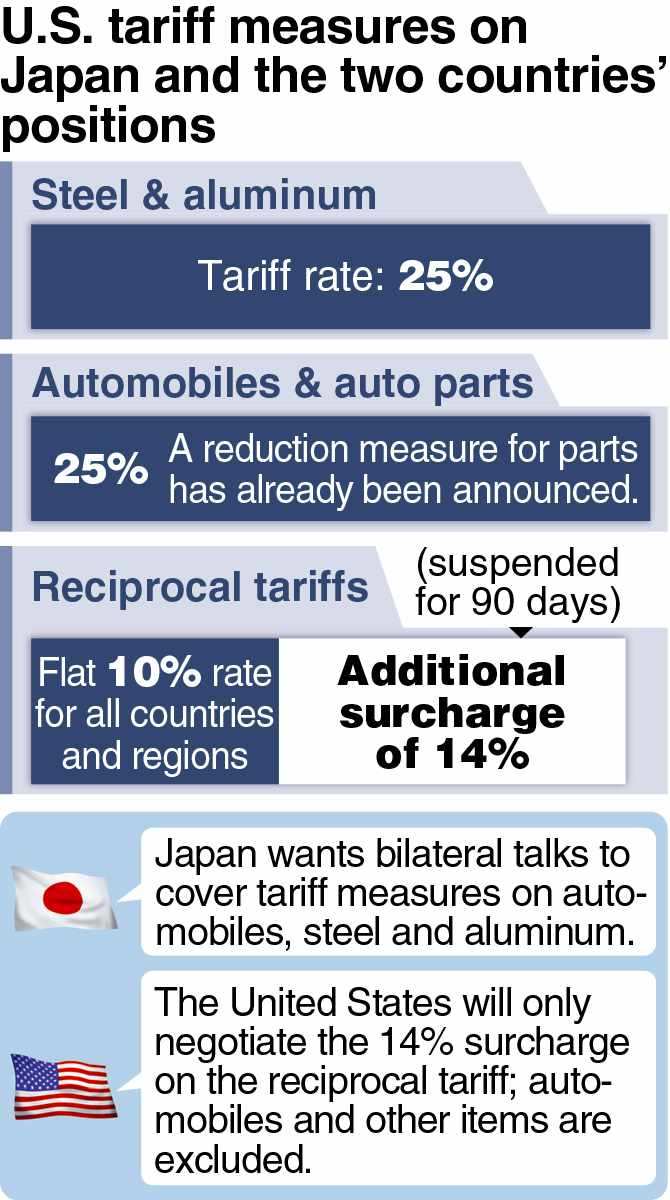
Washington has excluded automobiles and other key items from the scope of the talks. In response, Tokyo has insisted that it will make no concessions as it presses for a complete overhaul of each of the duties imposed Saturday, including those on auto parts.
Prime Minister Shigeru Ishiba on the day met at the Prime Minister’s Residence with economic revitalization minister Ryosei Akazawa, who had just returned from the second round of ministerial talks in the United States, and instructed him on the government’s next steps based on the outcome of the talks.
“There is still a wide gulf between [Japan’s and the United States’] positions, and no common ground has emerged,” Ishiba told reporters after the meeting. “We are [pushing to negotiate] all the tariffs, including those on automobiles, steel and aluminum.” Ishiba also called the new duties on auto parts “extremely regrettable” and said Japan would “continue to demand that they be reversed.”
Akazawa likewise told the press that Tokyo “has consistently requested a total rollback of the tariff package, and [the two countries] cannot reach an agreement unless that element is included.”
The United States has limited the scope of the ministerial talks to the extra “reciprocal tariff” surcharge — 14% for Japan — and excluded the additional levies on automobiles, steel and aluminum, materials which Tokyo regards as essential. Unlike the reciprocal tariffs, the automotive duty is a flat 25% rate applied equally to every country, and it is said that Washington will not grant Japan special treatment.
Automobiles, however, are Japan’s core industry, with an extensive supply chain for parts makers, and leaving the tariffs in place could cause the entire Japanese economy to stall. On Saturday, Ishiba ordered Akazawa and other officials to plan their negotiating strategy “swiftly and meticulously.”
Japan and the United States have agreed to hold an intensive series of ministerial meetings starting in mid-May. Speaking to reporters at Haneda Airport immediately after landing on Saturday, Akazawa revealed that working-level talks had already begun in the United States on Friday local time, stressing that “discussions on individual issues and technical details are also extremely important.”


Related Tags



Most Read
Popular articles in the past 24 hours
-

10 Foreign Tourists Sustain Injuries After Fire at Capsule Hotel ...
-

M4.4 Earthquake Hits Central Japan’s Gunma Pref.; No Tsunami Expe...
-

Japanese Expert on Arab Cuisine Presents Dish with Whole Fish, Cr...
-

Zelenskiy Says Ukraine Wants Money, Technology in Return for Midd...
-

World Baseball Classic: Venezuela Beats Japan in Nail-biting Back...
-

Rapid Services Resume on JR Chuo Line; Suspension Caused by Accid...
-

Rapid Services on JR Chuo Line Suspended; Accident at Kokubunji S...
-

World Baseball Classic: Venezuela Beats Japan in Back-and-Forth Q...
Popular articles in the past week
-

Japan Figure Skating Legend Yuzuru Hanyu Is Proud Disaster Surviv...
-
15 Measles Patients Confirmed in Tokyo in Past 6 Days; 1 May Have...
-
Massive Sewer Pipe Found Jutting Out of Highway in Osaka
-
Japan Govt to Tighten Requirements to Receive Permanent Residency...
-
Power Outage Forces About 980 Passengers in Yokohama to Walk to T...
-
JR Tokai Breaks Ground on Yamanashi Maglev Station; Will Be Part ...
-

Parents in Japan to Get Instagram Notifications When Teens Repeat...
-
Metal Pipe That Protruded 13 Meters Above Ground in Osaka Sinks B...
Popular articles in the past month
-

Producer Behind Pop Group XG Arrested for Cocaine Possession
-

Japan PM Takaichi’s Cabinet Resigns en Masse
-

Man Infected with Measles Reportedly Dined at Restaurant in Tokyo...
-
Japan Figure Skating Legend Yuzuru Hanyu Is Proud Disaster Surviv...
-

iPS Treatments Pass Key Milestone, but Broader Applications Far f...
-

Sanae Takaichi Elected Prime Minister of Japan; Keeps All Cabinet...
-

South Korea Tightens Rules on Foreigners Buying Homes in Seoul Me...
-

Nepal Bus Crash Kills 19 People, Injures 25 Including One Japanes...
Top Articles in Politics
-
Japan PM Takaichi’s Cabinet Resigns en Masse
-
Sanae Takaichi Elected Prime Minister of Japan; Keeps All Cabinet Appointees from Previous Term
-
Japan’s Govt to Submit Road Map for Growth Strategy in March, PM Takaichi to Announce in Upcoming Policy Speech
-
LDP Begins Training New Lawmakers to Avoid Scandal, Gaffes; Historic Victory in Latest Election Heightens Focus on Party
-

Japan PM Sanae Takaichi Welcomes Peach Ambassadors Koga Momo Musume to Official Residence
JN ACCESS RANKING
-
Producer Behind Pop Group XG Arrested for Cocaine Possession
-
Japan PM Takaichi’s Cabinet Resigns en Masse
-
Man Infected with Measles Reportedly Dined at Restaurant in Tokyo Station
-
Japan Figure Skating Legend Yuzuru Hanyu Is Proud Disaster Survivor and Gold Medalist, Vows to Continue Support Efforts
-
iPS Treatments Pass Key Milestone, but Broader Applications Far from Guaranteed