
Japanese Ruling Parties’ Proposal on Defense Equipment Transfers Aims to Deepen Cooperation with Like-Minded Nations
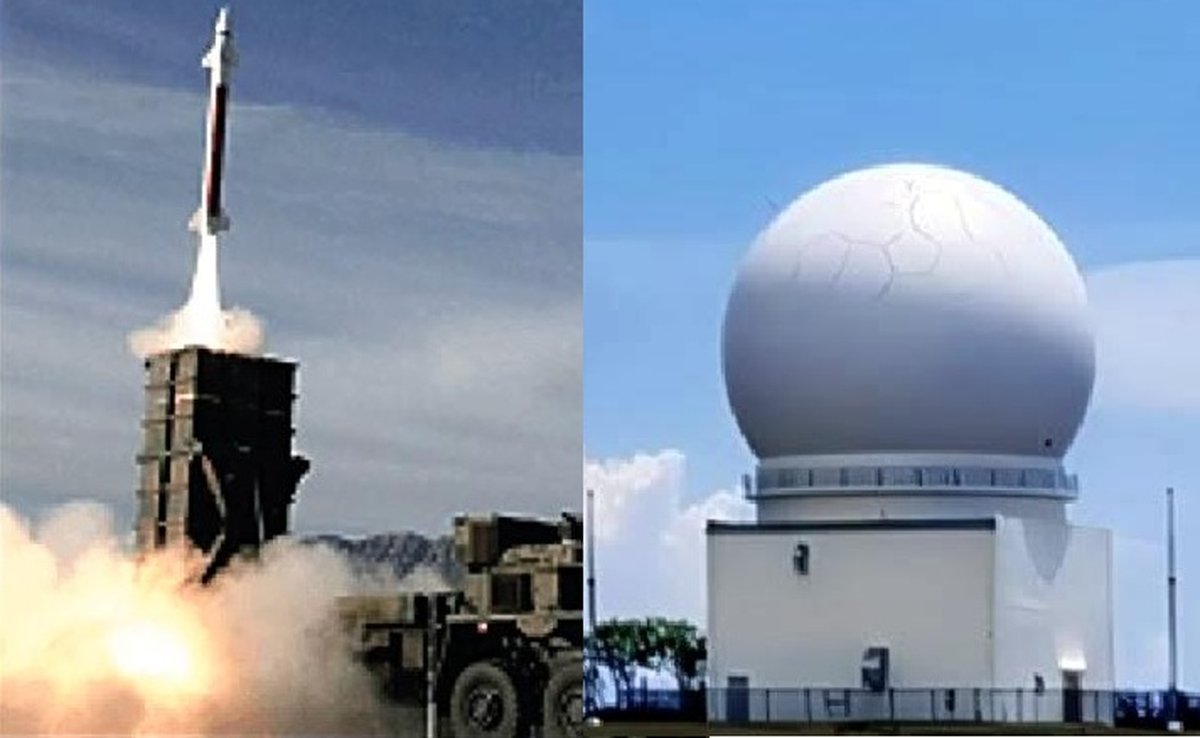
A medium-range surface-to-air guided missile, left, and a surveillance and control radar
17:42 JST, March 7, 2026
A proposal for easing operational guidelines for the Three Principles on Transfer of Defense Equipment and Technology, which was submitted by the ruling coalition of the Liberal Democratic Party and the Japan Innovation Party on Friday, is expected to promote exports of defense equipment and help deepen cooperation with like-minded nations.
The proposal submitted to Prime Minister Sanae Takaichi by the coalition calls for abolishing restrictions that limit defense equipment exports to five categories, including rescue and transport. This means the export of all defense equipment would become possible in principle, regardless of its lethality.
“Equipment transfers are an important policy to enhance regional deterrence and response capabilities,” Defense Minister Shinjiro Koizumi said at a press conference on Friday. “We will accelerate consideration to realize the revision as soon as possible.”
Based on the ruling coalition’s proposal, the government intends to revise the guidelines as early as this spring at a National Security Council meeting to be attended by nine Cabinet ministers.
Under the current guidelines, exportable defense equipment is restricted to the five categories of rescue, transport, vigilance, surveillance and minesweeping, with exceptions made for items such as those developed through international cooperation. The proposal calls for eliminating this rule and allowing the transfer of all finished products, parts, technology and services, in principle.
The revision includes the lifting of a ban on exports of arms that the Self-Defense Forces Law defines as having lethal and destructive capabilities, such as missiles and destroyers, according to the proposal.
Specifically, defense equipment will be classified as either arms or non-arms. Certain procedural safeguards will be introduced for arms transfers. The proposal seeks to have the National Security Council conduct screenings, while calling for limiting exports of such items to countries with which Japan has signed defense equipment transfer agreements. Currently, there are 17 such countries. Arms exports even to these countries would be prohibited, in principle, if combat occurs there, unless there are special circumstances. Non-lethal items, such as bulletproof vests, would not be restricted.
The 17 countries include the United States, Britain, Australia and emerging Southeast Asian nations such as the Philippines and Vietnam. Many of these countries are facing China’s aggressive maritime expansion in the South China Sea, and enhancing their defense capabilities is an urgent task. According to Defense Ministry sources, the Philippines has expressed interest in purchasing used destroyers of the Maritime Self-Defense Force, while Indonesia has shown interest in used submarines. The abolition of the five categories would pave the way for exporting such defense equipment.
If like-minded nations increasingly adopt common defense equipment, interoperability between their forces will improve, making it possible to share equipment in emergencies. This is expected to widen what Koizumi called “relationships of mutual support,” primarily in the Indo-Pacific, eventually enhancing Japan’s deterrence and response capabilities.
Along with the expansion of the market, the major shift is also likely to strengthen the Japanese defense industry’s foundation. In addition to paid exports, there would also be a significant widening of items involved in the government’s official security assistance program, under which defense equipment is provided to partner nations for free.
Arms ban for Ukraine to stay
Meanwhile, the ruling coalition did not include in its proposal the lifting of a ban on arms support to Ukraine, which had been a key focus. Ukraine is not one of the nations with which Japan has signed a defense equipment transfer agreement and thus is not eligible for Japan’s arms exports. Signing such an agreement with Japan would make Ukraine an eligible country, but due to ongoing combat with Russia, arms exports would be prohibited unless special circumstances exist. While some JIP members called for permitting arms exports to Ukraine, there was wariness among LDP members arguing that the exports could be seen as fueling the conflict.
Japan’s support for Ukraine has primarily focused on non-weapon items such as bulletproof vests and protective masks, and this stance is expected to continue even if the guidelines are revised.






Most Read
Popular articles in the past 24 hours
-

Inspection via Micro-Drones Begins at Fukushima No. 1 Nuclear Pla...
-
Japan's DPFP to Join Natl Council Considering Tax Cut Measures
-

Samurai Japan Beats Taiwan in its First World Baseball Classic Ga...
-
Japan Govt Survey Finds Just 10% of Workers Want Working Hours to...
-
Heckling, Once a Fixture of Diet Debate in Japan, Abates in the F...
-
Japan Asked U.S. Not to Disadvantage Tokyo under New Tariff Rules
-

Nippon Life Insurance's U.S. Arm Sues OpenAI Over Legal Assistanc...
-
Sake Mash Brewed Aboard ISS Returns to Japan; Final Product Alrea...
Popular articles in the past week
-

South Korea Tightens Rules on Foreigners Buying Homes in Seoul Me...
-

Ibaraki Pref.'s 1st Foreign Bus Driver Hired in Tsukuba
-
2 Unpublished Early Novellas by Japan's Kenzaburo Oe Discovered, ...
-

Strait of Hormuz Closure Shakes Markets; Prolonged Closure Could ...
-

Amid Strait of Hormuz Blockade, Shipping Companies Scramble to Ge...
-

Iran Situation: Japan Must Exert Diplomatic Efforts without Merel...
-

Measles Patient Visited Hospital in Bunkyo Ward, Tokyo, Metropoli...
-

Japanese Shipping Giants Halt Strait of Hormuz Transit as Iran Co...
Popular articles in the past month
-

Producer Behind Pop Group XG Arrested for Cocaine Possession
-

Japan PM Takaichi’s Cabinet Resigns en Masse
-

Man Infected with Measles Reportedly Dined at Restaurant in Tokyo...
-

Videos Plagiarized, Reposted with False Subtitles Claiming ‘Ryuky...
-

Prudential Life Insurance Plans to Fully Compensate for Damages C...
-

Woman with Measles Visited Hospital in Tokyo Multiple Times Befor...
-

iPS Treatments Pass Key Milestone, but Broader Applications Far f...
-

Sanae Takaichi Elected Prime Minister of Japan; Keeps All Cabinet...
Top Articles in Politics
-
Japan PM Takaichi’s Cabinet Resigns en Masse
-
Sanae Takaichi Elected Prime Minister of Japan; Keeps All Cabinet Appointees from Previous Term
-

Japan’s Govt to Submit Road Map for Growth Strategy in March, PM Takaichi to Announce in Upcoming Policy Speech
-

LDP Wins Landslide Victory, Secures Single-party Majority; Ruling Coalition with JIP Poised to Secure Over 300 seats (UPDATE 1)
-

LDP Wins Historic Landslide Victory
JN ACCESS RANKING
-
Producer Behind Pop Group XG Arrested for Cocaine Possession
-
Japan PM Takaichi’s Cabinet Resigns en Masse
-
Man Infected with Measles Reportedly Dined at Restaurant in Tokyo Station
-
Videos Plagiarized, Reposted with False Subtitles Claiming ‘Ryukyu Belongs to China’; Anti-China False Information Also Posted in Japan
-
Prudential Life Insurance Plans to Fully Compensate for Damages Caused by Fraudulent Actions Without Waiting for Third-Party Committee Review