
Japan Eyes Fighter Jets, Missiles for Bolstering Defense of Nansei Islands; Prepares for Possible ’27 Taiwan Contingency
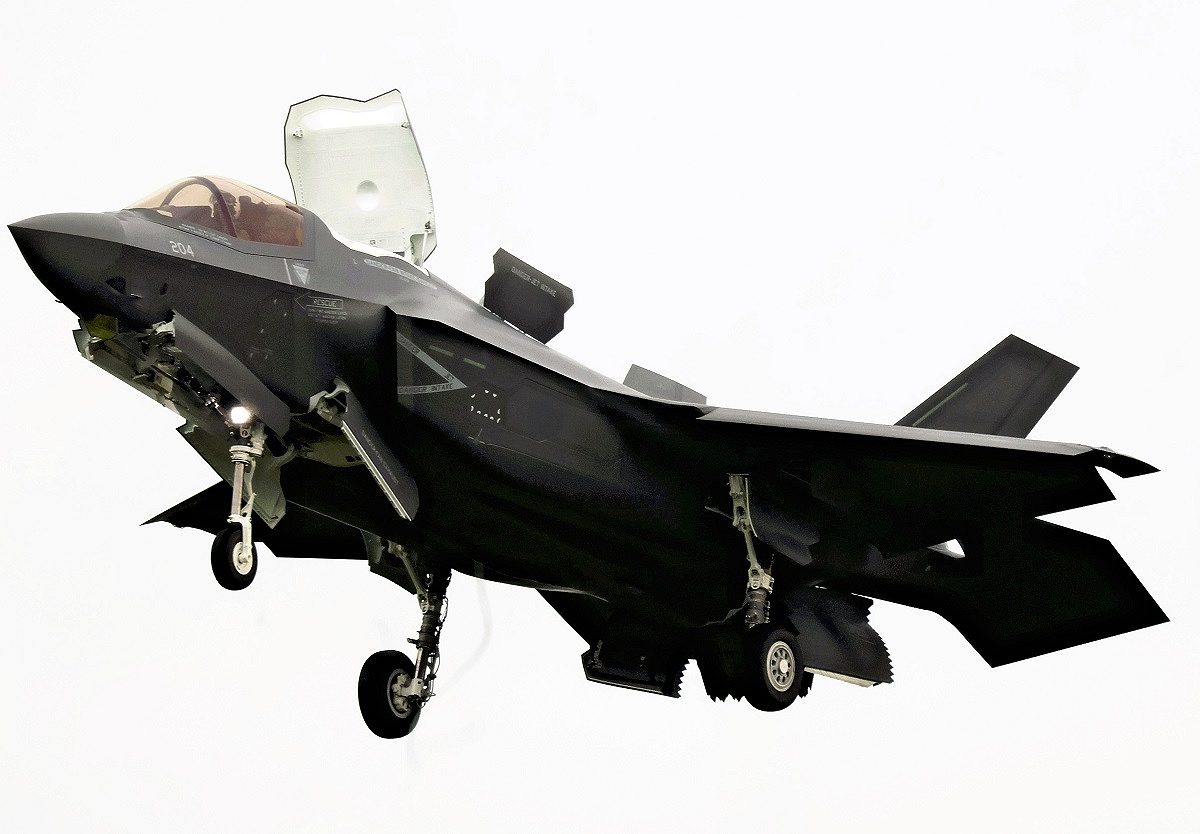
An F-35B stealth fighter jet prepares to land at the Air Self-Defense Force’s Nyutabaru Air Base in the town of Shintomi, Miyazaki Prefecture, on Aug. 7.
14:58 JST, August 14, 2025
The Defense Ministry and the Self-Defense Forces are quickly building up their capability to defend the Nansei Islands as China continues to flex its military muscles with a Taiwan contingency in mind.
Plans to deploy state-of-the-art fighter jets and missiles that will be integral to Japan’s counterattack capabilities in the region are moving ahead as the nation prepares for a possible conflict between China and Taiwan.
During a drill involving the Maritime Self-Defense Force helicopter-carrier destroyer Kaga in the western Pacific on Aug. 8, cutting-edge F-35B aircraft from the U.S. and British militaries landed on the vessel’s flight deck. This operation was part of defense exchanges conducted as part of a joint exercise involving Japan, the United States, the United Kingdom, Australia, Spain and Norway. This was the first time for a British F-35B to land on a Japanese ship.
The Kaga’s flight deck has been modified to enable the ship to operate as a de facto aircraft carrier, and the vessel is expected to be used as a maritime base for F-35Bs. The MSDF “worked closely with allied” and like-minded countries “to enhance interoperability and strengthen maritime cooperation,” the MSDF posted on its official X account Tuesday.
Air Self-Defense Force F-35Bs were deployed at Nyutabaru Air Base in the town of Shintomi, Miyazaki Prefecture, for the first time on Aug. 7.
The ministry’s urgent bolstering of defense capabilities for the Nansei Islands comes at a time when China’s military is becoming increasingly active in areas near Japan. A belief held by such people as U.S. Defense Secretary Pete Hegseth is that China is aiming for its “military to be capable of invading Taiwan by 2027.”
Two Chinese aircraft carriers deployed into the western Pacific conducted drills in June that apparently simulated intercepting a U.S. carrier strike group that was attempting to intervene in a contingency involving Taiwan. China’s military has been conducting exercises that are premised on more realistic combat situations with increasing frequency.
The deployment of F-35Bs at the Nyutabaru base, which is located near the Pacific coast, and the Kaga’s transformation into an aircraft carrier are intended to reinforce the nation’s defense capabilities along that coastline. “That area had insufficient protection,” a senior ministry official told The Yomiuri Shimbun. Stationing F-35Bs on the Kaga would enable the vessel to offer defensive support to remote islands in the Nansei region.
Personnel shortage
Progress also is being made in preparing logistics systems for the event of a contingency involving Taiwan and in improving Japan’s counterattack capabilities.
The ministry on Tuesday completed the transfer of all 17 Osprey transport aircraft that had been provisionally stationed at the Ground Self-Defense Force’s Camp Kisarazu in Kisarazu, Chiba Prefecture, to Camp Saga in Saga Prefecture. An amphibious rapid deployment brigade that would handle the defense or recapture of remote islands has been stationed at the GSDF’s Camp Ainoura in nearby Nagasaki Prefecture. This will enable Japanese forces to be more quickly deployed to a front line in that region.
The GSDF’s Camp Kengun in Kumamoto Prefecture is likely to become the location for the nation’s first deployment of modified Type 12 surface-to-ship guided missiles, which will be central to Japan’s ability to conduct counterstrikes against enemy missile launch sites and other targets for self-defense. These modified missiles have a range of more than 1,000 kilometers and could reach military port facilities and warships attempting to launch an attack in areas near the Chinese mainland.
However, a shortage of recruits is among the many challenges facing the SDF. The designated number of SDF personnel is about 247,000, but the current total stands at only about 220,000.
“There’s not enough time to prepare the defense systems needed before 2027 rolls around,” a senior Japanese government official admitted.







Most Read
Popular articles in the past 24 hours
-

German Journalist Traces Footsteps of Great-Grandfather Who Was P...
-

10 Foreign Tourists Sustain Injuries After Fire at Capsule Hotel ...
-

World Baseball Classic: Venezuela Beats Japan in Nail-biting Back...
-

Rapid Services Resume on JR Chuo Line; Suspension Caused by Accid...
-

Rapid Services on JR Chuo Line Suspended; Accident at Kokubunji S...
-

Zelenskiy Says Ukraine Wants Money, Technology in Return for Midd...
-

World Baseball Classic: Venezuela Beats Japan in Back-and-Forth Q...
-

World Baseball Classic: Red Sox’s Abreu Hits 3-run Homer, Giving ...
Popular articles in the past week
-

Japan Figure Skating Legend Yuzuru Hanyu Is Proud Disaster Surviv...
-
15 Measles Patients Confirmed in Tokyo in Past 6 Days; 1 May Have...
-
Massive Sewer Pipe Found Jutting Out of Highway in Osaka
-
Japan Govt to Tighten Requirements to Receive Permanent Residency...
-
Power Outage Forces About 980 Passengers in Yokohama to Walk to T...
-
JR Tokai Breaks Ground on Yamanashi Maglev Station; Will Be Part ...
-

Parents in Japan to Get Instagram Notifications When Teens Repeat...
-
'World's Oldest Bio-Business' Is Japan's Seed Koji Retailing, Mol...
Popular articles in the past month
-

Producer Behind Pop Group XG Arrested for Cocaine Possession
-

Japan PM Takaichi’s Cabinet Resigns en Masse
-

Man Infected with Measles Reportedly Dined at Restaurant in Tokyo...
-
Japan Figure Skating Legend Yuzuru Hanyu Is Proud Disaster Surviv...
-

iPS Treatments Pass Key Milestone, but Broader Applications Far f...
-

Sanae Takaichi Elected Prime Minister of Japan; Keeps All Cabinet...
-

South Korea Tightens Rules on Foreigners Buying Homes in Seoul Me...
-

Nepal Bus Crash Kills 19 People, Injures 25 Including One Japanes...
Top Articles in Politics
-
Japan PM Takaichi’s Cabinet Resigns en Masse
-
Sanae Takaichi Elected Prime Minister of Japan; Keeps All Cabinet Appointees from Previous Term
-

Japan’s Govt to Submit Road Map for Growth Strategy in March, PM Takaichi to Announce in Upcoming Policy Speech
-
LDP Begins Training New Lawmakers to Avoid Scandal, Gaffes; Historic Victory in Latest Election Heightens Focus on Party
-

Japan PM Sanae Takaichi Welcomes Peach Ambassadors Koga Momo Musume to Official Residence
JN ACCESS RANKING
-
Producer Behind Pop Group XG Arrested for Cocaine Possession
-
Japan PM Takaichi’s Cabinet Resigns en Masse
-
Man Infected with Measles Reportedly Dined at Restaurant in Tokyo Station
-
Japan Figure Skating Legend Yuzuru Hanyu Is Proud Disaster Survivor and Gold Medalist, Vows to Continue Support Efforts
-
iPS Treatments Pass Key Milestone, but Broader Applications Far from Guaranteed