
Reform Plans for USFJ: Establishment of New Joint Forces, Strengthened Authority; Some Concerned about ‘Complicated’ Coordination
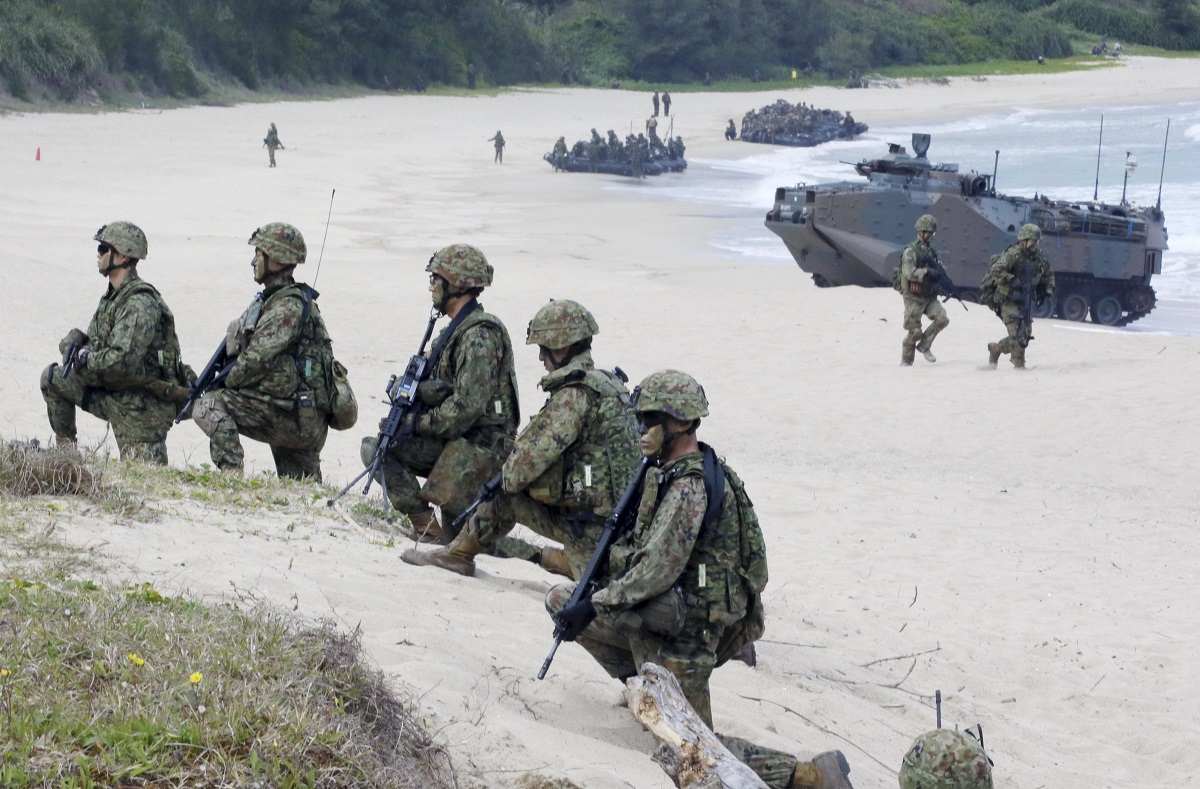
Self-Defense Forces members conduct landing training during Japan-U.S. joint training with the U.S. Marine Corps in Tokunoshima, Kagoshima Prefecture, in March 2023.
20:00 JST, May 5, 2024
HONOLULU — The U.S. government intends to reorganize the U.S. Forces Japan (USFJ) to strengthen its command functions in Japan as the Self-Defense Forces and the U.S. forces’ command and control system comes under review.
Two reform proposals have emerged within the government. The first proposal is to establish a new joint task force based in Japan which would work in coordination with the SDF and enable integrated command between the Army, Navy, Air Force and Marines.
Currently, a U.S. Air Force lieutenant general serves as the USFJ commander, but there are plans to fill the command post of the newly established joint task force with a general-level commander from the Pacific Fleet who would command the USFJ while traveling back and forth between Japan and the Indo-Pacific Command in Hawaii.
The second proposal is to strengthen the authority of the USFJ command. According to the proposal, the position of the USFJ headquarters at Yokota Air Base in Tokyo will be fundamentally reviewed. While the operational command authority will remain in Hawaii in principle, authority for planning, training and other coordination will be transferred from Hawaii to the USFJ.
This idea is being promoted by such experts as Christopher Johnstone, a senior adviser and Japan chair at the Center for Strategic and International Studies who served for many years at the Pentagon and the White House in charge of Japan. These experts insist that a lieutenant general, whose counterpart would be the deputy commander of the SDF Joint Operations Command, should be appointed as the USFJ commander. The proposal also advocates establishing a standing bilateral joint planning and coordination office in Japan.
Although many in Japan welcome the moves strengthening the USFJ authority, some are voicing concerns.
“The number of decision-making points will increase, and coordination between Japan and the U.S forces will be rather complicated,” a former senior SDF official said.
Within the U.S. forces, the Navy and the Air Force are anticipated to battle for control over the post-realignment USFJ.
Resistance is expected from the Indo-Pacific Command, whose authority will be reduced if the USFJ’s authority is strengthened.
A senior official of the U.S. Defense Department made no secret of the many challenges that lay ahead. The Pentagon plans to accelerate adjustments by setting a deadline of March 2025, when the SDF Joint Operations Command is scheduled to be established.





Most Read
Popular articles in the past 24 hours
-

Japan’s Lotteria Restaurant Operator Co. Changes Name, Will Rebra...
-

Revitalization of Shipbuilding Industry: Counter Chinese, S. Kore...
-
University of Tsukuba Faculty Member Posts Discriminatory Message...
-
Japan's Foreign Minister Says No Contact With China's Counterpart...
-

Osaka Expo Mascot Myaku-Myaku-Themed Cafe Opens in Osaka, Set to ...
-

Japanese Shares Dip as Soft Data, Post-Election Lull Cap Moves
-

Milano Cortina 2026: 500-Meter Bronze Gives Miho Takagi Drive For...
-

1st Overseas Suke-San Udon to Open in Taiwan; Company Aims for Mo...
Popular articles in the past week
-

Prudential Life Insurance Plans to Fully Compensate for Damages C...
-

Videos Plagiarized, Reposted with False Subtitles Claiming ‘Ryuky...
-

Woman with No Overseas Travel History Infected with Measles in Na...
-

Milano Cortina 2026: Kokomo Murase Comes Out on Top After Overcom...
-
CRA Leadership Election Will Center on Party Rebuilding; Lower Ho...
-
Tokyo’s New Record-Breaking Fountain Named ‘Tokyo Aqua Symphony’
-
Crime in Japan Ticks Up for 4th Straight Year
-
Japanese Constitutional Revision Debate Expected to be Revived Af...
Popular articles in the past month
-

Japan Institute to Use Domestic Commercial Optical Lattice Clock ...
-

Israeli Ambassador to Japan Speaks about Japan’s Role in the Reco...
-

Man Infected with Measles May Have Come in Contact with Many Peop...
-

China Eyes Rare Earth Foothold in Malaysia to Maintain Dominance,...
-
Prudential Life Insurance Plans to Fully Compensate for Damages C...
-

Woman with Measles Visited Hospital in Tokyo Multiple Times Befor...
-
Australian Woman Dies After Mishap on Ski Lift in Nagano Prefectu...
-
Foreign Snowboarder in Serious Condition After Hanging in Midair ...
Top Articles in Politics
-

LDP Wins Historic Landslide Victory
-

LDP Wins Landslide Victory, Secures Single-party Majority; Ruling Coalition with JIP Poised to Secure Over 300 seats (UPDATE 1)
-
Japan Tourism Agency Calls for Strengthening Measures Against Overtourism
-
CRA Leadership Election Will Center on Party Rebuilding; Lower House Defeat Leaves Divisions among Former CDPJ, Komeito Members
-

Voters Using AI to Choose Candidates in Japan’s Upcoming General Election; ChatGPT, Other AI Services Found Providing Incorrect Information
JN ACCESS RANKING
-
Japan Institute to Use Domestic Commercial Optical Lattice Clock to Set Japan Standard Time
-
Israeli Ambassador to Japan Speaks about Japan’s Role in the Reconstruction of Gaza
-
Man Infected with Measles May Have Come in Contact with Many People in Tokyo, Went to Store, Restaurant Around When Symptoms Emerged
-
Prudential Life Insurance Plans to Fully Compensate for Damages Caused by Fraudulent Actions Without Waiting for Third-Party Committee Review
-
Woman with Measles Visited Hospital in Tokyo Multiple Times Before Being Diagnosed with Disease