
Underwater Drones to Be Tested in Japan from June; Govt Aims to Promote Domestic AUV Manufacturing
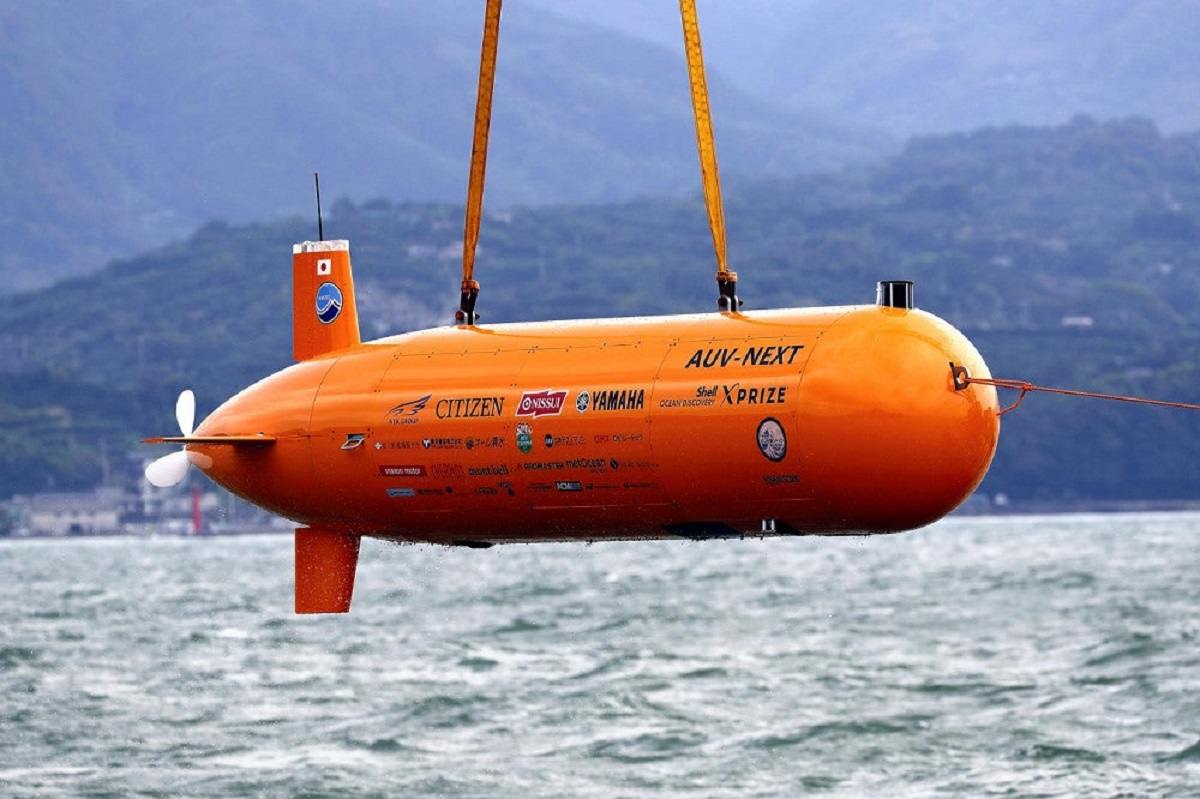
The autonomous underwater vehicle AUV NEXT
14:41 JST, April 17, 2024
The government will start in June demonstration tests for the practical use of autonomous underwater vehicles (AUVs), which can automatically navigate underwater, according to sources.
While AUVs are expected to be used in the fields of marine resource development and national security, private companies have not yet entered the market due to high manufacturing costs and lack of experience in their use.
AUVs, also called underwater drones, are expected to be used in hazardous waters and deep-sea areas where water pressure is high. The production cost per unit ranges from tens of millions of yen to over one billion yen.
The government expects AUVs will be used for such purposes as inspection of offshore wind power generation facilities and underwater surveillance and vigilance activities. The government plans to put them into practical use by 2030.
For offshore wind power generation, in addition to the selection of suitable sites, the government envisions demonstration tests with the inspection of floating facilities in mind, with a view to expanding their introduction in the future. In the planned tests, the government plans to use existing oil pipelines on the ocean floor to stand in for underwater power cables to check for damage and fouling.
In light of China’s maritime expansion, the government will also strengthen its undersea surveillance and vigilance capabilities, such as searching for suspicious objects. The government is also considering using the AUVs for surveys of ecosystems and water quality.
Companies that own AUVs, as well as research institutes and organizations that conduct oceanographic surveys, will be invited to the demonstration tests. After screening proposals and other documents, the government will select about three teams to be involved in the tests. The government will shoulder part of cost for the tests, at up to ¥50 million per team. The demonstration tests will be conducted from June through December, and the teams will be required to compile reports on the results and issues to be discussed.
The government formulated a strategy for domestic production of AUVs late last year with the aim of industrializing AUVs by 2030. AUVs are expensive to manufacture, and the United States and China lead the global market. Many of the models used in Japan are made overseas.
AUVs are also expected to be a means of compensating for labor shortages. The government hopes to explore fields in which AUVs can be put to use through the tests and will encourage new companies to enter the market.




Most Read
Popular articles in the past 24 hours
-
Inspection via Micro-Drones Begins at Fukushima No. 1 Nuclear Pla...
-

China’s National People’s Congress Opens: Military Expansion Cont...
-
Japan's DPFP to Join Natl Council Considering Tax Cut Measures
-

Samurai Japan Beats Taiwan in its First World Baseball Classic Ga...
-
Japan, Canada to Launch Strategic Roadmap on Defense, Economic Se...
-
Excited Baseball Fans Gather at Tokyo Dome Ahead of Japan's Openi...
-
AI Can't Be Listed as Inventor on Patent Applications, Japan's To...
-

Shohei Ohtani Ignites Team Spirit for Samurai Japan's World Baseb...
Popular articles in the past week
-

South Korea Tightens Rules on Foreigners Buying Homes in Seoul Me...
-

Ibaraki Pref.'s 1st Foreign Bus Driver Hired in Tsukuba
-
2 Unpublished Early Novellas by Japan's Kenzaburo Oe Discovered, ...
-
Strait of Hormuz Closure Shakes Markets; Prolonged Closure Could ...
-
Amid Strait of Hormuz Blockade, Shipping Companies Scramble to Ge...
-

Iran Situation: Japan Must Exert Diplomatic Efforts without Merel...
-
Measles Patient Visited Hospital in Bunkyo Ward, Tokyo, Metropoli...
-
North Korea Unveils Image of Kim Jong Un's Teenage Daughter Firi...
Popular articles in the past month
-

Producer Behind Pop Group XG Arrested for Cocaine Possession
-

Japan PM Takaichi’s Cabinet Resigns en Masse
-

Man Infected with Measles Reportedly Dined at Restaurant in Tokyo...
-

Videos Plagiarized, Reposted with False Subtitles Claiming ‘Ryuky...
-

Prudential Life Insurance Plans to Fully Compensate for Damages C...
-

Woman with Measles Visited Hospital in Tokyo Multiple Times Befor...
-

iPS Treatments Pass Key Milestone, but Broader Applications Far f...
-

Sanae Takaichi Elected Prime Minister of Japan; Keeps All Cabinet...
Top Articles in Politics
-
Japan PM Takaichi’s Cabinet Resigns en Masse
-
Sanae Takaichi Elected Prime Minister of Japan; Keeps All Cabinet Appointees from Previous Term
-

Japan’s Govt to Submit Road Map for Growth Strategy in March, PM Takaichi to Announce in Upcoming Policy Speech
-

LDP Wins Landslide Victory, Secures Single-party Majority; Ruling Coalition with JIP Poised to Secure Over 300 seats (UPDATE 1)
-

LDP Wins Historic Landslide Victory
JN ACCESS RANKING
-
Producer Behind Pop Group XG Arrested for Cocaine Possession
-
Japan PM Takaichi’s Cabinet Resigns en Masse
-
Man Infected with Measles Reportedly Dined at Restaurant in Tokyo Station
-
Videos Plagiarized, Reposted with False Subtitles Claiming ‘Ryukyu Belongs to China’; Anti-China False Information Also Posted in Japan
-
Prudential Life Insurance Plans to Fully Compensate for Damages Caused by Fraudulent Actions Without Waiting for Third-Party Committee Review