
Taiwan’s Semiconductor Giants Build Overseas Amid Global Demand, Local Labor Shortage
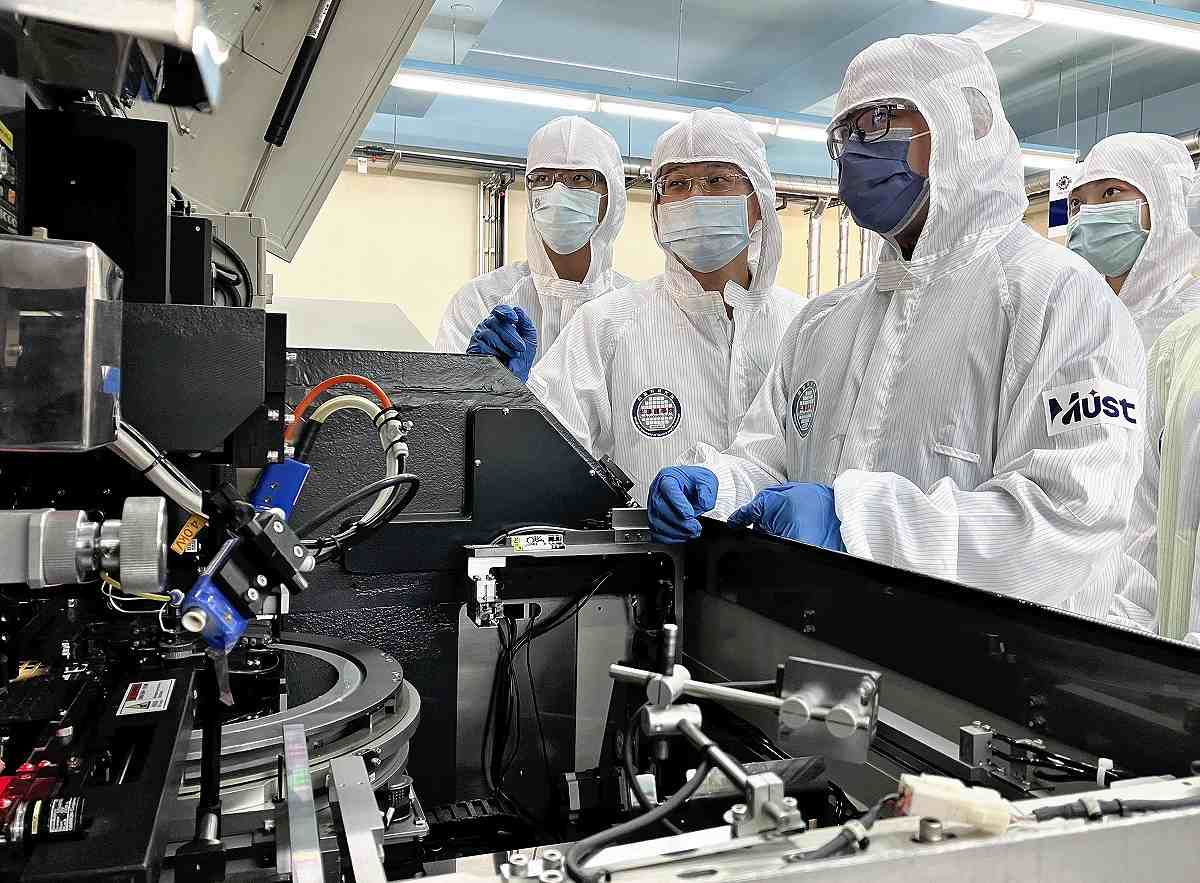
Students are seen at the Semiconductor School at Minghsin University of Science and Technology in Taiwan.
2:00 JST, November 12, 2023
TAIPEI — Taiwanese semiconductor foundries Taiwan Semiconductor Manufacturing Co. (TSMC) and United Microelectronics Corp. (UMC) are building up their production bases abroad. The Taiwan authorities, which previously encouraged domestic production, have begun allowing overseas expansion as governments and companies in Japan, the U.S. and Europe seek to shore up their supply of chips.
‘Silicon shield’
TSMC is erecting a production base in Kumamoto Prefecture, working with Sony Group Corp. and investing over ¥1 trillion. It decided in August to also install a factory in Dresden, Germany. CEO C.C. Wei, who anticipates an investment over €10 billion (about ¥1.6 trillion), said that Europe is promising for its automotive and industrial sectors. TSMC will provide 70% of funding, with Bosch, a major German automotive parts manufacturer, and two other companies contributing the remaining 30%. TSMC is also spending $40 billion (about ¥5.9 trillion) to construct a new facility in Arizona, its third large-scale investment in a foreign country. UMC, meanwhile, is investing $5 billion in a new factory in Singapore, expected to open in the second half of 2024.
According to Taiwan research firm TrendForce Corp., TSMC commands 56.4% of the global market share in semiconductor contracted manufacturing. Including UMC, which ranks fourth with 6.6%, Taiwan companies hold a 64% market share, making semiconductors a core industry accounting for about 40% of Taiwan’s total exports. Concerned about security, Taiwanese authorities had stressed local semiconductor production that could double as a deterrent, dubbed the “silicon shield.” The “shield” was meant to force China and the international community to consider how the semiconductor supply chain could be disrupted by a Taiwan crisis.
Japanese students
While the authorities have shifted their stance on overseas expansion due in part to U.S.-China tension and moves by Japan, the U.S. and Europe to restructure supply chains, the policy switch has also been triggered by a lack of human resources on the island. The authorities believe that international collaboration is essential to address the shortage. The Semiconductor School at Taiwan’s Minghsin University of Science and Technology plans to launch a program for Japanese students by February 2024. The school, which receives subsidies for facility development from the authorities, also plans to host technicians from Japanese companies. “The semiconductor industries of Taiwan and Japan share a close relationship,” said university President Liu Kuo-Wei. “Training Japanese personnel also offers significant benefits for Taiwan.”







Most Read
Popular articles in the past 24 hours
-

Tokyo Skytree's Elevator Stops, Trapping 20 People; All Rescued (...
-
China, India Tapping into Promising African Market; Beijing Annou...
-

Milano Cortina 2026: Miura-Kihara Duo, Other Japanese Figure Skat...
-

Japan’s Major Real Estate Firms Expanding Overseas Businesses to ...
-

Reciprocal Tariffs Ruled Illegal: Judiciary Would Not Tolerate Pr...
-
‘Storytellers’ Being Dispatched Overseas to Promote Japan; Events...
-
Japan, Pacific Island Nations to Work on Deepening Cooperation
-

Fiji Defense Minister Hopes Japan Will Support Stabilization of P...
Popular articles in the past week
-

Japan PM Takaichi’s Cabinet Resigns en Masse
-

Man Infected with Measles Reportedly Dined at Restaurant in Tokyo...
-

Sanae Takaichi Elected Prime Minister of Japan; Keeps All Cabinet...
-

Japan's Govt to Submit Road Map for Growth Strategy in March, PM ...
-

Bus Carrying 40 Passengers Catches Fire on Chuo Expressway; All E...
-

Milano Cortina 2026: Figure Skaters Riku Miura, Ryuichi Kihara Pa...
-

Japan, U.S. Name 3 Inaugural Investment Projects; Reached Agreeme...
-
U.S. Firm to Build Training Hub in Fukushima N-plant for Debris R...
Popular articles in the past month
-
Japan PM Takaichi’s Cabinet Resigns en Masse
-

Japan Institute to Use Domestic Commercial Optical Lattice Clock ...
-

Israeli Ambassador to Japan Speaks about Japan’s Role in the Reco...
-
Man Infected with Measles Reportedly Dined at Restaurant in Tokyo...
-

Videos Plagiarized, Reposted with False Subtitles Claiming ‘Ryuky...
-

Man Infected with Measles May Have Come in Contact with Many Peop...
-

Prudential Life Insurance Plans to Fully Compensate for Damages C...
-

Woman with Measles Visited Hospital in Tokyo Multiple Times Befor...
Top Articles in Politics
-
Japan PM Takaichi’s Cabinet Resigns en Masse
-
Sanae Takaichi Elected Prime Minister of Japan; Keeps All Cabinet Appointees from Previous Term
-
Japan’s Govt to Submit Road Map for Growth Strategy in March, PM Takaichi to Announce in Upcoming Policy Speech
-

LDP Wins Historic Landslide Victory
-

LDP Wins Landslide Victory, Secures Single-party Majority; Ruling Coalition with JIP Poised to Secure Over 300 seats (UPDATE 1)
JN ACCESS RANKING
-
Japan PM Takaichi’s Cabinet Resigns en Masse
-
Japan Institute to Use Domestic Commercial Optical Lattice Clock to Set Japan Standard Time
-
Israeli Ambassador to Japan Speaks about Japan’s Role in the Reconstruction of Gaza
-
Man Infected with Measles Reportedly Dined at Restaurant in Tokyo Station
-
Videos Plagiarized, Reposted with False Subtitles Claiming ‘Ryukyu Belongs to China’; Anti-China False Information Also Posted in Japan