
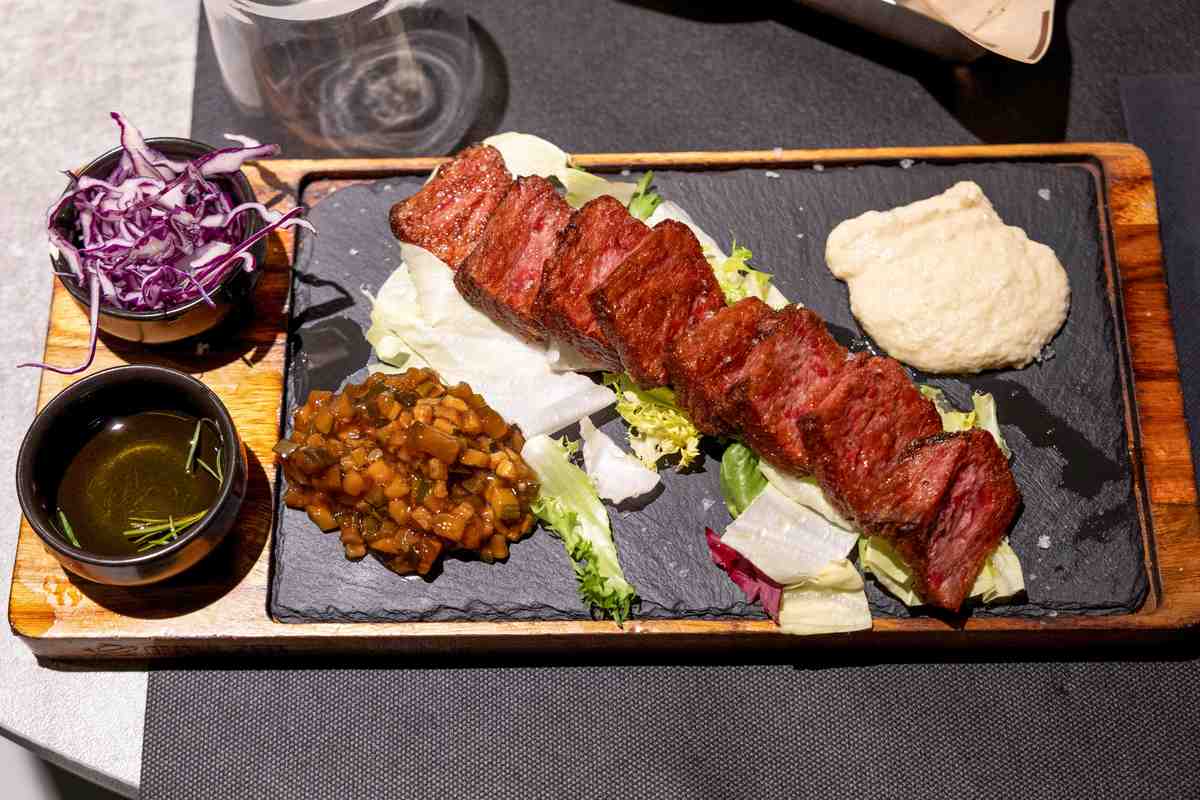
Plant-based 3D-printed sliced meat is seen at Impact Food restaurant in Rome on Dec. 1.
15:34 JST, January 7, 2026
ROME (Reuters) — Scientists in Italy are developing sweet snacks with lab-grown plant cells and fruit residues, producing a material that a 3D printer can then process into “pastries” with high nutritional content.
Italy’s rich culinary traditions may have just gained UNESCO heritage status, but the Nutri3D project by the country’s public research agency ENEA shows scientists are out to push boundaries in the quest for sustainable, nutrient-rich snacks.
Prototypes include snack bars and glossy “honey pearls” designed to preserve flavor and nutritional value.
“In a world where arable land is shrinking and climate change forces us to rethink food production, the goal is to keep making what we are used to eating,” said Silvia Massa, head of ENEA’s Agriculture 4.0 lab.
The aim “is not to grow the plant itself, but its cells,” she added.
Northern Europe has led early efforts, with Finnish labs producing fruit compotes from cell cultures and researchers in Zurich developing cocoa-like flavorings.
“We Italians add creativity, combining cellular food with recovered by-products,” Massa said, referring to the fruit residues from jam production, for example.
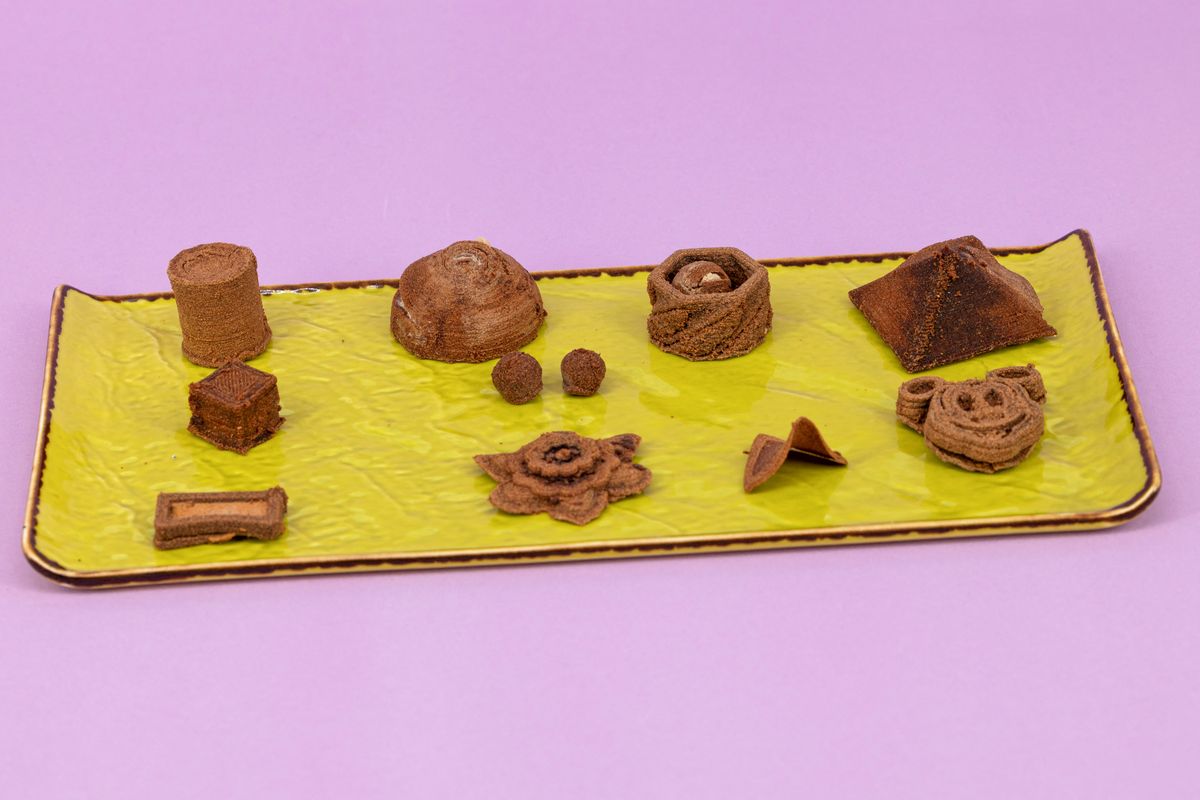
3D snack items are seen at the Elthub plant in Oricola, Italy, on Nov. 24.
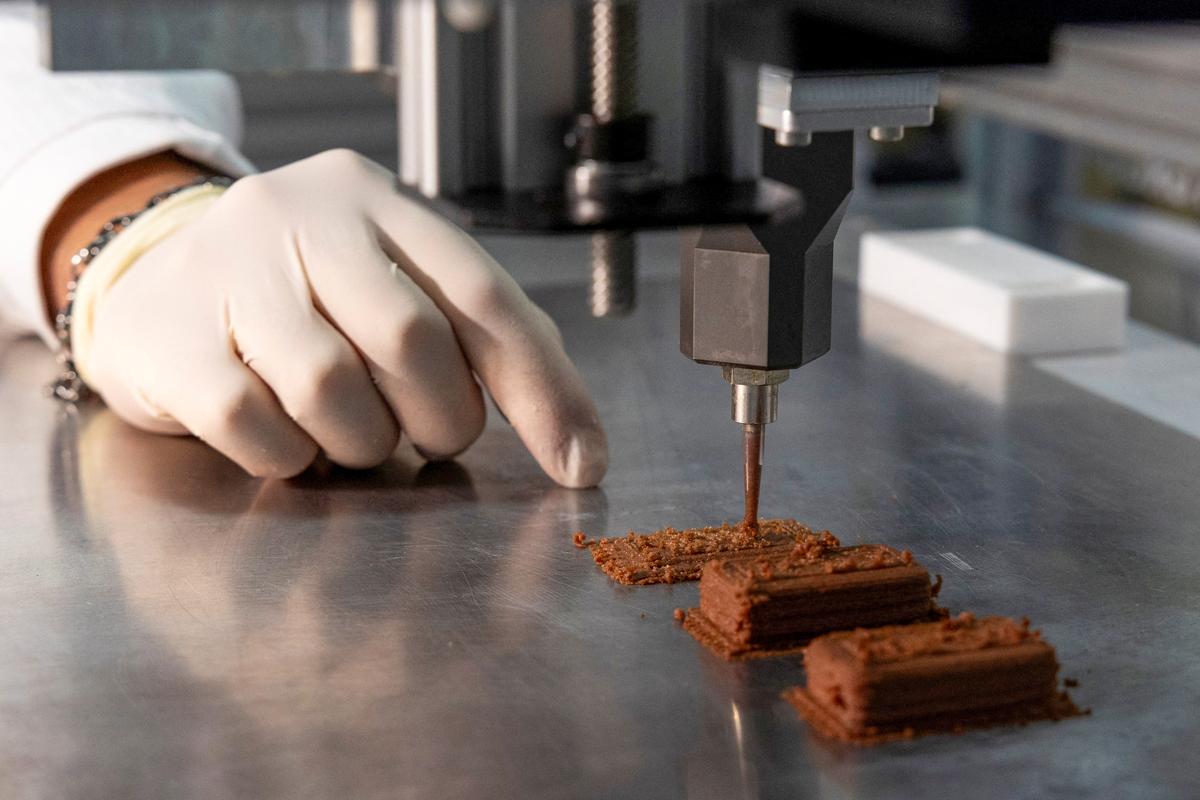
3D snack items are printed at the Elthub plant in Oricola, Italy, on Nov. 24.
The project is run with EltHub — an Italian private technology R&D firm that is part of ELT Group — and Rigoni di Asiago, a family-owned company specializing in organic food products.
At EltHub in the central region of Abruzzo, ENEA’s plant-based “inks” are shaped using a 3D printer.
An ENEA survey found 59% of respondents willing to try such foods.
The technology could also be useful in resource-scarce settings, such as space or in conflict zones, said EltHub director Ermanno Petricca, dubbing the snacks “fruit for astronauts.”
ENEA is also testing microgreens and nano-tomatoes for space cultivation.
On Earth, 3D food printing could enable tailored nutrition for people with dietary restrictions. A plant-based steakhouse in Rome, Impact Food, is already offering 3D-printed sliced meat on its menu.







Most Read
Popular articles in the past 24 hours
-

Strait of Hormuz Closure Shakes Markets; Prolonged Closure Could ...
-

Iran Situation: Japan Must Exert Diplomatic Efforts without Merel...
-

Measles Patient Visited Hospital in Bunkyo Ward, Tokyo, Metropoli...
-

Milano Cortina 2026: Japanese Figure Skater Miura Returns to Home...
-

Takayama Among World's Top 10 Most Welcoming Cities for 2026; 2nd...
-

2 of Japan's Opposition Parties Submit Bill to Revise Political F...
-
Chiba Police to Arrest Japanese National in Midair; Man Accused o...
-

Former Nomura Securities Employee Given 18-year Prison Sentence f...
Popular articles in the past week
-

Milano Cortina 2026: Japanese Gold Medalist Figure Skater Miura S...
-

Tokyo Spends Big on Children, Wins Over Parents
-

Japan’s Miura, Kihara Announce Withdrawal from Figure Skating Wor...
-

Yokohama to Test Out Renewable-Powered Offshore Floating Data Cen...
-

BOJ Keeping Eye on Economy and Takaichi's ‘Proactive Fiscal Polic...
-

Tokyo Measles Patient Traveled to Fukuoka Aboard JAL Planes; Susp...
-

Japan’s Takaichi Speaks on New U.S. Tariff in Upper House, Says P...
-

Nidec Chairman Resigns Amid Accounting Scandal at Major Japanese ...
Popular articles in the past month
-

Producer Behind Pop Group XG Arrested for Cocaine Possession
-

Japan PM Takaichi’s Cabinet Resigns en Masse
-

Man Infected with Measles Reportedly Dined at Restaurant in Tokyo...
-

Israeli Ambassador to Japan Speaks about Japan’s Role in the Reco...
-

Videos Plagiarized, Reposted with False Subtitles Claiming ‘Ryuky...
-

Prudential Life Insurance Plans to Fully Compensate for Damages C...
-

Woman with Measles Visited Hospital in Tokyo Multiple Times Befor...
-

iPS Treatments Pass Key Milestone, but Broader Applications Far f...
Top Articles in News Services
-

Survey Shows False Election Info Perceived as True
-
Hong Kong Ex-Publisher Jimmy Lai’s Sentence Raises International Outcry as China Defends It
-

Japan’s Nikkei Stock Average Falls as US-Iran Tensions Unsettle Investors (UPDATE 1)
-
Japan’s Nikkei Stock Average Touches 58,000 as Yen, Jgbs Rally on Election Fallout (UPDATE 1)
-
Japan’s Nikkei Stock Average Rises on Tech Rally and Takaichi’s Spending Hopes (UPDATE 1)
JN ACCESS RANKING
-
Producer Behind Pop Group XG Arrested for Cocaine Possession
-
Japan PM Takaichi’s Cabinet Resigns en Masse
-
Man Infected with Measles Reportedly Dined at Restaurant in Tokyo Station
-
Israeli Ambassador to Japan Speaks about Japan’s Role in the Reconstruction of Gaza
-
Videos Plagiarized, Reposted with False Subtitles Claiming ‘Ryukyu Belongs to China’; Anti-China False Information Also Posted in Japan