
Sumo Restaurant in Tokyo Teaches Foreign Visitors About the Ancient Sport, with Bouts Between Retired Rikishi
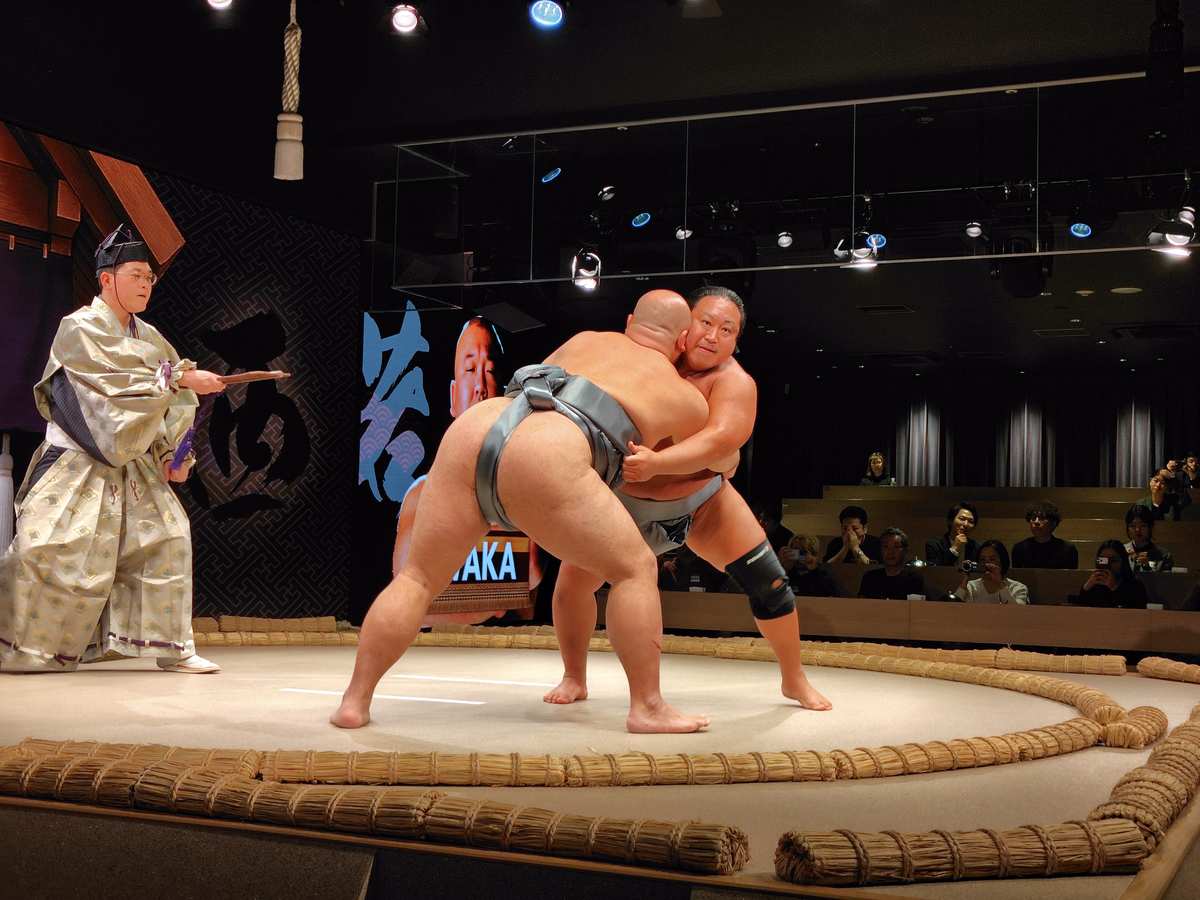
Former professional rikishi fight on the dohyo in a tournament match.
12:44 JST, January 2, 2026
Among the high-end boutiques and fancy restaurants in Tokyo’s fashionable Ginza district can be heard the sounds of grunts and groans. And occasionally some laughs.
On the underground floor of a 10-story mixed-use building, the press was given a sneak peek of a restaurant that features a combination of sumo and washoku cuisine in an English-speaking atmosphere that will have its grand opening next week.
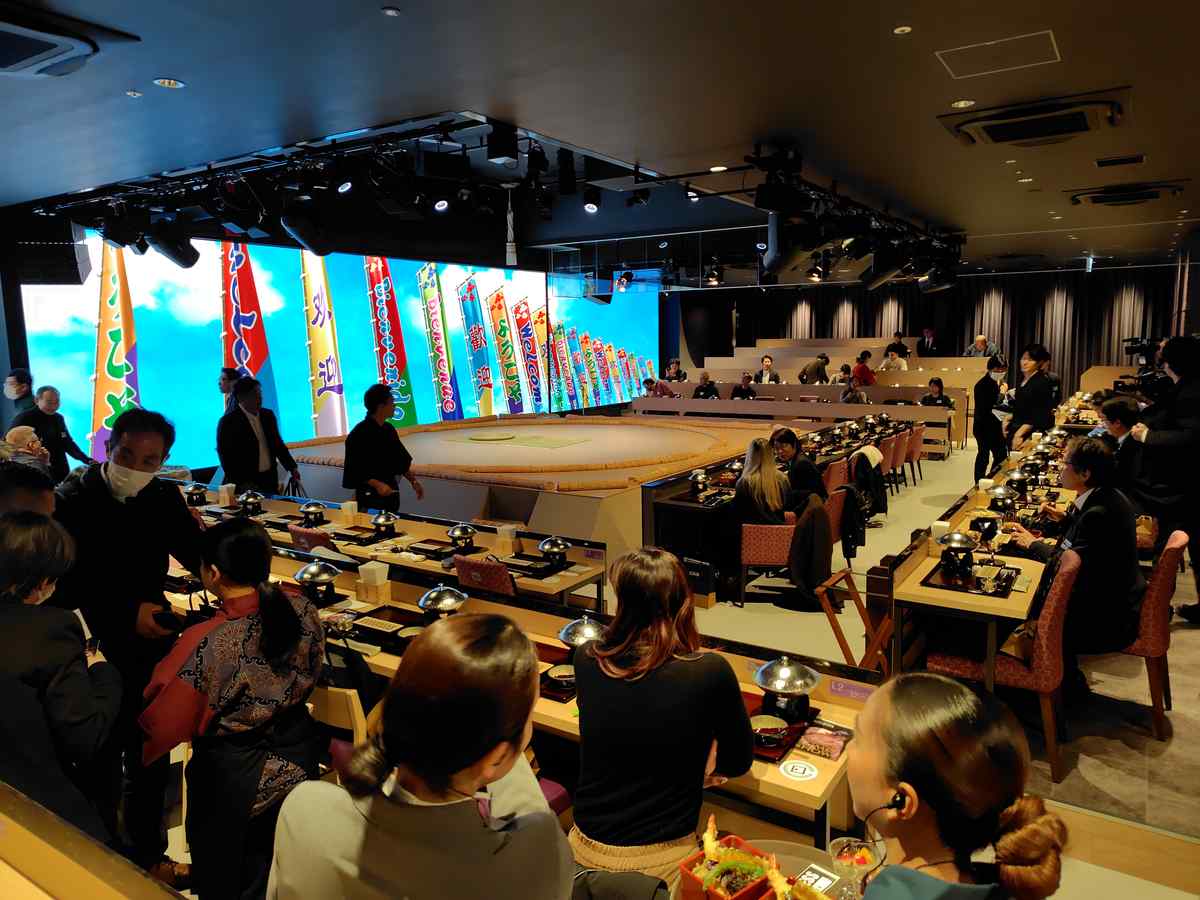
A dohyo ring is set up in the middle of the Sumo Live Restaurant Hirakuza Ginza Tokyo.
“Our core target is tourists from English-speaking countries,” said Yutaka Sugimoto, inbound business division chief of Hanshin Contents Link Corp., which will open the Sumo Live Restaurant Hirakuza Ginza Tokyo on Wednesday. “We offer an accessible experience, giving introductions to sumo culture through intense matches.”
A regulation-sized dohyo ring is set up in the middle of the restaurant, where rikishi fight while also teaching the basics of sumo. Everything from the food service to the performances, including the sumo commentary, proceeds in English.
Building on the success of a similar-style sumo entertainment hall in Osaka that attracted over 50,000 guests over 1½ years since opening in 2024, the Osaka-based developer chose Ginza as the site of its second such establishment, purposely located away from Ryogoku, the home of sumo, and Asakusa, a nearby entertainment area.
“We wanted to compete in a different arena than Asakusa and Ryogoku when pursuing luxury for the affluent,” Hirakuza Ginza manager Motonobu Yuizono said.
Long tables with seating for about 150 guests surround the dohyo in a U shape, and a set meal of signature washoku dishes, including tempura, chanko hotchpotch and wagyu beef steak, are cooked in an open kitchen. The menu can also accommodate Muslim and vegan dietary needs. Guests enjoy their food and drinks while watching the two-hour show.
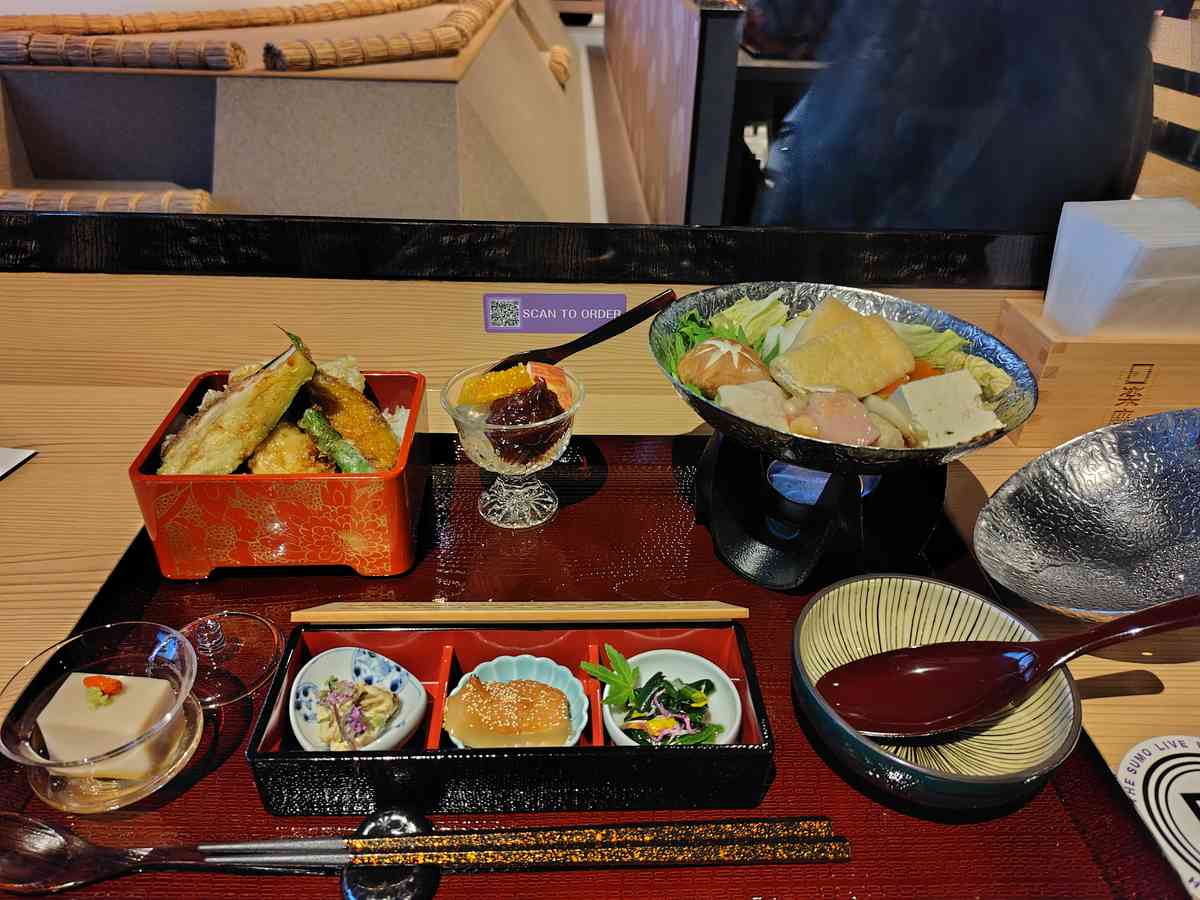
A kaiseki set meal of a tempura bowl and chanko hotchpotch
Almost half of the program is a lecture on “what you need to know” to enjoy sumo, such as techniques and rules. Explanations zip along on a big screen, followed by demonstrations by the wrestlers.
The climax is a series of tournament-style bouts. Four former rikishi fought on the preview day. Flashy lighting and sound effects liven up the mood as they climb onto the ring, but silence suddenly falls once a bout starts. Loud slaps as wrestlers crash into each other and their heavy breathing echo in dead silence — the most intense and solemn moments.
“Most sumo matches are decided in an instant, like a pushout or a slapdown,” said Yoshinori Tashiro, representative director of sumo agency Open Box Co., to which the rikishi belong. “Since ours is entertainment, we choreograph it in daily practice to deliver matches packed with sumo’s charm, but without making them look staged.”
“We’re striving to condense the dramatic appeal of ‘almost getting thrown but not quite’ into a single, focused match,” he said.
Having said that, Tashiro, who had fought in Grand Sumo — professional sumo organized by the Japan Sumo Association — under the ring name Tooyama, stressed that he has “no intention of competing with Grand Sumo.”
“I want to create a scheme for those who watch our show to then go and watch real sumo,” he said, adding that understanding the rules definitely makes sumo more exciting to watch. “We want to cultivate the eye of foreign viewers. I believe that if I can achieve that, I can repay the sumo world.”
With six 15-day tournaments annually, top-level sumo can only be seen 90 days of the year, and only 45 of those are at Tokyo’s Ryogoku Kokugikan. Also, tickets are expensive and sell out very quickly.
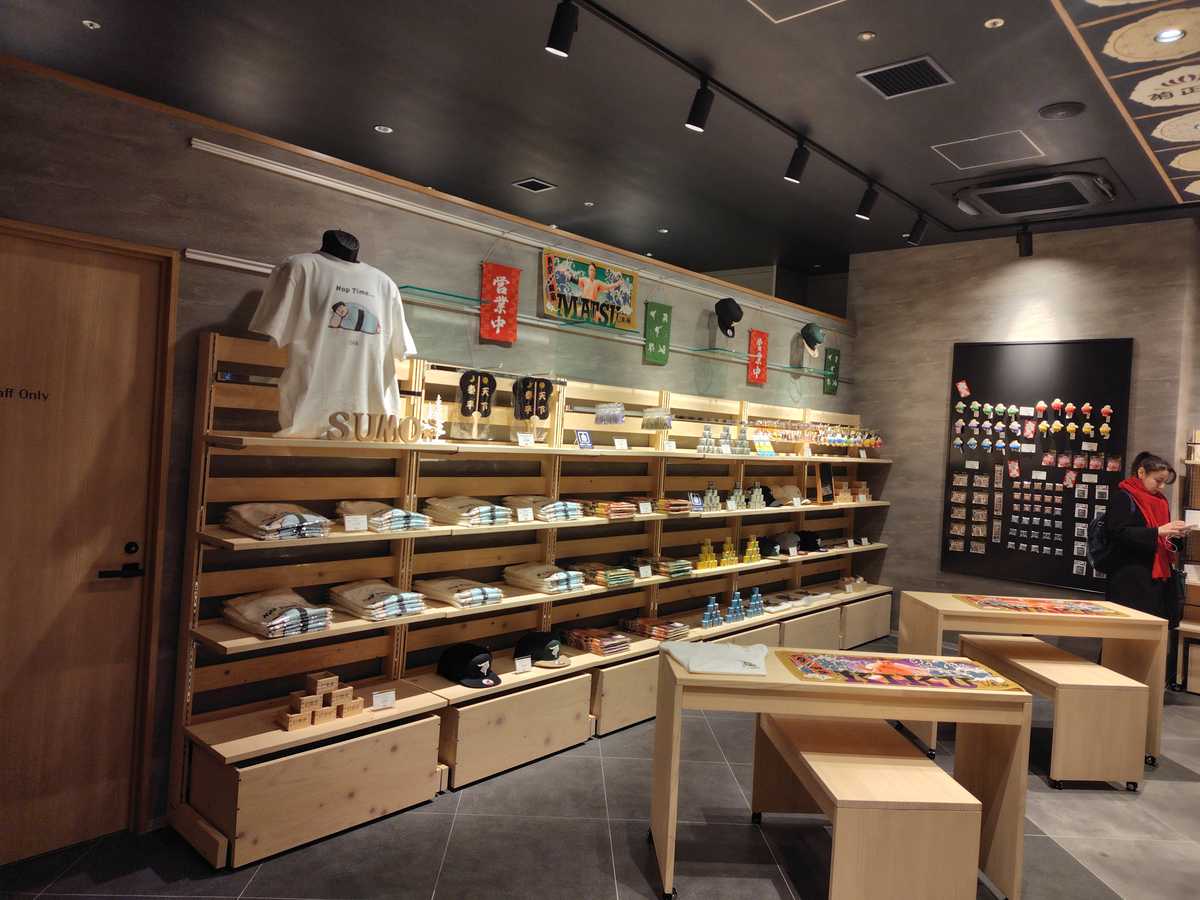
A souvenir shop stands at the entrance of the restaurant.
“We aren’t as good as Grand Sumo, but we want to meet the demand of people who want to see sumo even when there is no tourney. We made it permanent, a small but enjoyable event for all kinds of people,” Tashiro said. He also hopes the show will serve as a second career for retired wrestlers.
In his own second career, Tashiro became an actor after retiring from sumo, appearing in such movies as the Bollywood film “Sumo” and the U.S. movie “John Wick: Chapter 4.” But he aims to educate as well as entertain. He especially wants to help visitors to Japan fully appreciate sumo by understanding what is going on.
You may also like to read
Osaka: Reservations and Seat Belts Required at Flying Restaurant in OsakaA big problem right now, he says, is that some people buy tickets and go to the arena early in the afternoon, only to get bored and go home before the most exciting final bouts with the top-ranked wrestlers start around 5:30 p.m. Educating new spectators has long been a challenge for professional sumo, he said.
“So, we discussed it with stablemasters, and in Osaka, we prepare tickets for the spring tournament for our customers and give lectures at Hirakuza Osaka before they go [to the tournament venue],” said Tashiro, hoping a similar educative tour can be organized in Tokyo.
Everyday prices start at ¥17,000 (or ¥9,500 for children aged 3 to 12), with VIP ringside seats starting at ¥27,000. Visit https://hirakuza.net/sumolp2/ for more information.


Related Tags


Most Read
Popular articles in the past 24 hours
-

15 Years since Great East Japan Earthquake: How Can Affected Area...
-

Japan’s Nikkei Stock Average Rise Lifted by AI Stocks, Easing Con...
-
2 Mt. Fuji Hikers Identified as Police Warn People Not to Climb i...
-

Parents in Japan to Get Instagram Notifications When Teens Repeat...
-

Japan’s Mitsui O.S.K. Lines Container Ship Anchored in Persian Gu...
-

CARTOON OF THE DAY (March 11)
-
Tokyo Conference 2026 Opens, Discusses Rebuilding Multilateralism...
-

Samurai Japan Routs Perky Czech Republic Team After Shuto, Muraka...
Popular articles in the past week
-

Ibaraki Pref.'s 1st Foreign Bus Driver Hired in Tsukuba
-

Nippon Life Insurance's U.S. Arm Sues OpenAI Over Legal Assistanc...
-
Govt to Utilize ODA for Ensuring Economic Security; Securing Ener...
-

Amid Strait of Hormuz Blockade, Shipping Companies Scramble to Ge...
-
Japan Govt Survey Finds Just 10% of Workers Want Working Hours to...
-

Beckoning Cats Get Makeover to Fit Modern Lifestyles with Sleek D...
-
Japan's 2nd Round of U.S. Investments May Be Worth Over $100 Bill...
-

Imperial Family Watches World Baseball Classic Game Against Austr...
Popular articles in the past month
-

Producer Behind Pop Group XG Arrested for Cocaine Possession
-

Japan PM Takaichi’s Cabinet Resigns en Masse
-

Man Infected with Measles Reportedly Dined at Restaurant in Tokyo...
-

Videos Plagiarized, Reposted with False Subtitles Claiming ‘Ryuky...
-

iPS Treatments Pass Key Milestone, but Broader Applications Far f...
-

Sanae Takaichi Elected Prime Minister of Japan; Keeps All Cabinet...
-

Nepal Bus Crash Kills 19 People, Injures 25 Including One Japanes...
-
South Korea Tightens Rules on Foreigners Buying Homes in Seoul Me...
Top Articles in Features
-

Tokyo’s New Record-Breaking Fountain Named ‘Tokyo Aqua Symphony’
-

High-Hydration Bread on the Rise, Seeing Increase in Specialty Shops, Recipe Searches
-
Japanese Students Use Traditional Pickle to Create Novel Wagashi Confectionery
-
Heirs to Kyoto Talent: Craftsman Works to Keep Tradition of ‘Kinran’ Brocade Alive Through Initiatives, New Creations
-

My Spendthrift Mother Constantly Asks Me for Money
JN ACCESS RANKING
-
Producer Behind Pop Group XG Arrested for Cocaine Possession
-
Japan PM Takaichi’s Cabinet Resigns en Masse
-
Man Infected with Measles Reportedly Dined at Restaurant in Tokyo Station
-
Videos Plagiarized, Reposted with False Subtitles Claiming ‘Ryukyu Belongs to China’; Anti-China False Information Also Posted in Japan
-
iPS Treatments Pass Key Milestone, but Broader Applications Far from Guaranteed