
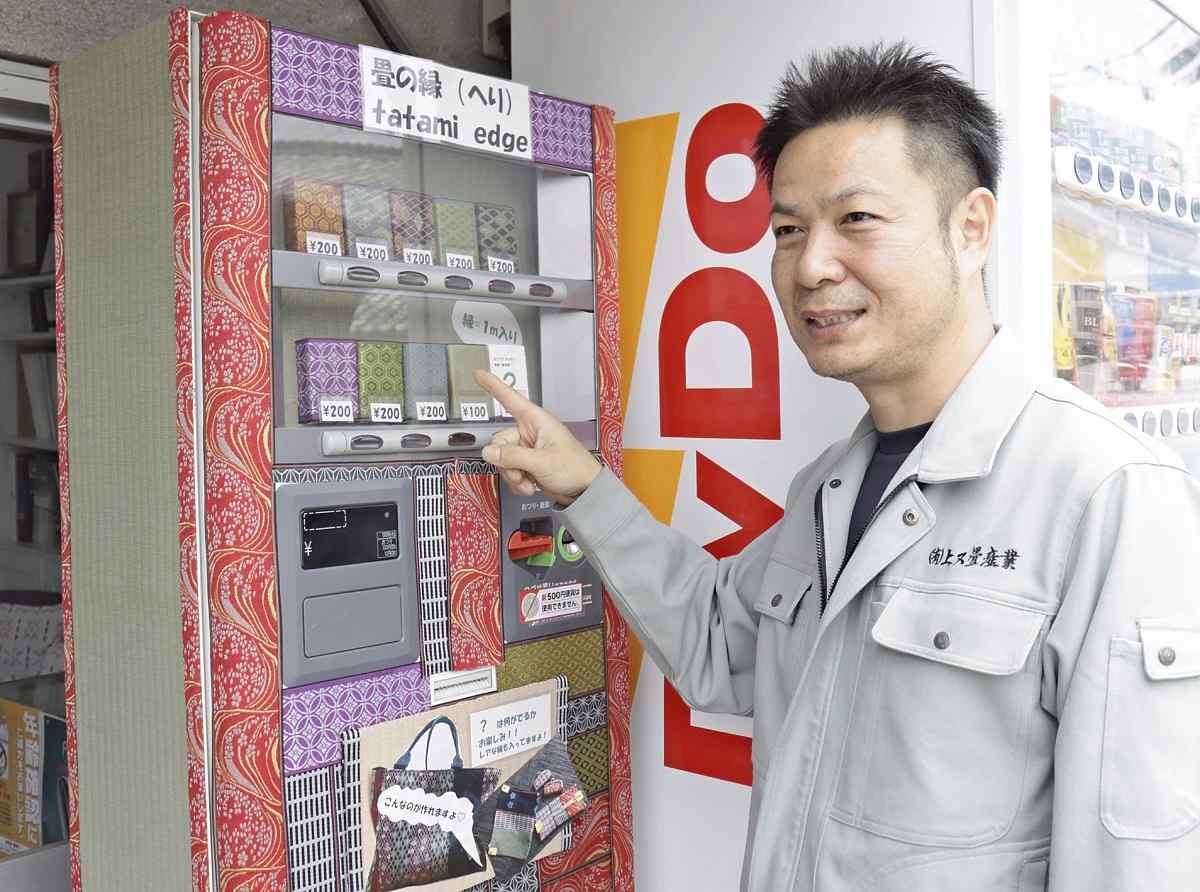
Uemata Tatami Industry President Takashi Ueda points out the tatami-edging selections in the vending machine he installed in Otsu.
11:16 JST, July 15, 2023
OTSU — A vending machine in Otsu that dispenses strips of cloth normally used to wrap the edges of tatami mats is providing a rare opportunity for craft enthusiasts to express themselves, while at the same time reducing waste.
The vending machine was installed by Uemata Tatami Industry as a way to reuse leftover materials. Tatami-edging cloth is typically discarded as waste when there are excess pieces.
The cloth is soft, durable and works well with double-sided tape, making it ideal for creating one-of-a-kind handmade items such as pencil cases, coin purses and bags. Dispensed in small boxes about the size of a pack of cigarettes, the cloth strips are 1 meter long and 8 centimeters wide.

Small items made using tatami edging cloth, such as pencil cases
There are 10 varieties available, including a “mystery” option containing a random pattern, all priced at ¥100 to ¥200.
With the declining popularity of Japanese-style rooms, the tatami mat industry has been facing challenging times.
Uemata Tatami’s 46-year-old president, Takashi Ueda, said, “I want to do anything I can to protect traditional industries.”


Related Tags







Most Read
Popular articles in the past 24 hours
-

German Journalist Traces Footsteps of Great-Grandfather Who Was P...
-

10 Foreign Tourists Sustain Injuries After Fire at Capsule Hotel ...
-

World Baseball Classic: Venezuela Beats Japan in Nail-biting Back...
-

Rapid Services Resume on JR Chuo Line; Suspension Caused by Accid...
-

Rapid Services on JR Chuo Line Suspended; Accident at Kokubunji S...
-

World Baseball Classic: Venezuela Beats Japan in Back-and-Forth Q...
-

World Baseball Classic: Red Sox’s Abreu Hits 3-run Homer, Giving ...
-

Zelenskiy Says Ukraine Wants Money, Technology in Return for Midd...
Popular articles in the past week
-

Japan Figure Skating Legend Yuzuru Hanyu Is Proud Disaster Surviv...
-
15 Measles Patients Confirmed in Tokyo in Past 6 Days; 1 May Have...
-

Massive Sewer Pipe Found Jutting Out of Highway in Osaka
-

Japan Govt to Tighten Requirements to Receive Permanent Residency...
-

Power Outage Forces About 980 Passengers in Yokohama to Walk to T...
-

JR Tokai Breaks Ground on Yamanashi Maglev Station; Will Be Part ...
-

Parents in Japan to Get Instagram Notifications When Teens Repeat...
-

'World's Oldest Bio-Business' Is Japan's Seed Koji Retailing, Mol...
Popular articles in the past month
-

Producer Behind Pop Group XG Arrested for Cocaine Possession
-

Japan PM Takaichi’s Cabinet Resigns en Masse
-

Man Infected with Measles Reportedly Dined at Restaurant in Tokyo...
-
Japan Figure Skating Legend Yuzuru Hanyu Is Proud Disaster Surviv...
-

iPS Treatments Pass Key Milestone, but Broader Applications Far f...
-

Sanae Takaichi Elected Prime Minister of Japan; Keeps All Cabinet...
-

South Korea Tightens Rules on Foreigners Buying Homes in Seoul Me...
-

Nepal Bus Crash Kills 19 People, Injures 25 Including One Japanes...
Top Articles in Features
-
Japanese Students Use Traditional Pickle to Create Novel Wagashi Confectionery
-

My Spendthrift Mother Constantly Asks Me for Money
-

Kawazu Cherry Blossoms in Full Bloom in Japan’s Shizuoka Pref.; Festival to Be Held through March 8
-

Tourists Ignore Safety Barriers Near Famous Zao ‘Snow Monsters’ in Japan
-

Tottori: 95-Year-Old Japanese Descendent from Philippines Visits Father’s Grave
JN ACCESS RANKING
-
Producer Behind Pop Group XG Arrested for Cocaine Possession
-
Japan PM Takaichi’s Cabinet Resigns en Masse
-
Man Infected with Measles Reportedly Dined at Restaurant in Tokyo Station
-
Japan Figure Skating Legend Yuzuru Hanyu Is Proud Disaster Survivor and Gold Medalist, Vows to Continue Support Efforts
-
iPS Treatments Pass Key Milestone, but Broader Applications Far from Guaranteed