
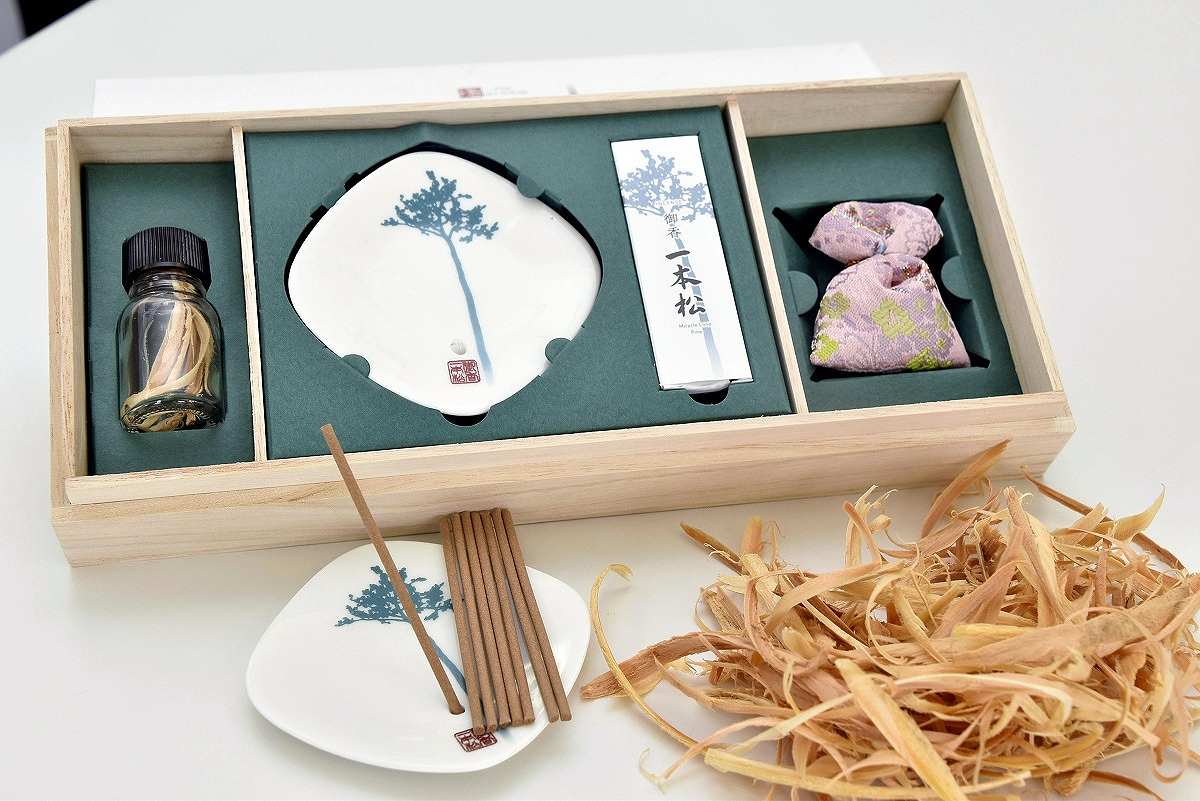
The Nanamanbun no Ichi no Kiseki no Kaori incense set
1:00 JST, July 10, 2023
RIKUZEN-TAKATA, Iwate — Incense made from the “miracle lone pine,” which remained standing after the 2011 Great East Japan Earthquake and tsunami in Rikuzen-Takata, Iwate Prefecture, was unveiled in June.
Of the about 70,000 pine trees that grew in the former Takata Matsubara forest, the “miracle lone pine” was the only tree to survive the disaster. Work to preserve the tree was completed in July 2013, and it is now on display as a monument.
The city of Rikuzen-Takata asked the public last year for ideas of how to use wood waste — about 750 kilograms — generated during the preservation process, in a way that also informs future generations about the disaster. In response, local trading company Rikuzentakata Agency Co. proposed an idea.
The incense set, which was also developed by the company, is given to those who donate ¥200,000 through the furusato nozei system, a tax-deductible donation program.
The incense set, Nanamanbun no Ichi no Kiseki no Kaori (The fragrance of the one-in-70,000 miracle), comprises four items: 24 eight-centimeter-long incense sticks in which wood chips are kneaded; an aromatic bag containing a mixture of wood waste and scented material; a small bottle containing wood chips; and an incense plate.
“For locals who have been struggling after the earthquake, the tree is like a beacon of light for the future,” said Rikuzentakata Agency President Kiyoshi Murakami. “I hope people will feel like they are near the tree as the scent gives them energy.”
The Takata Matsubara forest is said to have originated from trees planted by Matsuzaka Shinemon Sadanobu (1672-1754), a local official, and others to protect the area from the wind and tides during the Edo period (1603-1867).
“I think Shinemon would be pleased if the product could help promote the town with its declining population, as well as lift the spirits of the locals,” said Yasumori Matsuzaka, 78, a descendant of Shinemon Sadanobu and director of the Rikuzentakata City Museum.
Selling the incense set to the general public for ¥55,000 is also being considered.
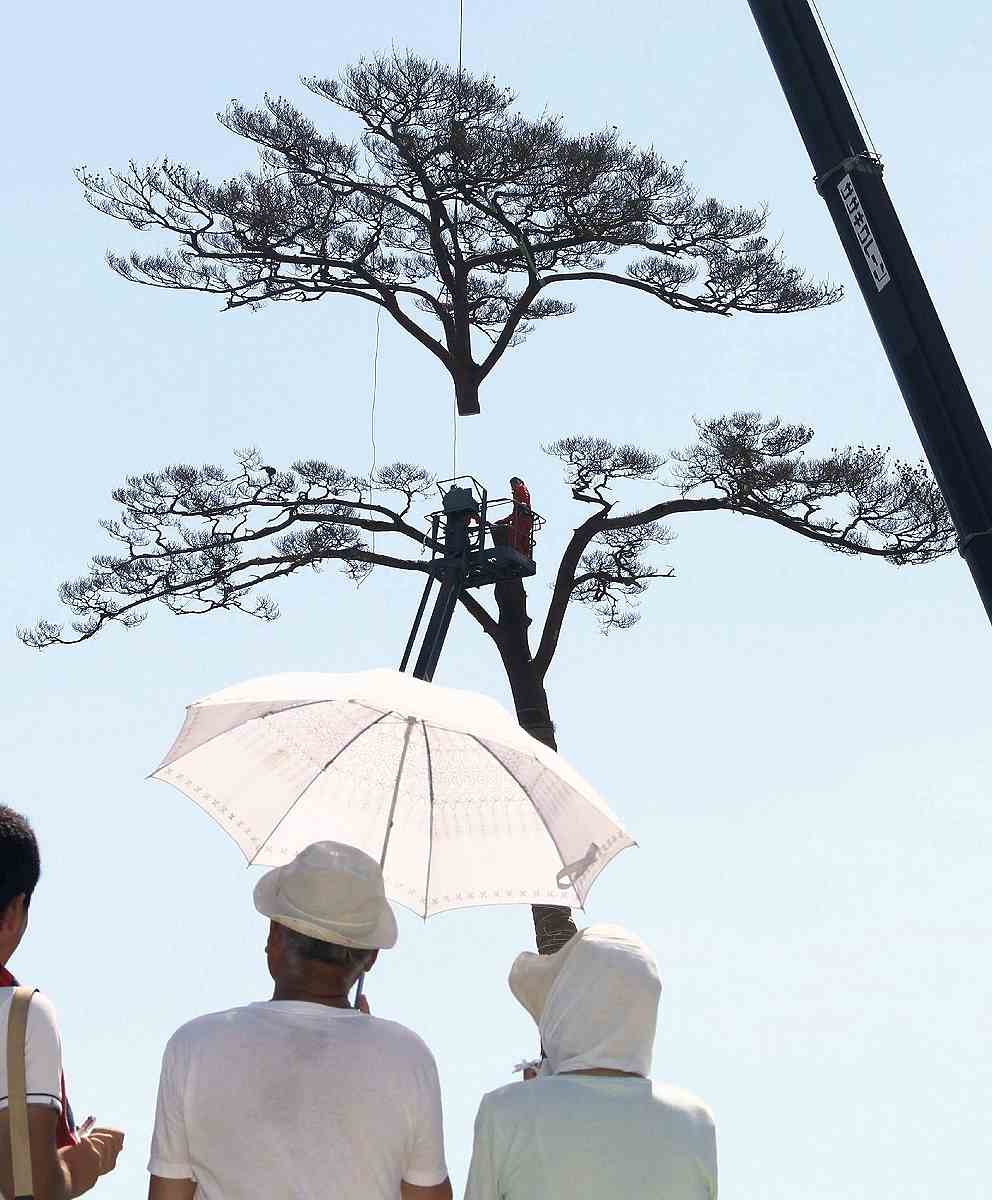
The “miracle lone pine” was cut to undergo a preservation process in Rikuzen-Takata in September 2012.


Related Tags






Most Read
Popular articles in the past 24 hours
-

Ransomware Attacks Hitting Japan's Small, Midsize Firms
-

German Journalist Traces Footsteps of Great-Grandfather Who Was P...
-

10 Foreign Tourists Sustain Injuries After Fire at Capsule Hotel ...
-

World Baseball Classic: Venezuela Beats Japan in Nail-biting Back...
-

Rapid Services on JR Chuo Line Suspended; Accident at Kokubunji S...
-

Rapid Services Resume on JR Chuo Line; Suspension Caused by Accid...
-

World Baseball Classic: Red Sox’s Abreu Hits 3-run Homer, Giving ...
-

World Baseball Classic: Venezuela Beats Japan in Back-and-Forth Q...
Popular articles in the past week
-

Japan Figure Skating Legend Yuzuru Hanyu Is Proud Disaster Surviv...
-
15 Measles Patients Confirmed in Tokyo in Past 6 Days; 1 May Have...
-

Massive Sewer Pipe Found Jutting Out of Highway in Osaka
-

Japan Govt to Tighten Requirements to Receive Permanent Residency...
-
Power Outage Forces About 980 Passengers in Yokohama to Walk to T...
-
JR Tokai Breaks Ground on Yamanashi Maglev Station; Will Be Part ...
-

Parents in Japan to Get Instagram Notifications When Teens Repeat...
-
'World's Oldest Bio-Business' Is Japan's Seed Koji Retailing, Mol...
Popular articles in the past month
-

Producer Behind Pop Group XG Arrested for Cocaine Possession
-

Japan PM Takaichi’s Cabinet Resigns en Masse
-

Man Infected with Measles Reportedly Dined at Restaurant in Tokyo...
-
Japan Figure Skating Legend Yuzuru Hanyu Is Proud Disaster Surviv...
-

iPS Treatments Pass Key Milestone, but Broader Applications Far f...
-

Sanae Takaichi Elected Prime Minister of Japan; Keeps All Cabinet...
-

South Korea Tightens Rules on Foreigners Buying Homes in Seoul Me...
-

Nepal Bus Crash Kills 19 People, Injures 25 Including One Japanes...
Top Articles in Features
-
Japanese Students Use Traditional Pickle to Create Novel Wagashi Confectionery
-

My Spendthrift Mother Constantly Asks Me for Money
-
Kawazu Cherry Blossoms in Full Bloom in Japan’s Shizuoka Pref.; Festival to Be Held through March 8
-
Tourists Ignore Safety Barriers Near Famous Zao ‘Snow Monsters’ in Japan
-
Tottori: 95-Year-Old Japanese Descendent from Philippines Visits Father’s Grave
JN ACCESS RANKING
-
Producer Behind Pop Group XG Arrested for Cocaine Possession
-
Japan PM Takaichi’s Cabinet Resigns en Masse
-
Man Infected with Measles Reportedly Dined at Restaurant in Tokyo Station
-
Japan Figure Skating Legend Yuzuru Hanyu Is Proud Disaster Survivor and Gold Medalist, Vows to Continue Support Efforts
-
iPS Treatments Pass Key Milestone, but Broader Applications Far from Guaranteed