
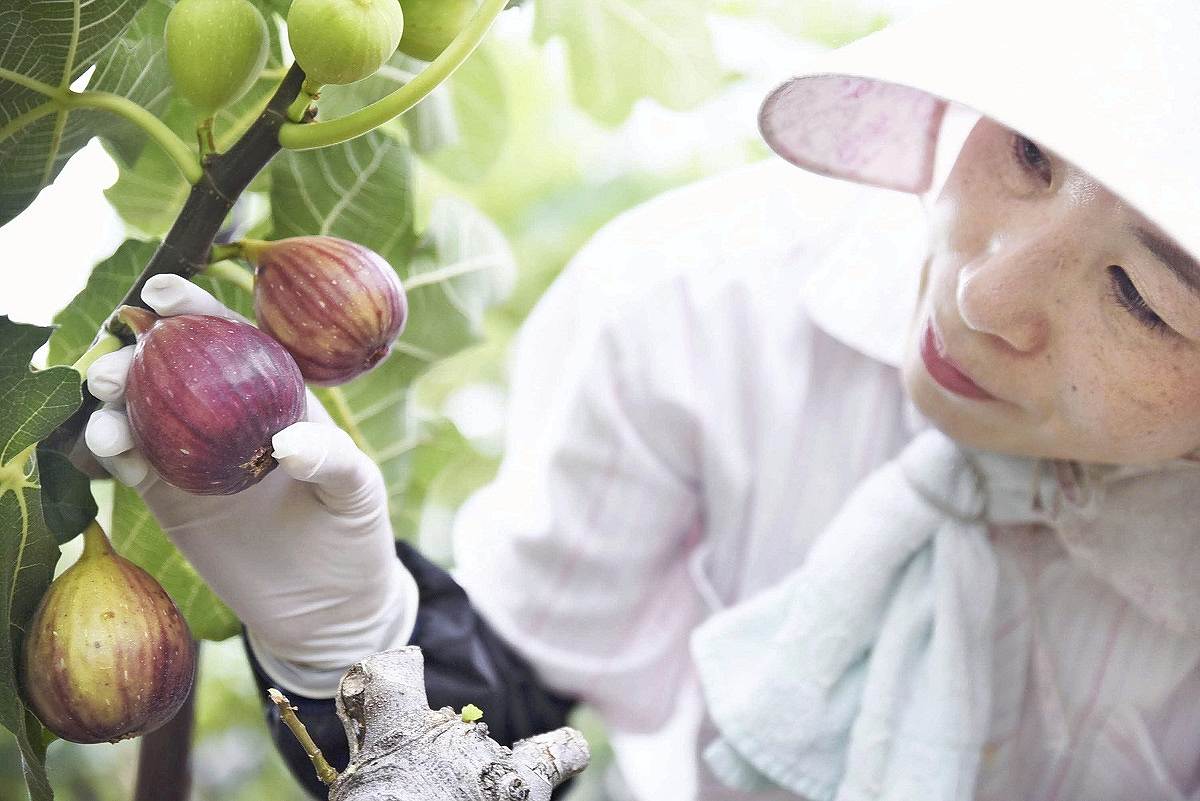
Emi Nishida checks the condition of her figs.
15:00 JST, October 22, 2023
A specialty of Kawanishi, Hyogo Prefecture, figs are fast becoming well known far beyond the town where they are cultivated. Some fully ripe figs that are harvested early in the morning are used in stores as far away as Tokyo on the same day. They are popularly called “asadori no megumi,” which means “blessings of the morning harvest.” The figs can be eaten raw as they are, while those that are higher quality are used at a famous tart shop in Tokyo or processed into wine that has become a hit in local markets. “Everyone who is part of the fruit’s process will work together to get the word out about the charm of Kawanishi figs,” said an official of the Kawanishi municipal government.
Fruit has been widely cultivated in Kawanishi for many years. As for figs, many believe that the current main variety, Masui Dauphine, was successfully produced in the city for the first time in Japan in the early Showa era (1926-89). Fig production then spread to other parts of the country. Today, about 100 farmers grow figs on a total of 12 hectares of land, mainly in the southern part of the city, and ship roughly 400 tons of figs each year to places including the Keihanshin area (Kyoto, Osaka and Kobe).
With a focus on emphasizing their fig’s sweet flavor and freshness, the city decided on the nickname of “asadori no megumi” in 2015 after asking the public for feedback, and dove straight into promoting itself as the birthplace of modern figs.
Kawanishi fig tarts

A tart made with Kawanishi figs
Kawanishi figs have been attracting attention in Tokyo as well since 2019. Taking advantage of its close location to Osaka International Airport, the city cooperates with airlines such as Japan Airlines and transports figs harvested early in the morning to Tokyo. Qu’il fait bon, a nationwide fruit tart chain, produces tarts combining Kawanishi figs with chocolate cream and sells them at stores in Tokyo’s Ginza and Aoyama districts in the afternoon of the same day that they shipped. A whole tart with a diameter of 25 centimeters sells for ¥9,936, including tax.
“The flavor of the figs is as strong as the chocolate,” said a public relations official at Qu’il fait bon. “The tart is popular among women in their 30s. Some customers line up in front, waiting for the tart to hit the shelves.”
As for wine, Japan agricultural cooperative Hyogo Rokko and others commercialized a fig variant in 1995. The wine is called “The Morning Dewdrops,” and the cooperative sells it around February every year for a limited period. Businesses in Kawanishi have developed products using figs such as cakes, pies and freeze-dried items, which are used as gifts for the city’s hometown tax donation program and for other purposes.

Fig wine, popular for its sweet, fruity aroma.
Fig season takes place in August and September. Emi Nishida, 55, a fig farmer in the city, grows about 6,000 fig trees in her field and harvests them from around 4 a.m. with her family and friends. “Since there has been less rain this year, the figs are small, but their sweetness is condensed,” said Nishida. Speaking about Kawanishi figs being built up as a brand, she said, “I hope many people come to know the appeal of this fruit that has been carefully taken care of.”





Most Read
Popular articles in the past 24 hours
-

Ransomware Attacks Hitting Japan's Small, Midsize Firms
-

German Journalist Traces Footsteps of Great-Grandfather Who Was P...
-

10 Foreign Tourists Sustain Injuries After Fire at Capsule Hotel ...
-

World Baseball Classic: Venezuela Beats Japan in Nail-biting Back...
-

Rapid Services Resume on JR Chuo Line; Suspension Caused by Accid...
-

Rapid Services on JR Chuo Line Suspended; Accident at Kokubunji S...
-

World Baseball Classic: Venezuela Beats Japan in Back-and-Forth Q...
-

World Baseball Classic: Red Sox’s Abreu Hits 3-run Homer, Giving ...
Popular articles in the past week
-

Japan Figure Skating Legend Yuzuru Hanyu Is Proud Disaster Surviv...
-
15 Measles Patients Confirmed in Tokyo in Past 6 Days; 1 May Have...
-

Massive Sewer Pipe Found Jutting Out of Highway in Osaka
-

Japan Govt to Tighten Requirements to Receive Permanent Residency...
-

Power Outage Forces About 980 Passengers in Yokohama to Walk to T...
-

JR Tokai Breaks Ground on Yamanashi Maglev Station; Will Be Part ...
-

Parents in Japan to Get Instagram Notifications When Teens Repeat...
-
'World's Oldest Bio-Business' Is Japan's Seed Koji Retailing, Mol...
Popular articles in the past month
-

Producer Behind Pop Group XG Arrested for Cocaine Possession
-

Japan PM Takaichi’s Cabinet Resigns en Masse
-

Man Infected with Measles Reportedly Dined at Restaurant in Tokyo...
-
Japan Figure Skating Legend Yuzuru Hanyu Is Proud Disaster Surviv...
-

iPS Treatments Pass Key Milestone, but Broader Applications Far f...
-

Sanae Takaichi Elected Prime Minister of Japan; Keeps All Cabinet...
-

South Korea Tightens Rules on Foreigners Buying Homes in Seoul Me...
-

Nepal Bus Crash Kills 19 People, Injures 25 Including One Japanes...
Top Articles in Features
-
Japanese Students Use Traditional Pickle to Create Novel Wagashi Confectionery
-

My Spendthrift Mother Constantly Asks Me for Money
-
Kawazu Cherry Blossoms in Full Bloom in Japan’s Shizuoka Pref.; Festival to Be Held through March 8
-
Tourists Ignore Safety Barriers Near Famous Zao ‘Snow Monsters’ in Japan
-
Tottori: 95-Year-Old Japanese Descendent from Philippines Visits Father’s Grave
JN ACCESS RANKING
-
Producer Behind Pop Group XG Arrested for Cocaine Possession
-
Japan PM Takaichi’s Cabinet Resigns en Masse
-
Man Infected with Measles Reportedly Dined at Restaurant in Tokyo Station
-
Japan Figure Skating Legend Yuzuru Hanyu Is Proud Disaster Survivor and Gold Medalist, Vows to Continue Support Efforts
-
iPS Treatments Pass Key Milestone, but Broader Applications Far from Guaranteed