
Junichi Okada Wears Three Hats in ‘Last Samurai Standing,’ Serving as Star, Producer, Action Choreographer in Thrilling Netflix Period Drama
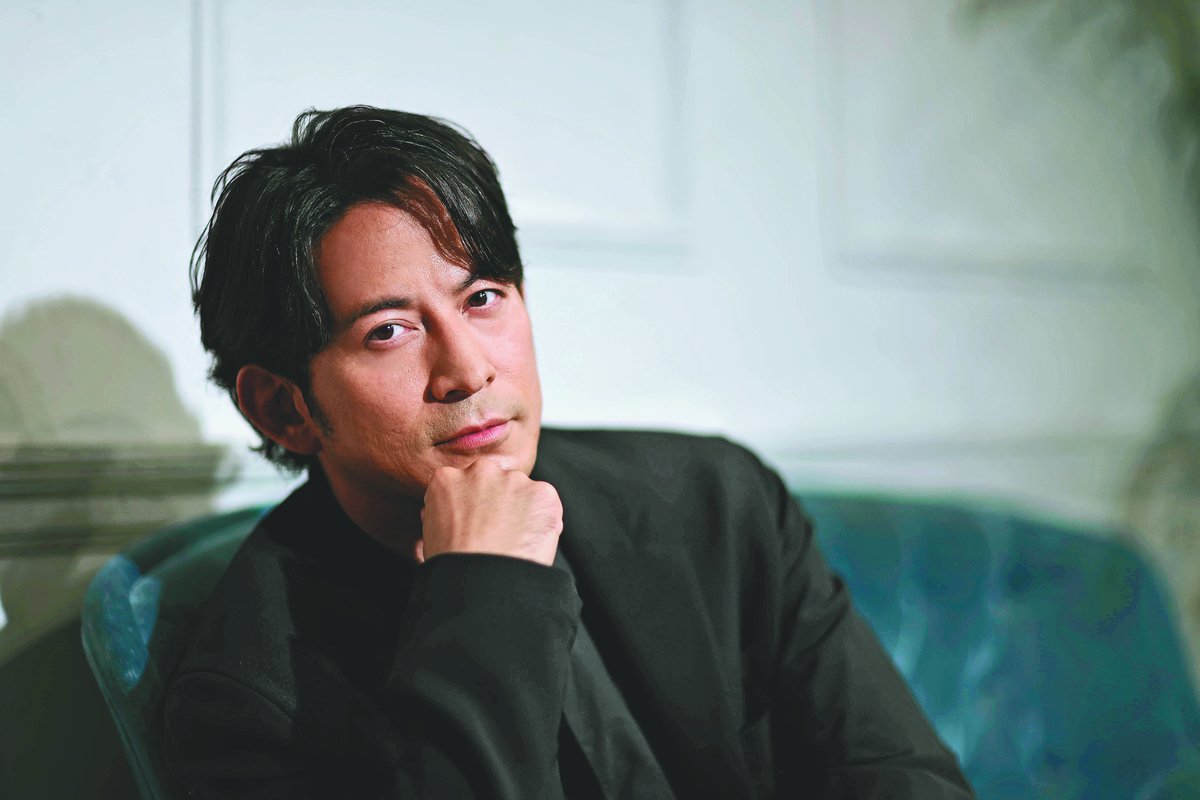
Junichi Okada
11:00 JST, January 9, 2026
Ten years since Netflix launched in Japan, the streaming platform has ventured into its first Japanese period drama series. “Last Samurai Standing,” whose Japanese title is “Ikusagami,” centers on former samurai who, ousted from society in the early Meiji era (1868-1912), fight for their lives in a deadly game of survival.
Junichi Okada, who has taken on three roles in the series — lead actor, producer and action choreographer — recently sat with The Yomiuri Shimbun for an interview and spoke about his passion for period films and dramas.
The series has been distributed worldwide exclusively on Netflix. It depicts martial artists and former samurai, displaced societally due to a decree banning swords, who race to Tokyo from Kyoto, killing each other along the way in pursuit of a huge cash prize.
Okada plays Shujiro Saga, feared by his peers as a legendary swordman.
“I wondered how well I could embody such a powerful samurai, and focused on quality to convey it authentically,” Okada said.
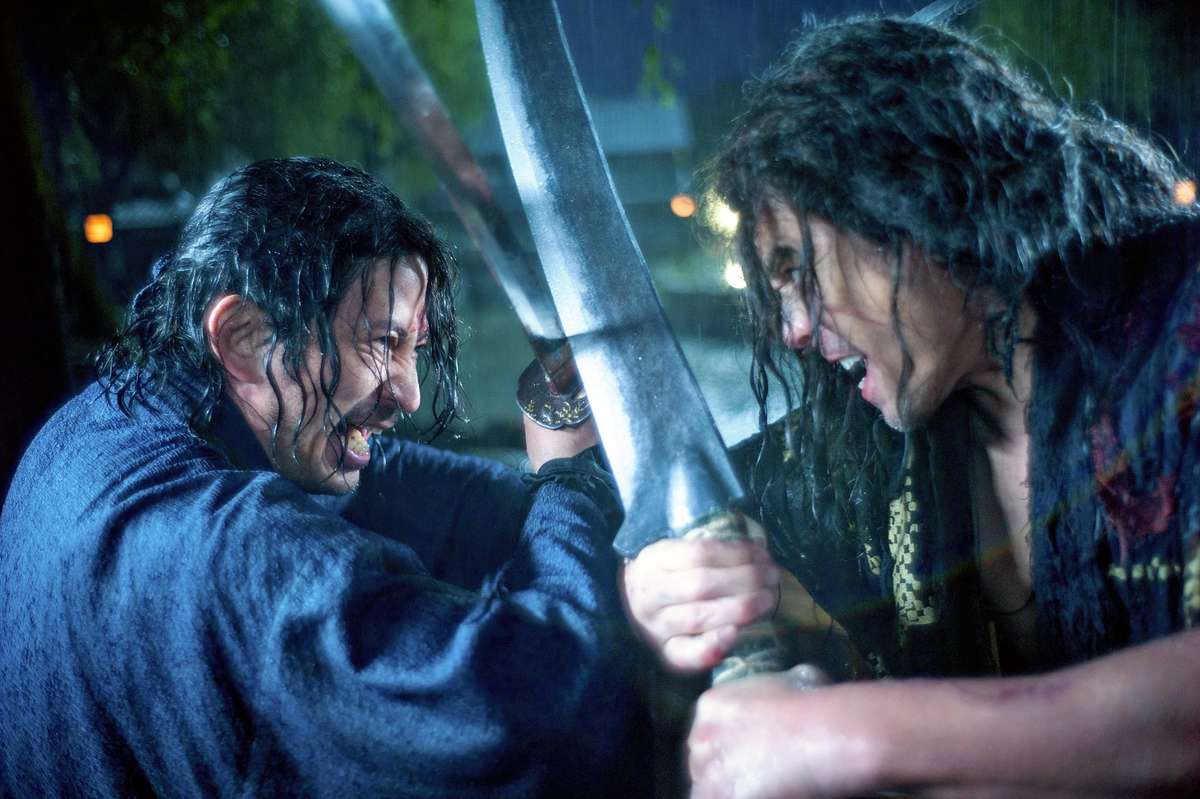
Shujiro Saga (Junichi Okada), left, is hunted by Bukotsu (Hideaki Ito), a notoriously vicious fighter.
Of course, quality must accompany substance. In a scene in which Shujiro duels a mighty opponent, Okada portrays fierce sword fighting at a pace almost too quick for the eye to follow. No editing or filming techniques were used to speed up the action. Instead, “we tried to convey to viewers the sense of how much the fighting was accelerating at a realistic speed,” said Okada.
After breaking each other’s blades, the men keep at it with their broken swords and resort to using other weapons, providing a sense of catharsis from watching masters give it their all.
While the series gives Okada the opportunity to show off his action choreography skills, he said he only used 30% of his toolkit.
“If you incorporated all the beauty of Japanese style, formality and elegance, it would result in something too quiet that wouldn’t become a hit in today’s climate. What I can do now is show as many people as possible the fun and action of an engaging period drama,” he said, before adding in a low voice: “One day, I’d like to create something in which I can use 100% of myself.”
Martial arts expertise
While Okada’s chiseled good looks have not lessened over time, he has grown more soft-spoken, and his gaze more piercing. Most noticeably, he has trained meticulously and bulked up his physique.
“I’m an action person, and I exercise every day so that I won’t waste any of the work I’ve done up till this point. At the moment, my main focus is Brazilian jiujitsu, and I also work on tachi waza standing techniques,” he said.
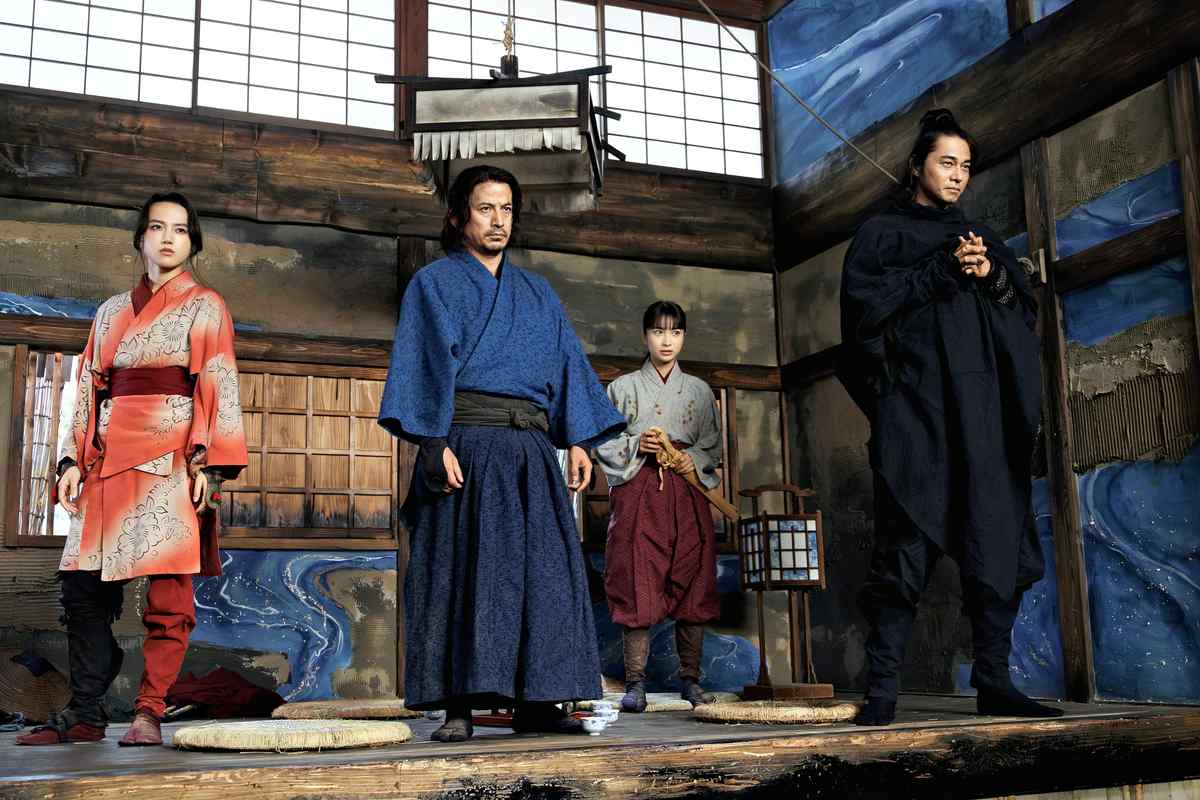
From left: Iroha (Kaya Kiyohara), Shujiro (Junichi Okada), Futaba (Yumia Fujisaki) and Kyojin (Masahiro Higashide) travel together.
Okada is known for his vast knowledge of martial arts.
“I told my previous management company, ‘Body language transcends language barriers. I want to be an actor who can do action and period films as well as dramas,’ and I still do. I’ve never changed my mind. I’m that kind of person,” he said.
Okada has engaged in various martial arts, such as the Philippine martial art kali, which is popular among Hollywood action stars, in addition to jeet kune do and USA shooto, because he wanted to make use of them in his action work. He also learned the way in which Japanese people in the past used their bodies while studying iaijutsu, the traditional martial art of quickly drawing a sword. It was after this that he took on Brazilian jiujitsu.
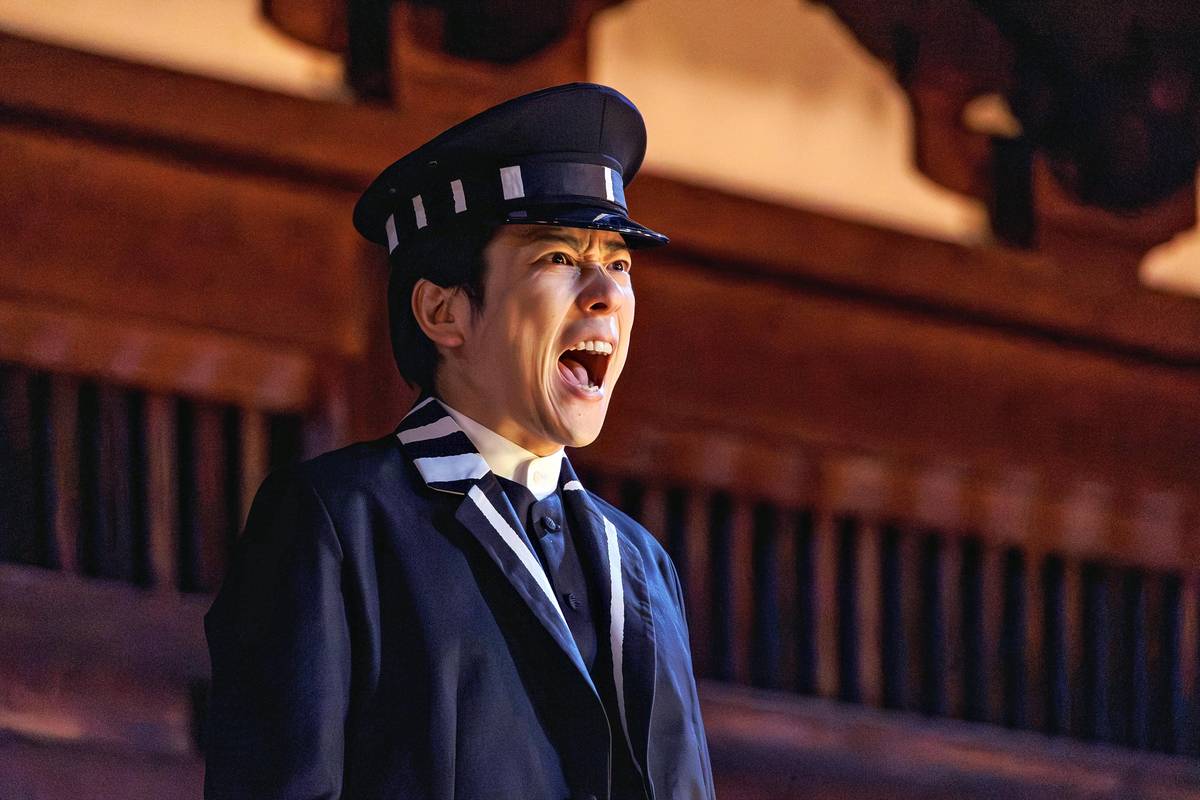
Enju (Kazunari Ninomiya) announces the start of the game.
All those experiences proved useful in “Last Samurai Standing,” with a notable example being a scene which depicts Shujiro fighting with his bare hands.
“You don’t punch. You hit with the heel of your palm,” Okada explained. “In Shujiro’s time, front kicks were rare, but we came up with the idea of it being his secret technique and made it part of his fighting style.”
He poured his heart and soul into each and every battle scene.
Working backstage
When he was young, Okada set his goals in 10-year increments.
“From 14 to 23 was my pop idol period. From 24, it was my ‘aspiring-actor’ era. The ‘actor period’ started at 34, and from 44, I decided to pursue what interests me, and began taking on work behind the camera in order to fully experience the thrill of creating something,” he said.
Kicking off his “creating” period, he received the offer of “Last Samurai Standing,” just before he turned 44. Upon reading the original novel, he thought it would be difficult to adapt to a visual medium. But at the same time, he had the hunch that, “If this works, this will be it.”
He began production with the goal of delivering “a sense of authenticity, a sense of weight and a sense of reality, without falling into fantasy.”
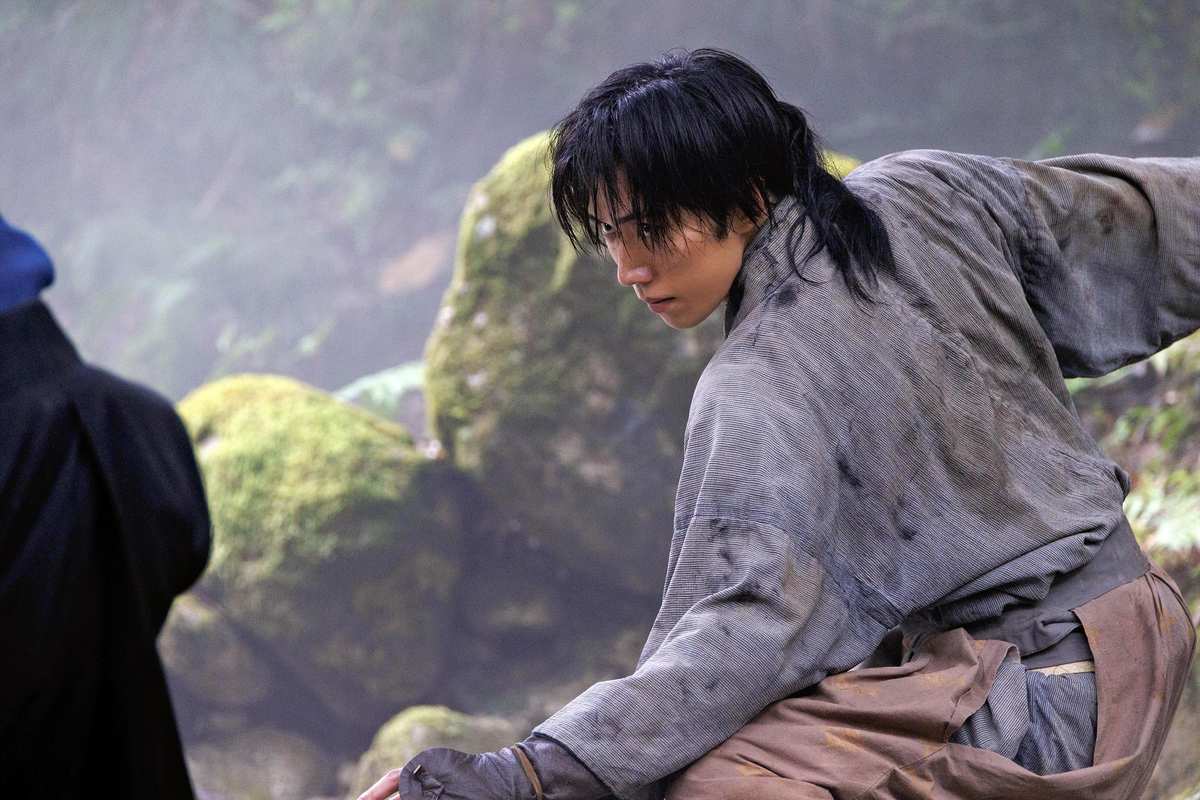
Shikura (Taichi Saotome), raised with Shujiro, plays the game to defeat his archenemy.
He also came to realize the challenges of being a producer.
“For example, you have the power to stop [a scene with an actor] falling down the stairs because it’s dangerous. Every time I tried to shoot a scene that [other people] asked to stop due to the risk, I would say, ‘This is why I’m a producer,’ and try to negotiate,” he recalls.
When on the production side, certain details become crucial to keep in mind — not only the schedule and the budget but even how many props an actor is allowed to destroy.
“There are things that are better for a lead actor not to know. If you’re able to only think about the acting, that selfishness can make you look better,” he said with a grin.
During production, he incorporated ideas given by the young members of the creative team, such as subtly changing the color palette in scenes where Shujiro and his crew arrive at a new town. At the root of this approach is his pride in his work, nurtured by watching many period films and dramas and creating his own.
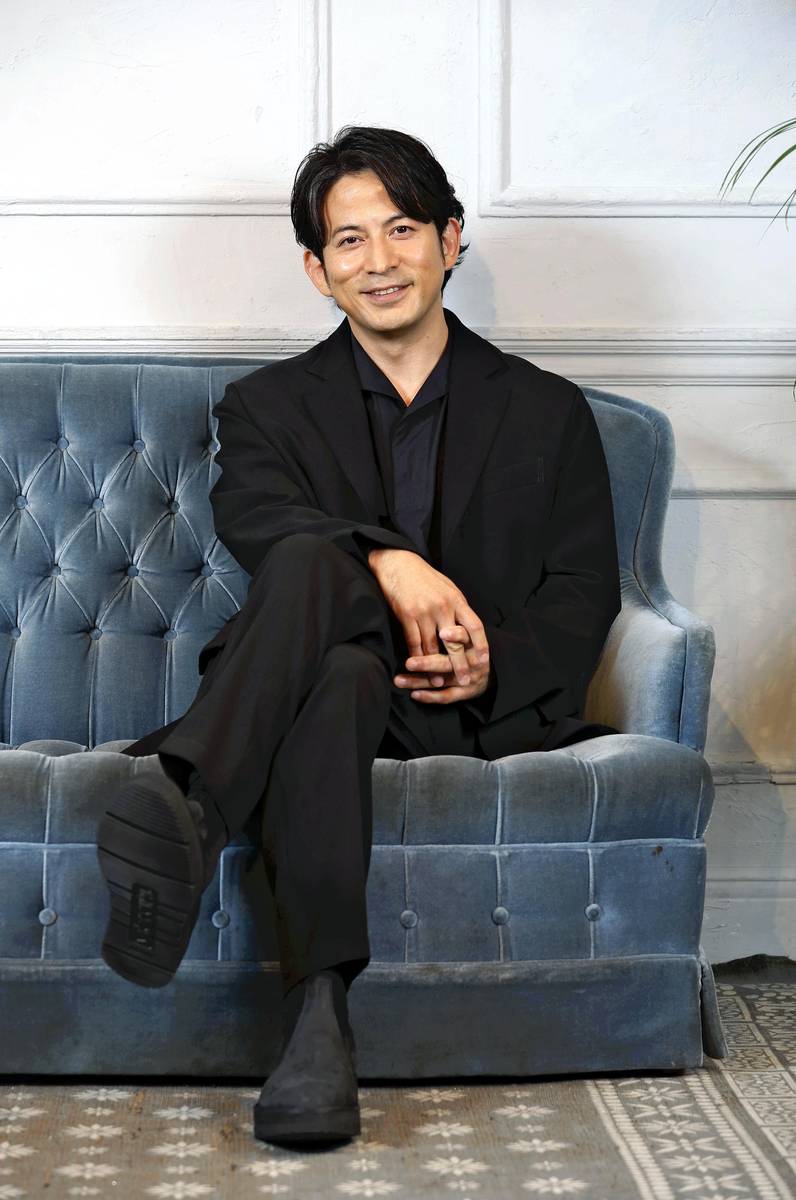
Junichi Okada
“Akira Kurosawa and Shintaro Katsu made films with samurai rolling over in mud. People used to say those ‘action films’ were not period films, but they were huge hits internationally and became the standard. This time, our challenge was to see if the younger generation could borrow the knowledge from generations past, reconstruct it while maintaining verisimilitude and make it into something entertaining,” he said.
Junichi Okada
Born on Nov. 18, 1980, Okada is from Osaka Prefecture. In 1995, he debuted as a member of pop idol group V6. He starred in the TV drama series “Kisarazu Cat’s Eye” in 2002 and in NHK’s Taiga epic historical drama series “Strategist Kanbe” in 2014. He has starred in period films such as “Sekigahara,” “Samurai’s Promise” and “Baragaki: Unbroken Samurai.” He explores the essence of various martial arts in NHK’s talk show “Budo Mind: Kamiwaza.”





Most Read
Popular articles in the past 24 hours
-

Strait of Hormuz Closure Shakes Markets; Prolonged Closure Could ...
-
Measles Patient Visited Hospital in Bunkyo Ward, Tokyo, Metropoli...
-

Iran Situation: Japan Must Exert Diplomatic Efforts without Merel...
-

Milano Cortina 2026: Japanese Figure Skater Miura Returns to Home...
-

2 of Japan's Opposition Parties Submit Bill to Revise Political F...
-

Takayama Among World's Top 10 Most Welcoming Cities for 2026; 2nd...
-
Chiba Police to Arrest Japanese National in Midair; Man Accused o...
-

Former Nomura Securities Employee Given 18-year Prison Sentence f...
Popular articles in the past week
-
Milano Cortina 2026: Japanese Gold Medalist Figure Skater Miura S...
-
Tokyo Spends Big on Children, Wins Over Parents
-
Japan’s Miura, Kihara Announce Withdrawal from Figure Skating Wor...
-

Yokohama to Test Out Renewable-Powered Offshore Floating Data Cen...
-
BOJ Keeping Eye on Economy and Takaichi's ‘Proactive Fiscal Polic...
-
Tokyo Measles Patient Traveled to Fukuoka Aboard JAL Planes; Susp...
-
Japan’s Takaichi Speaks on New U.S. Tariff in Upper House, Says P...
-

Nidec Chairman Resigns Amid Accounting Scandal at Major Japanese ...
Popular articles in the past month
-

Producer Behind Pop Group XG Arrested for Cocaine Possession
-

Japan PM Takaichi’s Cabinet Resigns en Masse
-

Man Infected with Measles Reportedly Dined at Restaurant in Tokyo...
-

Israeli Ambassador to Japan Speaks about Japan’s Role in the Reco...
-

Videos Plagiarized, Reposted with False Subtitles Claiming ‘Ryuky...
-

Prudential Life Insurance Plans to Fully Compensate for Damages C...
-

Woman with Measles Visited Hospital in Tokyo Multiple Times Befor...
-

iPS Treatments Pass Key Milestone, but Broader Applications Far f...
Top Articles in Culture
-
BTS to Hold Comeback Concert in Seoul on March 21; Popular Boy Band Releases New Album to Signal Return
-

Director Naomi Kawase’s New Film Explores Heart Transplants in Japan, Production Involved Real Patients, Families
-

Tokyo Exhibition Offers Inside Look at Impressionism; 70 of 100 Works on ‘Interiors’ by Monet, Others on Loan from Paris
-
Traditional Japanese Silk Hakama Tradition Preserved by Sole Weaver in Sendai
-
Exhibition Featuring Yoshiharu Tsuge’s Manga World Underway in Chofu, Tokyo; Unique, Surreal Works Draw Steady Crowds
JN ACCESS RANKING
-
Producer Behind Pop Group XG Arrested for Cocaine Possession
-
Japan PM Takaichi’s Cabinet Resigns en Masse
-
Man Infected with Measles Reportedly Dined at Restaurant in Tokyo Station
-
Israeli Ambassador to Japan Speaks about Japan’s Role in the Reconstruction of Gaza
-
Videos Plagiarized, Reposted with False Subtitles Claiming ‘Ryukyu Belongs to China’; Anti-China False Information Also Posted in Japan