
New Leader of Japan’s CRA Opposition Party Faces Challenge of Forging Unity
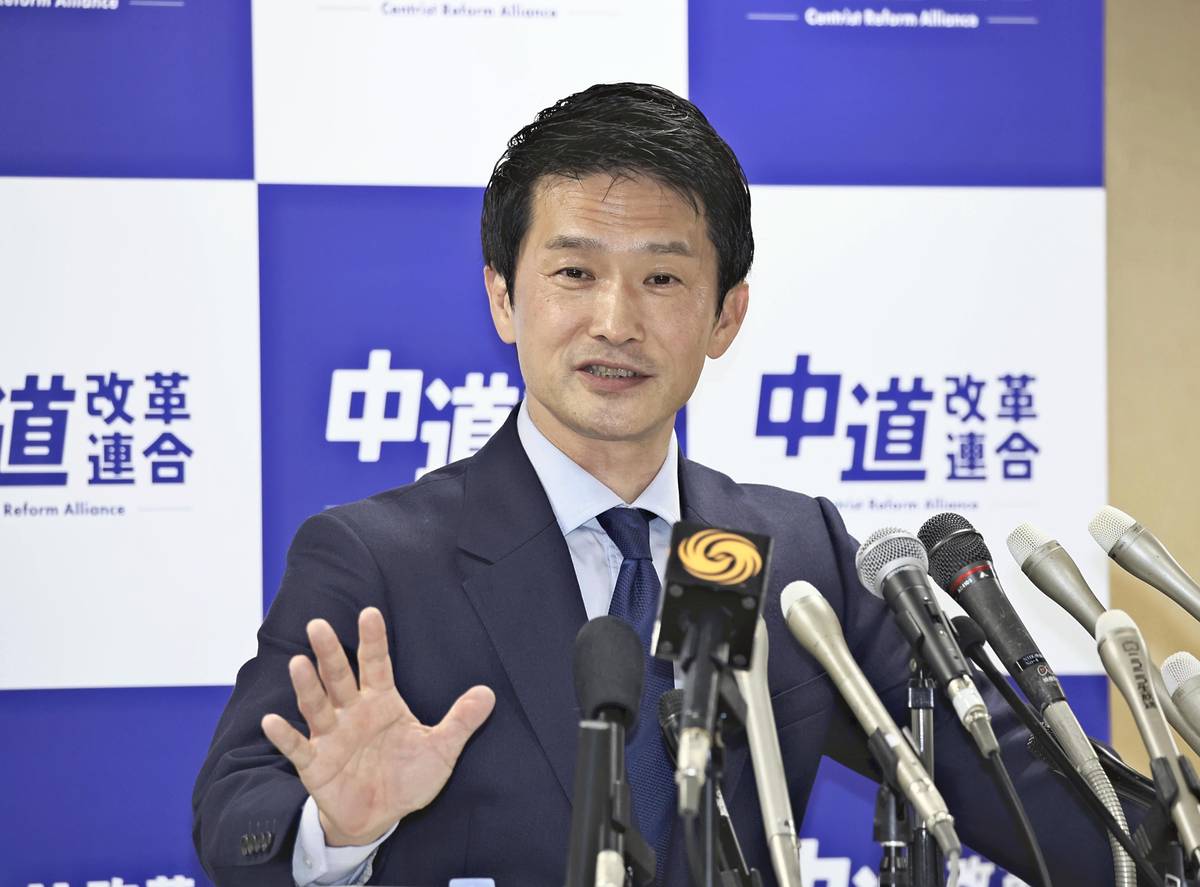
Newly elected Centrist Reform Alliance leader Junya Ogawa
17:57 JST, February 19, 2026
The Centrist Reform Alliance’s new leader, Junya Ogawa, is expected to face the difficult task of steering his party amid a number of challenges, such as how to deal with the massive ruling bloc and promote party conciliation.
The party launched its new leadership team on Wednesday. The CRA was formed in January by House of Representatives members of the Constitutional Democratic Party of Japan and Komeito, but the CDPJ and Komeito still exist as separate parties in the House of Councillors.
Ogawa had hoped for cooperation with members of those parties in the upper house, but five CDPJ members dealt his plans a blow when they did not vote for him in the upper house’s election for prime minister.
In the first round of voting on Wednesday, five CDPJ members, including Yuko Mori and Ai Aoki, instead casts votes for party leader Shunichi Mizuoka.
“At present, I belong to the CDPJ, so it is extremely natural to write down the name of the CDPJ leader,” said Aoki, who belongs to the party’s Isseikai group, led by former House of Representatives member Ichiro Ozawa.
During their meeting on Tuesday, Ogawa, Mizuoka and Komeito head Toshiko Takeya had confirmed coordination among the three parties and broadly agreed to vote for Ogawa in the prime minister election.
“I would like to make efforts to minimize communication issues among the three parties,” Ogawa said on Wednesday.
At a meeting of party lawmakers on the same day, the CRA approved the appointments of former CDPJ member Takeshi Shina, 59, as party secretary general and former Komeito member Mitsunari Okamoto, 60, as policy chief. In the special Diet session, the opposition party will have to face the massive ruling bloc, with the LDP alone holding more than two-thirds of seats in the lower house.
Three parties’ policy chiefs discussed jointly coordinating policies. The move aims at boosting the support rate of the CRA by creating highlights in Diet debates, such as in interpellations by party representatives, and at the Budget Committee.
In response to reporters’ question after the meeting on whether the three parties will coordinate their positions on bills, Okamoto said, “[Our positions] may be divided, but we would like to aim [to come to an agreement].”
Ogawa hopes to increase his party’s presence by monitoring the administration and proposing policies. But the number of party lawmakers is 49 in the lower house, short of the 51 seats needed to independently submit no-confidence motions against the cabinet. In this respect, it will be vital for the CRA to obtain other parties’ cooperation.
However, Yuichiro Tamaki, head of the Democratic Party for the People, remains cautious about collaborating with the CRA. Tamaki’s party, like the CDPJ and the CRA, receives support from the Japanese Trade Union Confederation (Rengo).
“We will keep an eye on how much the three parties [the CRA, the CDPJ and Komeito] will collaborate,” Tamaki said.
Reconciliation within the party will be another challenge for the CRA. Ogawa said on Wednesday that he will create an opportunity to listen to opinions from those who failed to secure seats in the lower house election. Many of them reportedly expressed the intention to leave the party.
“It will take five or 10 years to rebuild the party,” said a veteran party member. “We have to grow out of being an opposition party that merely stands against [the ruling bloc].”


Related Tags





Most Read
Popular articles in the past 24 hours
-

Director Naomi Kawase's New Film Explores Heart Transplants in Ja...
-

Milano Cortina 2026: Japan’s Mari Fukada Wins Gold in Women’s Sno...
-

Japan’s Nikkei Stock Average Rises on Tech Rally and Takaichi's S...
-

Milano Cortina 2026: Japan’s Taiga Hasegawa Wins Silver in Men’s ...
-
Japanese Man Living in Iraq Suspected of Illegally Entering U.S. ...
-
Takaichi Expected to Express Desire for Constitutional Revision P...
-

Milano Cortina 2026: Snowboarding Star Fukada Wins Gold in Hard-F...
-

Mark Zuckerberg Quizzed on Kids' Instagram Use in Social Media Tr...
Popular articles in the past week
-

Japan PM Takaichi’s Cabinet Resigns en Masse
-

Man Infected with Measles Reportedly Dined at Restaurant in Tokyo...
-

Videos Plagiarized, Reposted with False Subtitles Claiming ‘Ryuky...
-

Sanae Takaichi Elected 105th Prime Minister of Japan; Keeps All C...
-

Japan's Govt to Submit Road Map for Growth Strategy in March, PM ...
-

Milano Cortina 2026: Figure Skaters Riku Miura, Ryuichi Kihara Pa...
-

Tokyo’s New Record-Breaking Fountain Named ‘Tokyo Aqua Symphony’
-

Bus Carrying 40 Passengers Catches Fire on Chuo Expressway; All E...
Popular articles in the past month
-
Japan PM Takaichi’s Cabinet Resigns en Masse
-

Japan Institute to Use Domestic Commercial Optical Lattice Clock ...
-

Israeli Ambassador to Japan Speaks about Japan’s Role in the Reco...
-
Man Infected with Measles Reportedly Dined at Restaurant in Tokyo...
-

Man Infected with Measles May Have Come in Contact with Many Peop...
-

Prudential Life Insurance Plans to Fully Compensate for Damages C...
-
Videos Plagiarized, Reposted with False Subtitles Claiming ‘Ryuky...
-

Woman with Measles Visited Hospital in Tokyo Multiple Times Befor...
Top Articles in Politics
-
Japan PM Takaichi’s Cabinet Resigns en Masse
-
Sanae Takaichi Elected 105th Prime Minister of Japan; Keeps All Cabinet Appointees from Previous Term
-
Japan’s Govt to Submit Road Map for Growth Strategy in March, PM Takaichi to Announce in Upcoming Policy Speech
-

LDP Wins Historic Landslide Victory
-

LDP Wins Landslide Victory, Secures Single-party Majority; Ruling Coalition with JIP Poised to Secure Over 300 seats (UPDATE 1)
JN ACCESS RANKING
-
Japan PM Takaichi’s Cabinet Resigns en Masse
-
Japan Institute to Use Domestic Commercial Optical Lattice Clock to Set Japan Standard Time
-
Israeli Ambassador to Japan Speaks about Japan’s Role in the Reconstruction of Gaza
-
Man Infected with Measles Reportedly Dined at Restaurant in Tokyo Station
-
Man Infected with Measles May Have Come in Contact with Many People in Tokyo, Went to Store, Restaurant Around When Symptoms Emerged