
Japanese Govt to Classify Large-scale Infrastructure Failures as Disasters; Disaster Relief to Become Available for Such Incidents
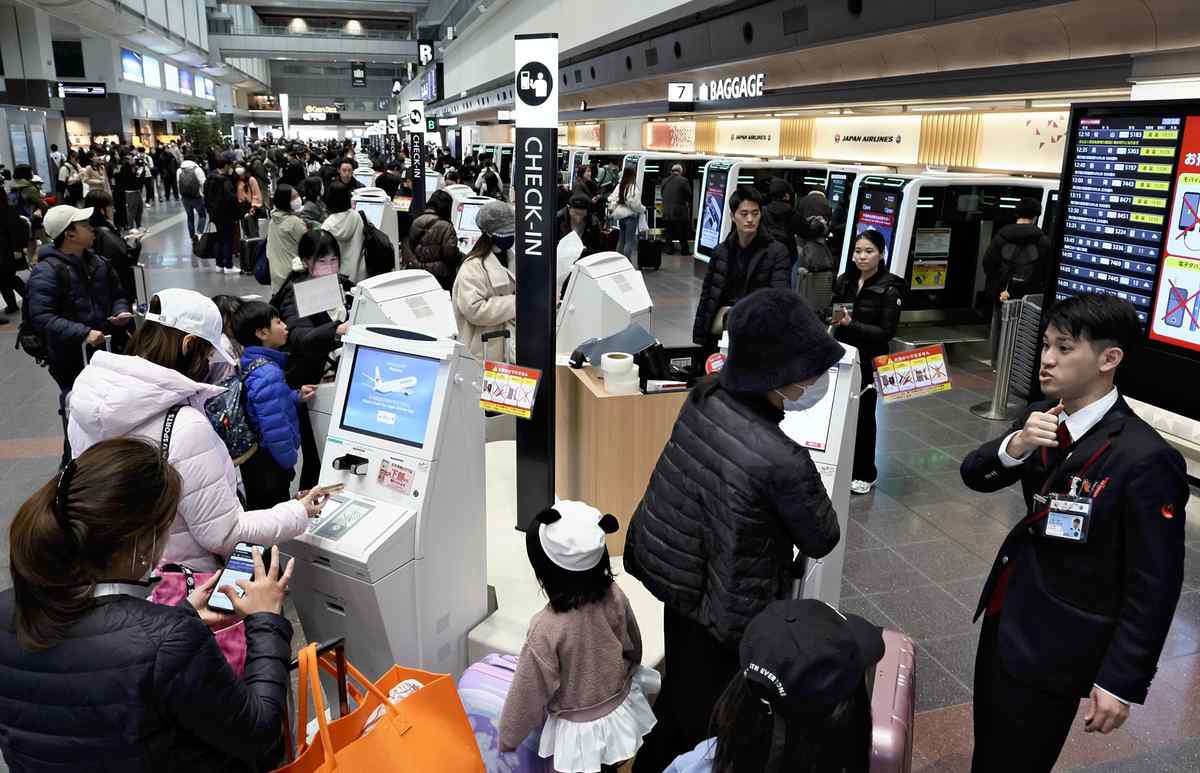
Japan Airlines’ service counter in Haneda Airport is crowded due to system failures caused by a cyberattack on Dec. 26, 2024.
20:00 JST, August 3, 2025
The government will classify large-scale failures in the functions of infrastructure as disasters under its new guidelines for such incidents, The Yomiuri Shimbun has learned.
The pillar of the guidelines is to legally treat incidents in which supplies of electricity, tap water and other essential goods or services are obstructed for prolonged periods of time as natural disasters, enabling the government to swiftly implement administrative action for relief.
The guidelines were compiled at a conference of relevant ministries and agencies in late June.
With cyberattacks becoming increasingly sophisticated, the guidelines aim to provide a way to better deal with any potentially serious impacts on society.
The government aims for the guidelines to cover interruptions to electric power supplies, telecommunication functions and data center operations, among others.
As examples of large-scale infrastructure failures, the government cites blackouts and telecommunication failures caused by system trouble, including those involving human error. The failures, it anticipates, could lead to such incidents as disruptions to roads due to failed traffic lights, people trapped in elevators, cuts to the water supply and adverse effects on medical institutions.
If certain criteria are met, such as “residential buildings are substantially dysfunctional,” an incident will be treated as a “disaster” under the Basic Law on Disaster Management, and all related laws will be applied.
Under the guidelines, the government will be able to provide push-style assistance and dispatch public officials in the immediate aftermath of such incidents.
Moreover, in cases where “many people’s lives may be under threat,” the government will make use of the Disaster Relief Law, which facilitates the provision of soup kitchens and welfare services.
“[The anticipated interruptions to society are] different from natural disasters, so knowledge and experience of past incidents alone are insufficient,” a government official said.
The government will include a policy in the guidelines requiring entities in both the public and private sectors to implement disaster-prevention drills and tabletop exercises to cope with the infrastructure failures in ordinary times.
The government will also create guidance for local governments, which handle the incidents on the front line.






Most Read
Popular articles in the past 24 hours
-
Seeking Nuclear Waste Site, Japan Eyes Remote Island of Minami-To...
-

Artisans from Disaster-Hit Areas Work Together to Keep Memories o...
-

Japan Tourist Spot's Capsule Toys Made from Recycled Materials Pr...
-

Japan’s Space One Kairos 3rd Flight Rocket Launched, but Mission ...
-
NTT Docomo to Discontinue 3G Service in March
-

Person Apparently Caught in Avalanche on Mt. Kamifurano in Hokkai...
-

LCC Greater Bay Airlines to Launch Regular Service on Fukuoka-Hon...
-
Kihara Says Japanese National Detained in Iran Confirmed Safe; Pr...
Popular articles in the past week
-
Tokyo Spends Big on Children, Wins Over Parents
-

South Korea Tightens Rules on Foreigners Buying Homes in Seoul Me...
-

Japan’s Miura, Kihara Announce Withdrawal from Figure Skating Wor...
-

BOJ Keeping Eye on Economy and Takaichi's ‘Proactive Fiscal Polic...
-
2 Unpublished Early Novellas by Japan's Kenzaburo Oe Discovered, ...
-

Strait of Hormuz Closure Shakes Markets; Prolonged Closure Could ...
-
Nidec Chairman Resigns Amid Accounting Scandal at Major Japanese ...
-
Tourists Ignore Safety Barriers Near Famous Zao ‘Snow Monsters’ i...
Popular articles in the past month
-

Producer Behind Pop Group XG Arrested for Cocaine Possession
-

Japan PM Takaichi’s Cabinet Resigns en Masse
-

Man Infected with Measles Reportedly Dined at Restaurant in Tokyo...
-

Israeli Ambassador to Japan Speaks about Japan’s Role in the Reco...
-

Videos Plagiarized, Reposted with False Subtitles Claiming ‘Ryuky...
-

Prudential Life Insurance Plans to Fully Compensate for Damages C...
-

Woman with Measles Visited Hospital in Tokyo Multiple Times Befor...
-

iPS Treatments Pass Key Milestone, but Broader Applications Far f...
Top Articles in Politics
-
Japan PM Takaichi’s Cabinet Resigns en Masse
-

Sanae Takaichi Elected Prime Minister of Japan; Keeps All Cabinet Appointees from Previous Term
-

Japan’s Govt to Submit Road Map for Growth Strategy in March, PM Takaichi to Announce in Upcoming Policy Speech
-

LDP Wins Landslide Victory, Secures Single-party Majority; Ruling Coalition with JIP Poised to Secure Over 300 seats (UPDATE 1)
-

LDP Wins Historic Landslide Victory
JN ACCESS RANKING
-
Producer Behind Pop Group XG Arrested for Cocaine Possession
-
Japan PM Takaichi’s Cabinet Resigns en Masse
-
Man Infected with Measles Reportedly Dined at Restaurant in Tokyo Station
-
Israeli Ambassador to Japan Speaks about Japan’s Role in the Reconstruction of Gaza
-
Videos Plagiarized, Reposted with False Subtitles Claiming ‘Ryukyu Belongs to China’; Anti-China False Information Also Posted in Japan