

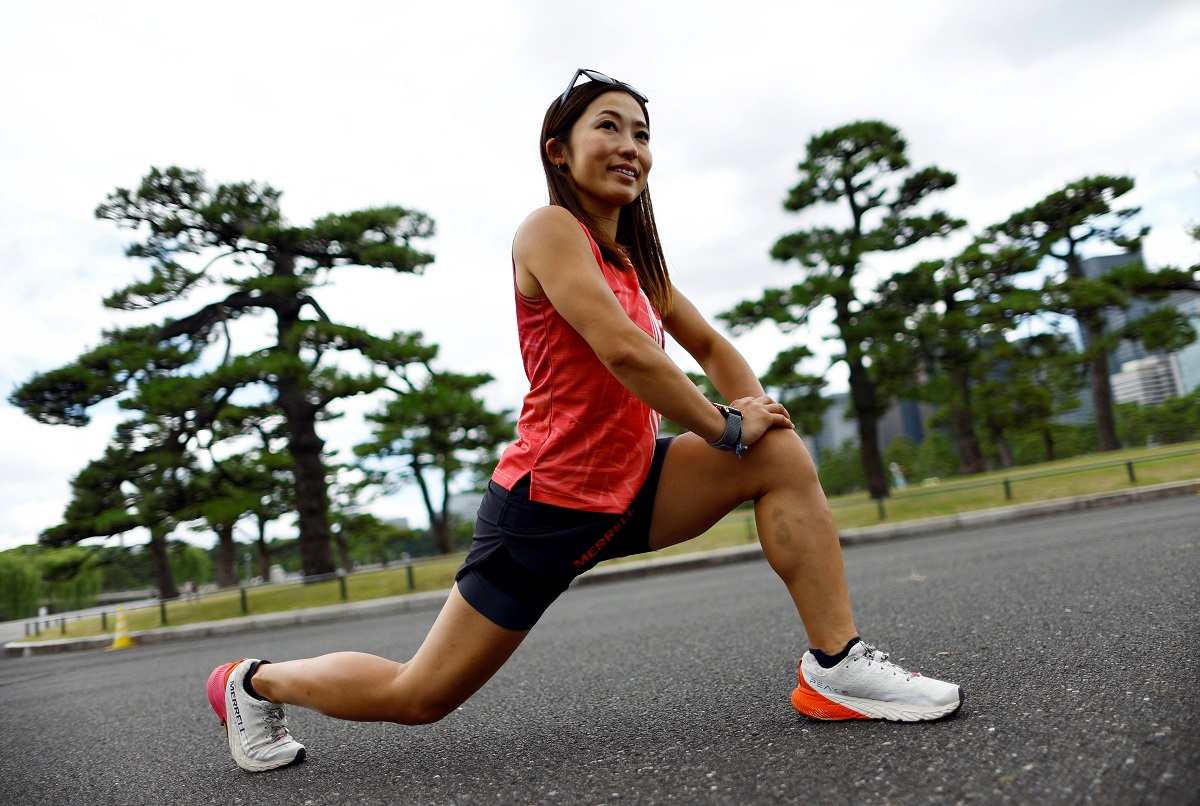
Tomomi Bitoh, 33, Japan’s top ultra runner, takes part in a workout session around the Imperial Palace in Tokyo, Japan June 4, 2024.
16:44 JST, June 5, 2024
TOKYO (Reuters) – Japanese champion runner Tomomi Bitoh completed a 170-km (106-mile) race in the Himalayas last November, and immediately made a beeline for a Tokyo clinic to begin freezing her eggs, hoping to keep alive her dream of becoming a mother.
The 33-year-old former childcare worker is one of a growing number of Japanese women joining in a trend authorities in the world’s most advanced aging society hope will stem further declines in the birthrate.
“I have this big dream of becoming number one in the world,” said Bitoh, who placed second among women in the 2021 Marathon des Sables, regarded as one of the world’s toughest long-distance races.
“I don’t think that’s something I can do 10 or 20 years from now, after having a child. It’s now or never.”
The average number of children born to a Japanese woman fell to a fresh low of 1.20 in 2023, data from the health ministry showed on Wednesday.
The figure marks an eighth successive year of decline and is far below the 2.07 experts consider necessary to maintain a stable population.
Japan says its demographic woes are a “quiet national emergency” that stifles growth and puts a heavy strain on its social security system.
The government, which says the difficulty of balancing a career and child-rearing are among the key deterrents to having children, has earmarked billions of dollars for efforts it hopes will reverse the trend.
So far, the signs are not encouraging.
As many as 55% of single men and women in their late teens and 20s have no desire to ever have a child, an annual poll by Rohto Pharmaceutical showed in December, the first time that a majority of respondents has made that choice.
Bitoh called for more public support for families who are bringing up children, as well as a shift away from traditional views that burden women with domestic work.
“It costs a lot of money to raise children,” she said. “And men find it harder than women to take childcare leave. Improvements in such areas would make people become more positive about having children.”
$1=155.4700 yen








Most Read
Popular articles in the past 24 hours
-

Record 167 Elementary School Students Harmed Via Social Media in ...
-
Nidec Chairman Resigns Amid Accounting Scandal at Major Japanese ...
-

Humbert Humbert: Husband-Wife Vocal Duo Brings Cheerful Singing t...
-

Trump’s Address: Confront the Dead End that Authoritarianism Has ...
-

Japan’s Hikonyan Cat Mascot to Celebrate 20th Birthday with Party...
-

Japan's Kairos Rocket Set to Launch on Sunday After Delays
-

Pakistan, Afghan Forces Clash after Days of Hostilities
-

Mizuho to Cut Up to 5,000 Administrative Jobs with AI-Driven Oper...
Popular articles in the past week
-

Producer Behind Pop Group XG Arrested for Cocaine Possession
-

iPS Treatments Pass Key Milestone, but Broader Applications Far f...
-

Tokyo Skytree's Elevator Stops, Trapping 20 People; All Rescued (...
-

Nepal Bus Crash Kills 19 People, Injures 25 Including One Japanes...
-

Milano Cortina 2026: Japanese Gold Medalist Figure Skater Miura S...
-

Japan’s Major Real Estate Firms Expanding Overseas Businesses to ...
-

Reciprocal Tariffs Ruled Illegal: Judiciary Would Not Tolerate Pr...
-

Japanese High School Student Aims to Share Kaiten History Through...
Popular articles in the past month
-
Producer Behind Pop Group XG Arrested for Cocaine Possession
-

Japan PM Takaichi’s Cabinet Resigns en Masse
-

Japan Institute to Use Domestic Commercial Optical Lattice Clock ...
-

Man Infected with Measles Reportedly Dined at Restaurant in Tokyo...
-

Israeli Ambassador to Japan Speaks about Japan’s Role in the Reco...
-

Videos Plagiarized, Reposted with False Subtitles Claiming ‘Ryuky...
-

Man Infected with Measles May Have Come in Contact with Many Peop...
-

Prudential Life Insurance Plans to Fully Compensate for Damages C...
Top Articles in News Services
-

Survey Shows False Election Info Perceived as True
-

Hong Kong Ex-Publisher Jimmy Lai’s Sentence Raises International Outcry as China Defends It
-

Japan’s Nikkei Stock Average Touches 58,000 as Yen, Jgbs Rally on Election Fallout (UPDATE 1)
-
Japan’s Nikkei Stock Average Falls as US-Iran Tensions Unsettle Investors (UPDATE 1)
-
Japan’s Nikkei Stock Average Rises on Tech Rally and Takaichi’s Spending Hopes (UPDATE 1)
JN ACCESS RANKING
-
Producer Behind Pop Group XG Arrested for Cocaine Possession
-
Japan PM Takaichi’s Cabinet Resigns en Masse
-
Man Infected with Measles Reportedly Dined at Restaurant in Tokyo Station
-
Israeli Ambassador to Japan Speaks about Japan’s Role in the Reconstruction of Gaza
-
Videos Plagiarized, Reposted with False Subtitles Claiming ‘Ryukyu Belongs to China’; Anti-China False Information Also Posted in Japan