
University Team Develops Meatless Broth For Udon Noodles; Professor And Students Make Dashi From Mushrooms, Veggies
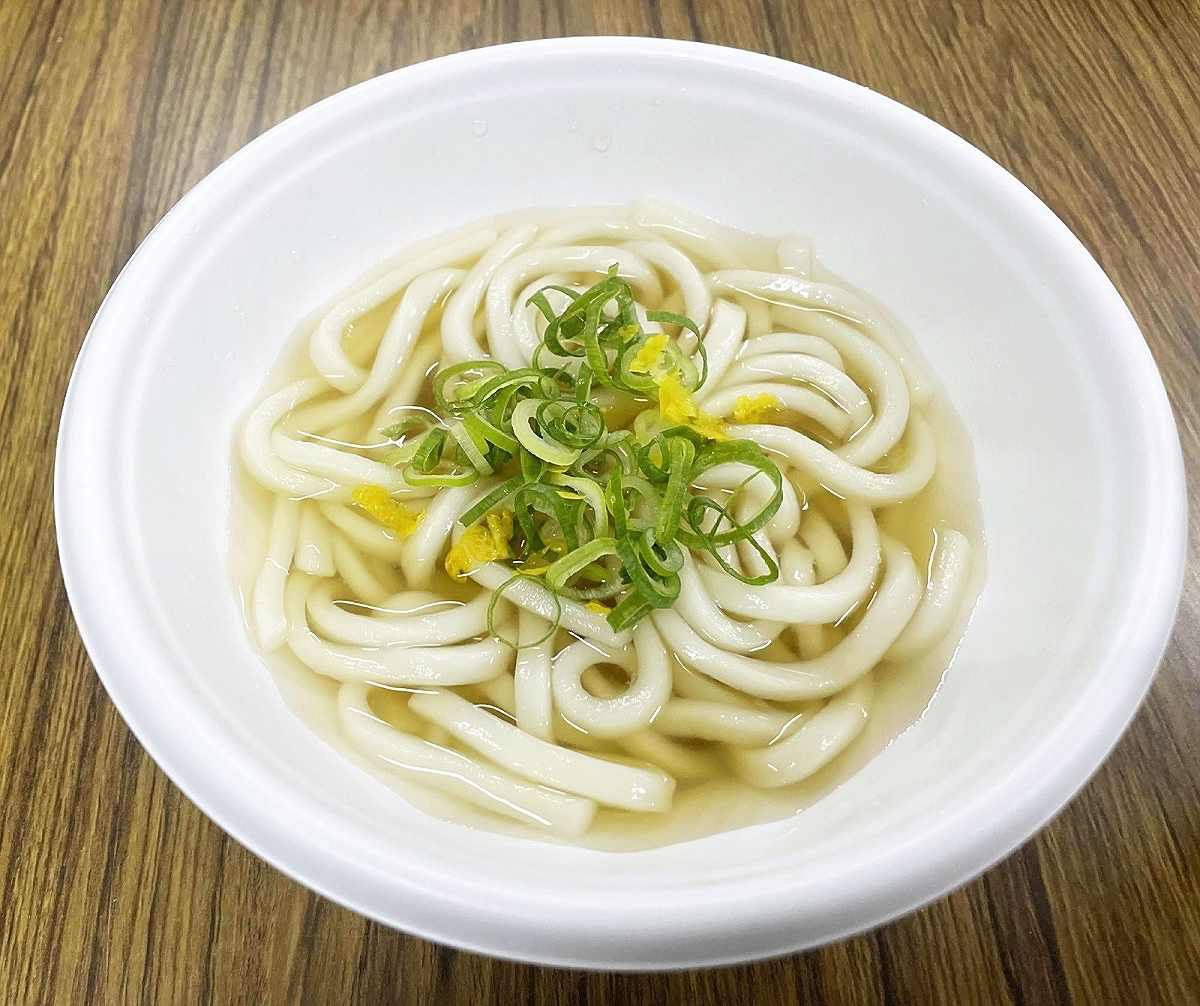
A bowl of udon made using beji-tsuyu
13:30 JST, June 2, 2024
OSAKA — As I slurped the udon noodles, the flavor of the dashi broth that came with them spread through my mouth, filling it with a delicate, slightly sweet taste.
The dashi is “beji-tsuyu” (vegetable stock), which is being developed by a team of students under Prof. Toshiaki Watanabe of the Faculty of Health Science at Osaka Aoyama University in Minoo, Osaka Prefecture.
As the name implies, the broth for this udon soup is made entirely from meatless ingredients like mushrooms.
It does not contain any seafood, such as bonito or mackerel, which are generally used for this sort of broth.
Concern about the depletion of fisheries resources provided the impetus for the development of the meatless broth.
The environments surrounding fisheries are becoming increasingly harsh due to global warming, ocean pollution and overfishing.
Some past studies have predicted that edible fish will be gone from the world’s oceans within the near future.
Dashi is a key element of Japan’s rich food culture, but the old method of making it from fish might be difficult to maintain if such a future comes to pass.
Finding a sustainable way of making dashi is also a part of protecting washoku, Japanese traditional cuisine, which has been registered as a UNESCO intangible cultural heritage asset.
“If things continue as they are, we will no longer be able to eat the udon that Kansai natives love,” Watanabe thought, and began the development of the vegetable broth with students from his laboratory around the summer of 2022.
Generally, the taste of dashi is enhanced by the synergistic effect of inosinic acid, which gives bonito its umami flavor, and glutamic acid from kelp. The umami of bonito is an essential element that gives depth and strength to the soup stock.
Their challenge was how to come close to the umami of bonito using only plant-derived ingredients.
Watanabe and his students turned their attention to mushrooms, which contain guanylic acid, a possible alternative to inosinic acid.
After analyzing the flavors of nearly 10 different mushroom broths, they found that the combination of broths from two varieties, button mushrooms and shiitake mushrooms, was closest to the flavor of bonito broth.
To add more depth to the flavor, they combined the broth with kelp broth and powdered broths made from vegetables such as onion and burdock root.
They aim to commercialize the product by the time the Osaka-Kansai Expo opens next spring.
Watanabe and his students plan to further analyze the ingredients and discuss mass production methods with Maekawa Taste Co., a dashi manufacturer in Himeji, Hyogo Prefecture, with whom Watanabe has long had a close relationship.
Beji-tsuyu has the potential to open up new markets for dashi, as the broth they are developing can be enjoyed by vegans.
“I hope that the Expo will be an opportunity for overseas visitors to try udon noodles made with our broth and experience Japanese food culture,” said Yuta Wada, 21, a fourth-year student who is studying under Watanabe to commercialize this broth.
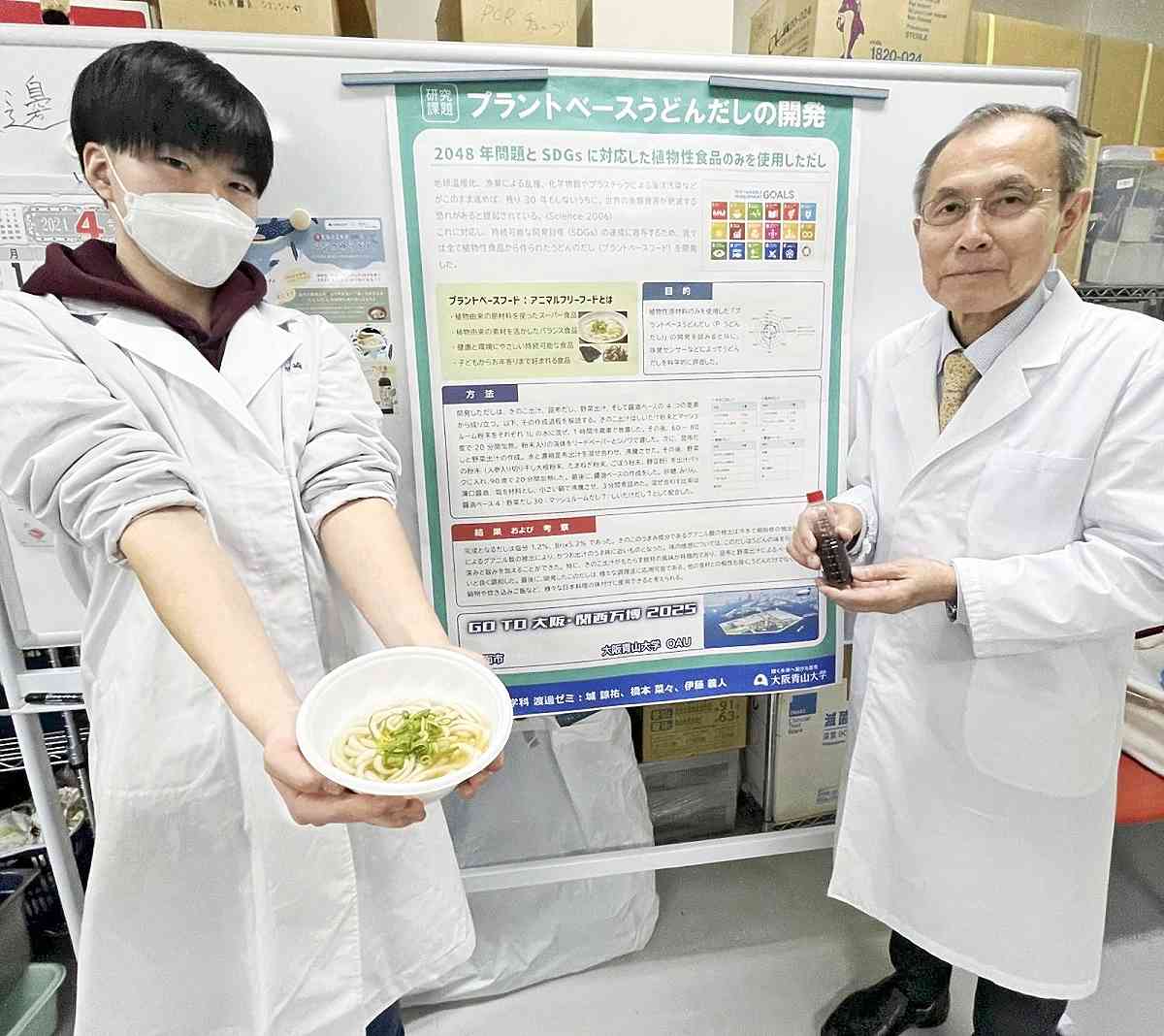
Osaka Aoyama University Prof. Toshiaki Watanabe, right, and Yuta Wada, a student at the university, show a bowl of udon using “beji-tsuyu” broth in Minoo, Osaka Prefecture.







Most Read
Popular articles in the past 24 hours
-

German Journalist Traces Footsteps of Great-Grandfather Who Was P...
-

10 Foreign Tourists Sustain Injuries After Fire at Capsule Hotel ...
-

World Baseball Classic: Venezuela Beats Japan in Nail-biting Back...
-

Rapid Services Resume on JR Chuo Line; Suspension Caused by Accid...
-

Rapid Services on JR Chuo Line Suspended; Accident at Kokubunji S...
-

Zelenskiy Says Ukraine Wants Money, Technology in Return for Midd...
-

World Baseball Classic: Venezuela Beats Japan in Back-and-Forth Q...
-

World Baseball Classic: Red Sox’s Abreu Hits 3-run Homer, Giving ...
Popular articles in the past week
-

Japan Figure Skating Legend Yuzuru Hanyu Is Proud Disaster Surviv...
-
15 Measles Patients Confirmed in Tokyo in Past 6 Days; 1 May Have...
-

Massive Sewer Pipe Found Jutting Out of Highway in Osaka
-

Japan Govt to Tighten Requirements to Receive Permanent Residency...
-

Power Outage Forces About 980 Passengers in Yokohama to Walk to T...
-

JR Tokai Breaks Ground on Yamanashi Maglev Station; Will Be Part ...
-

Parents in Japan to Get Instagram Notifications When Teens Repeat...
-
'World's Oldest Bio-Business' Is Japan's Seed Koji Retailing, Mol...
Popular articles in the past month
-

Producer Behind Pop Group XG Arrested for Cocaine Possession
-

Japan PM Takaichi’s Cabinet Resigns en Masse
-

Man Infected with Measles Reportedly Dined at Restaurant in Tokyo...
-
Japan Figure Skating Legend Yuzuru Hanyu Is Proud Disaster Surviv...
-

iPS Treatments Pass Key Milestone, but Broader Applications Far f...
-

Sanae Takaichi Elected Prime Minister of Japan; Keeps All Cabinet...
-

South Korea Tightens Rules on Foreigners Buying Homes in Seoul Me...
-

Nepal Bus Crash Kills 19 People, Injures 25 Including One Japanes...
Top Articles in Features
-
Japanese Students Use Traditional Pickle to Create Novel Wagashi Confectionery
-

My Spendthrift Mother Constantly Asks Me for Money
-

Kawazu Cherry Blossoms in Full Bloom in Japan’s Shizuoka Pref.; Festival to Be Held through March 8
-

Tourists Ignore Safety Barriers Near Famous Zao ‘Snow Monsters’ in Japan
-

Tottori: 95-Year-Old Japanese Descendent from Philippines Visits Father’s Grave
JN ACCESS RANKING
-
Producer Behind Pop Group XG Arrested for Cocaine Possession
-
Japan PM Takaichi’s Cabinet Resigns en Masse
-
Man Infected with Measles Reportedly Dined at Restaurant in Tokyo Station
-
Japan Figure Skating Legend Yuzuru Hanyu Is Proud Disaster Survivor and Gold Medalist, Vows to Continue Support Efforts
-
iPS Treatments Pass Key Milestone, but Broader Applications Far from Guaranteed