
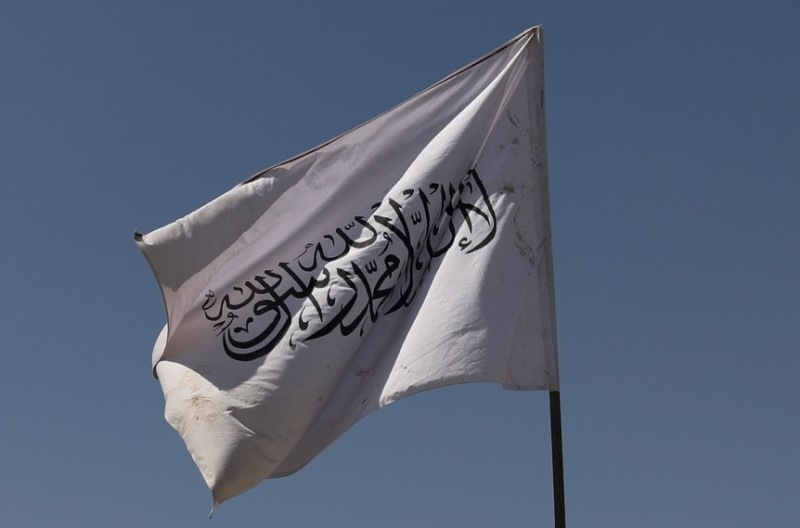
The flag of the Islamic Emirate of Afghanistan (Taliban) is raised at the military airfield in Kabul, Afghanistan.
18:42 JST, August 17, 2021
As the Taliban took control of Kabul on Sunday, U.S. TV stations repeatedly broadcast footage of U.S. Embassy staff being evacuated by helicopter on April 30, 1975, amid the chaos when the South Vietnamese capital of Saigon fell at the end of the Vietnam War.
Despite many casualties, the United States failed to achieve its goal in the Vietnam War of stopping communism from spreading in Southeast Asia. It can be described as a symbol of a failed foreign policy, in which the United States made errors in judgment.
There is growing opinion in the United States that the “Fall of Kabul” is the biggest mistake to be made by the administration of U.S. President Joe Biden since its inauguration.
Why did Biden rush to withdraw U.S. troops? In addition to his opposition to stationing U.S. military for purposes other than rooting out terrorists and to involvement in Afghanistan’s nation-building, Biden undeniably wanted to end the “longest war in U.S. history” before the 20th anniversary of the Sept. 11, 2001, terrorist attacks on U.S. soil.
His decision was also supported by U.S. public opinion against the war on terror, with over 60% of the public approving of the withdrawal.
Biden is the fourth U.S. president to lead the war against terrorism started by Republican President George W. Bush. Biden’s insufficient understanding of the situation cannot be denied since his hasty withdrawal has created a power vacuum, but the United States did not have the national strength or public support to continue the war, which shows no sign of ending.
The Afghan government made scant progress toward democracy despite support from the international community, including the United States. It collapsed instantly and the nation is returning to the Taliban’s control.
However, this may not be just a return to square one. The Biden administration has said the United States will lead the bloc that champions democracy to counter the authoritarianism in such countries as Russia and China that have been pronounced over the past 20 years. If the United States gives up on Afghanistan, trust in the United States would certainly be undermined and authoritarian forces would likely gain strength.
Should Afghanistan again become a hotbed of terrorism, or the country come under the influence of non-democratic forces, it will fuel global instability.
What can be done to alleviate the chaos? The United States still has responsibilities it must fulfill in this regard.






Most Read
Popular articles in the past 24 hours
-

German Journalist Traces Footsteps of Great-Grandfather Who Was P...
-

10 Foreign Tourists Sustain Injuries After Fire at Capsule Hotel ...
-

World Baseball Classic: Venezuela Beats Japan in Nail-biting Back...
-

Rapid Services Resume on JR Chuo Line; Suspension Caused by Accid...
-

Rapid Services on JR Chuo Line Suspended; Accident at Kokubunji S...
-

World Baseball Classic: Venezuela Beats Japan in Back-and-Forth Q...
-

World Baseball Classic: Red Sox’s Abreu Hits 3-run Homer, Giving ...
-

Zelenskiy Says Ukraine Wants Money, Technology in Return for Midd...
Popular articles in the past week
-

Japan Figure Skating Legend Yuzuru Hanyu Is Proud Disaster Surviv...
-
15 Measles Patients Confirmed in Tokyo in Past 6 Days; 1 May Have...
-
Massive Sewer Pipe Found Jutting Out of Highway in Osaka
-
Japan Govt to Tighten Requirements to Receive Permanent Residency...
-

Power Outage Forces About 980 Passengers in Yokohama to Walk to T...
-
JR Tokai Breaks Ground on Yamanashi Maglev Station; Will Be Part ...
-

Parents in Japan to Get Instagram Notifications When Teens Repeat...
-

'World's Oldest Bio-Business' Is Japan's Seed Koji Retailing, Mol...
Popular articles in the past month
-

Producer Behind Pop Group XG Arrested for Cocaine Possession
-

Japan PM Takaichi’s Cabinet Resigns en Masse
-

Man Infected with Measles Reportedly Dined at Restaurant in Tokyo...
-
Japan Figure Skating Legend Yuzuru Hanyu Is Proud Disaster Surviv...
-

iPS Treatments Pass Key Milestone, but Broader Applications Far f...
-

Sanae Takaichi Elected Prime Minister of Japan; Keeps All Cabinet...
-

South Korea Tightens Rules on Foreigners Buying Homes in Seoul Me...
-

Nepal Bus Crash Kills 19 People, Injures 25 Including One Japanes...
Top Articles in World
-
South Korea Tightens Rules on Foreigners Buying Homes in Seoul Metro Area
-
Nepal Bus Crash Kills 19 People, Injures 25 Including One Japanese National
-

Govt to Utilize ODA for Ensuring Economic Security; Securing Energy, Critical Minerals Sought
-

Ukrainian Ambassador Closely Watching Japan’s Revision of Defense Export Rules, Hopes for Future Arms Support
-

China, India Tapping into Promising African Market; Beijing Announces Tariff Cuts, Both Countries Aim to Expand Exports
JN ACCESS RANKING
-
Producer Behind Pop Group XG Arrested for Cocaine Possession
-
Japan PM Takaichi’s Cabinet Resigns en Masse
-
Man Infected with Measles Reportedly Dined at Restaurant in Tokyo Station
-
Japan Figure Skating Legend Yuzuru Hanyu Is Proud Disaster Survivor and Gold Medalist, Vows to Continue Support Efforts
-
iPS Treatments Pass Key Milestone, but Broader Applications Far from Guaranteed