
Japanese Prefecture Buys Historical Map of Takeshima, Receives Trove of Documents
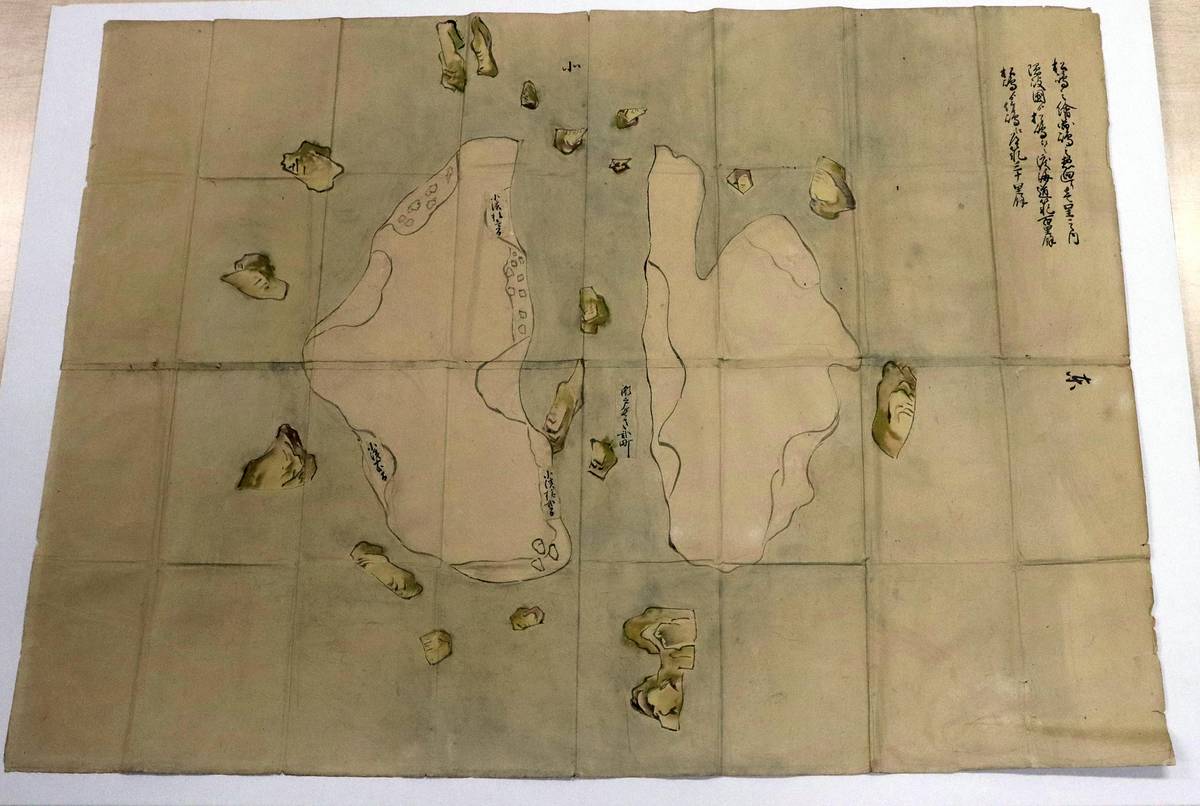
The “Map of Matsushima” is seen in Matsue on Jan. 13.
14:56 JST, January 21, 2026
MATSUE — Shimane prefectural government has acquired 71 historical documents, including the “Map of Matsushima,” which depicts what are today the prefecture’s Takeshima group of islets, it said earlier this month. The map is believed to have been drawn during the Edo period (1603-1867).
Some of the documents are from the Murakawa family and describe merchants from Yonago, Tottori Prefecture, fishing and engaging in other activities on the islands.
The prefectural government said these are “first-class historical documents demonstrating that the Takeshima group of islets have long been a place of activities for Japanese people.”
The “Map of Matsushima” is believed to date from the late 17th to early 18th century. It depicts the shape of the islands and other geographical features in detail and indicates their distance from the present-day Oki Islands in Shimane Prefecture. According to the prefectural government, the map went missing for a long time after it was exhibited at the Yonago Municipal Historical Museum in around 1987. The prefectural government purchased the map from a private individual.
The Murakawa family documents include agreements regarding fishing profits that were concluded between the family and the Oya merchant family, from Yonago. Both families, with permission from the Edo shogunate, hunted seals and fished for abalone on and around the Takeshima Islands and the nearby Ulleungdo Island in eastern South Korea.
Shimane Prefecture received the documents as a donation from a private individual.
The donation totaled 69 documents and included another map that depicts Takeshima as well as Ulleungdo Island and the Oki Islands. This map is a copy of an original. Although the year Kyoho 9 (1724) is listed on the map, it is unclear whether this indicates the date of creation.
“The documents demonstrate that Japanese people used the Takeshima group of islets. They will serve as evidence proving that the Takeshima igroup of islets are Japanese territory when discussing this issue,” said Masao Shimojo, an expert on Japanese history and professor emeritus at Takushoku University.


Related Tags


Most Read
Popular articles in the past 24 hours
-

Strait of Hormuz Closure Shakes Markets; Prolonged Closure Could ...
-

Iran Situation: Japan Must Exert Diplomatic Efforts without Merel...
-
Measles Patient Visited Hospital in Bunkyo Ward, Tokyo, Metropoli...
-

Milano Cortina 2026: Japanese Figure Skater Miura Returns to Home...
-

Takayama Among World's Top 10 Most Welcoming Cities for 2026; 2nd...
-
2 of Japan's Opposition Parties Submit Bill to Revise Political F...
-
Chiba Police to Arrest Japanese National in Midair; Man Accused o...
-
Former Nomura Securities Employee Given 18-year Prison Sentence f...
Popular articles in the past week
-

Milano Cortina 2026: Japanese Gold Medalist Figure Skater Miura S...
-
Tokyo Spends Big on Children, Wins Over Parents
-

Japan’s Miura, Kihara Announce Withdrawal from Figure Skating Wor...
-

Yokohama to Test Out Renewable-Powered Offshore Floating Data Cen...
-

BOJ Keeping Eye on Economy and Takaichi's ‘Proactive Fiscal Polic...
-
Tokyo Measles Patient Traveled to Fukuoka Aboard JAL Planes; Susp...
-

Japan’s Takaichi Speaks on New U.S. Tariff in Upper House, Says P...
-

Nidec Chairman Resigns Amid Accounting Scandal at Major Japanese ...
Popular articles in the past month
-

Producer Behind Pop Group XG Arrested for Cocaine Possession
-

Japan PM Takaichi’s Cabinet Resigns en Masse
-

Man Infected with Measles Reportedly Dined at Restaurant in Tokyo...
-

Israeli Ambassador to Japan Speaks about Japan’s Role in the Reco...
-

Videos Plagiarized, Reposted with False Subtitles Claiming ‘Ryuky...
-

Prudential Life Insurance Plans to Fully Compensate for Damages C...
-

Woman with Measles Visited Hospital in Tokyo Multiple Times Befor...
-

iPS Treatments Pass Key Milestone, but Broader Applications Far f...
Top Articles in Society
-
Producer Behind Pop Group XG Arrested for Cocaine Possession
-
Man Infected with Measles Reportedly Dined at Restaurant in Tokyo Station
-
Woman with Measles Visited Hospital in Tokyo Multiple Times Before Being Diagnosed with Disease
-

Bus Carrying 40 Passengers Catches Fire on Chuo Expressway; All Evacuate Safely
-

Tokyo Skytree’s Elevator Stops, Trapping 20 People; All Rescued (Update 1)
JN ACCESS RANKING
-
Producer Behind Pop Group XG Arrested for Cocaine Possession
-
Japan PM Takaichi’s Cabinet Resigns en Masse
-
Man Infected with Measles Reportedly Dined at Restaurant in Tokyo Station
-
Israeli Ambassador to Japan Speaks about Japan’s Role in the Reconstruction of Gaza
-
Videos Plagiarized, Reposted with False Subtitles Claiming ‘Ryukyu Belongs to China’; Anti-China False Information Also Posted in Japan