
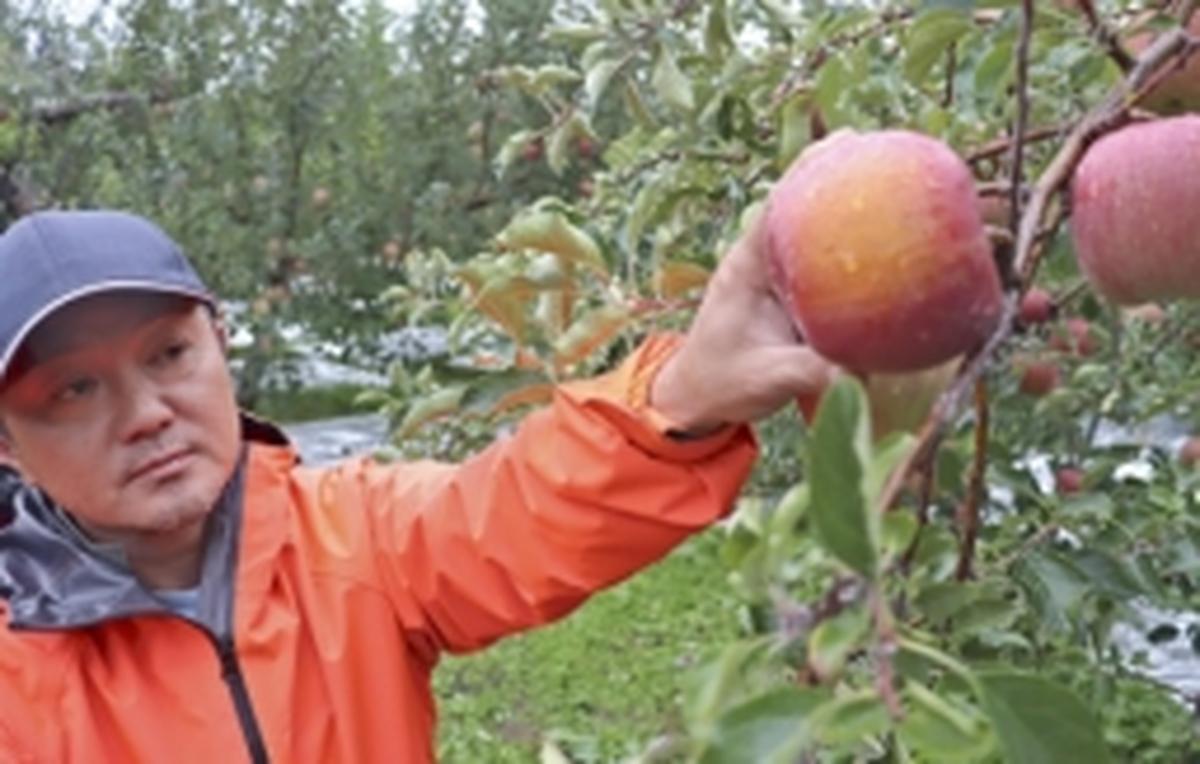
A farmer checks sunburned apples on his farm in Hirakawa, Aomori Prefecture, on Oct. 22.
14:29 JST, December 22, 2025
Apple production areas also are feeling the effects of climate change.
The harvest of early-season varieties of apples starts in Aomori Prefecture’s Tsugaru region in September. “I think everyone has noticed that these varieties no longer suit the climate here,” said a 47-year-old farmer in Hirakawa in the prefecture.
High temperatures can damage apples, which might become discolored or develop flushed areas on the skin. Trying to prevent this became such a burden on Ono that he replaced some of his apple trees with peach trees. These peaches are rarely affected by heat, and have become a brand known as “Tsugaru no momo” that has a sugar content of 11% or higher.
“These peaches fetch high prices,” Ono said. “My livelihood hinges on my farm, so this is better than hopelessly trying to keep growing apples.”
Converting land to peach orchards began in the region about 20 years ago. This is partly because peaches can be harvested even before the typhoon season arrives. However, a growing number of producers have switched crops in recent years due to “concerns about rising temperatures,” an official of the Tsugaru Mirai Agricultural Cooperative Association said.
According to the Aomori prefectural government, 48 hectares of land across seven cities, towns and villages in the Tsugaru region was used to grow peaches in 2015. As of 2023, this had expanded to 73 hectares, with at least 200 people currently producing peaches in the region.
The Agriculture, Forestry and Fisheries Ministry provides support for the introduction of shading nets and the switch to heat-resistant fruit varieties, and launching a subsidy program for farmers changing to different varieties in fiscal 2024.
“We’ll continue providing assistance to farmers who have been struggling to grow fruit like they did before,” a ministry official said.


Related Tags


Most Read
Popular articles in the past 24 hours
-

Iran Situation: Japan Must Exert Diplomatic Efforts without Merel...
-
Measles Patient Visited Hospital in Bunkyo Ward, Tokyo, Metropoli...
-
2 Unpublished Early Novellas by Japan's Kenzaburo Oe Discovered, ...
-

Milano Cortina 2026: Japanese Figure Skater Miura Returns to Home...
-

Takayama Among World's Top 10 Most Welcoming Cities for 2026; 2nd...
-
2 of Japan's Opposition Parties Submit Bill to Revise Political F...
-
Former Nomura Securities Employee Given 18-year Prison Sentence f...
-

Bank of Japan and Markets: High Oil Prices Increase Difficulty of...
Popular articles in the past week
-
Milano Cortina 2026: Japanese Gold Medalist Figure Skater Miura S...
-
Tokyo Spends Big on Children, Wins Over Parents
-

Japan’s Miura, Kihara Announce Withdrawal from Figure Skating Wor...
-

Yokohama to Test Out Renewable-Powered Offshore Floating Data Cen...
-
BOJ Keeping Eye on Economy and Takaichi's ‘Proactive Fiscal Polic...
-
Tokyo Measles Patient Traveled to Fukuoka Aboard JAL Planes; Susp...
-
Japan’s Takaichi Speaks on New U.S. Tariff in Upper House, Says P...
-
Nidec Chairman Resigns Amid Accounting Scandal at Major Japanese ...
Popular articles in the past month
-

Producer Behind Pop Group XG Arrested for Cocaine Possession
-

Japan PM Takaichi’s Cabinet Resigns en Masse
-

Man Infected with Measles Reportedly Dined at Restaurant in Tokyo...
-

Israeli Ambassador to Japan Speaks about Japan’s Role in the Reco...
-

Videos Plagiarized, Reposted with False Subtitles Claiming ‘Ryuky...
-

Prudential Life Insurance Plans to Fully Compensate for Damages C...
-

Woman with Measles Visited Hospital in Tokyo Multiple Times Befor...
-

iPS Treatments Pass Key Milestone, but Broader Applications Far f...
Top Articles in Society
-
Producer Behind Pop Group XG Arrested for Cocaine Possession
-
Man Infected with Measles Reportedly Dined at Restaurant in Tokyo Station
-
Woman with Measles Visited Hospital in Tokyo Multiple Times Before Being Diagnosed with Disease
-

Bus Carrying 40 Passengers Catches Fire on Chuo Expressway; All Evacuate Safely
-
Tokyo Skytree’s Elevator Stops, Trapping 20 People; All Rescued (Update 1)
JN ACCESS RANKING
-
Producer Behind Pop Group XG Arrested for Cocaine Possession
-
Japan PM Takaichi’s Cabinet Resigns en Masse
-
Man Infected with Measles Reportedly Dined at Restaurant in Tokyo Station
-
Israeli Ambassador to Japan Speaks about Japan’s Role in the Reconstruction of Gaza
-
Videos Plagiarized, Reposted with False Subtitles Claiming ‘Ryukyu Belongs to China’; Anti-China False Information Also Posted in Japan