
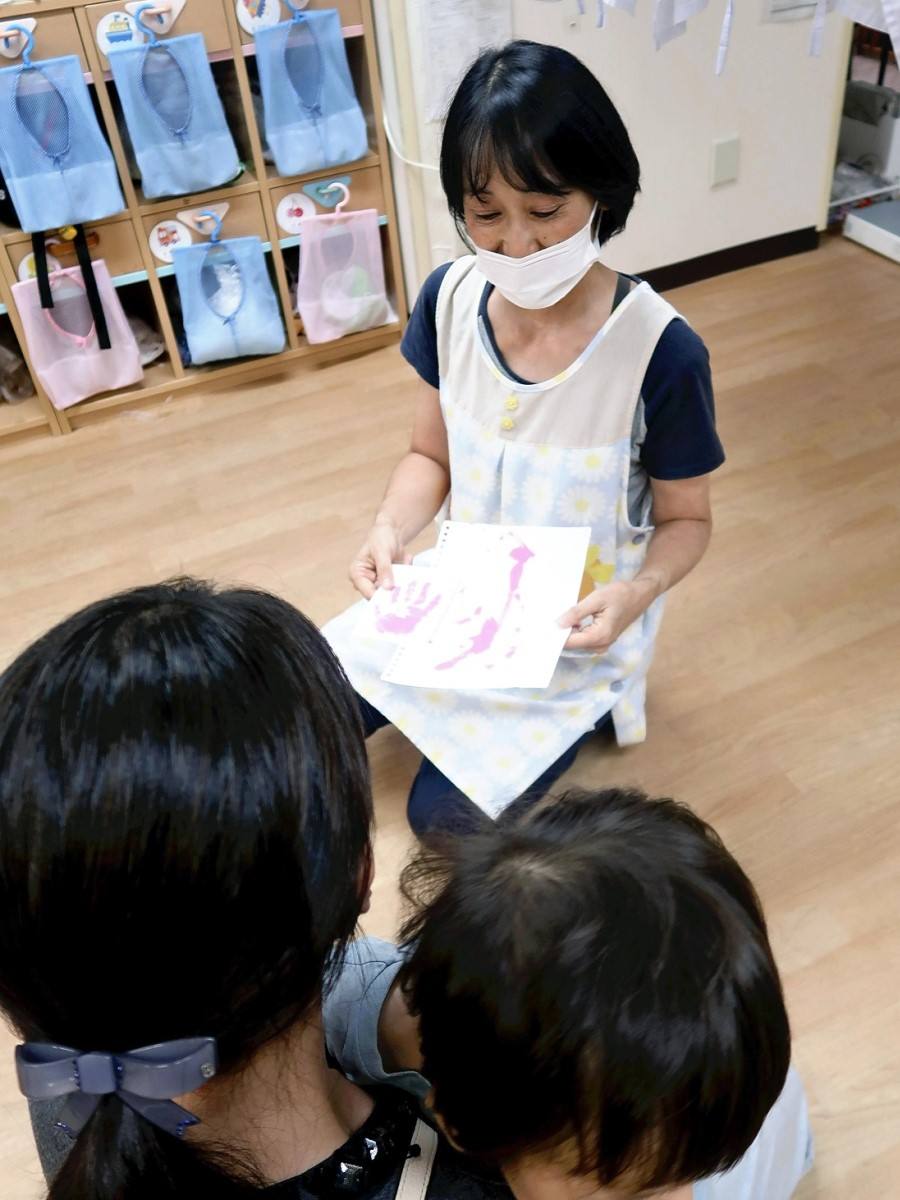
A teacher, center, speaks with a parent and child at a nursery school in Ota Ward, Tokyo, in October.
14:08 JST, April 5, 2023
At least 40% of nursery schools in urban areas failed to meet their April 2023 enrollment quota, due partly to a shrinking demand for childcare as a result of the declining birthrate, according to a Yomiuri Shimbun survey.
The survey was conducted in February and March on a total of 109 prefectural capitals, government ordinance-designated cities, Tokyo’s 23 wards and heartland cities. There were 103 valid responses.
The 40% figure relates to the first round of admission screenings for April. In addition to the falling birthrate, the shortfall is believed to be linked to such factors as a dearth of childcare workers and parents’ preferences for certain facilities.
Of the roughly 18,000 nursery schools overseen by 103 local governments, about 6,800 failed to meet their intake quotas in the first round of screenings.
The number of applicants fell 2.3% from last year to a total of 286,400. Some 71 municipalities logged a decrease, with 57 citing a “declining preschool population” in response to a multiple-responses-allowed question.
When asked what the challenges were regarding capacity issues, again, with multiple responses allowed, 43 municipalities said some nurseries were unable to fulfil their capacity due to a lack of childcare workers.
The non-selection figure — calculated by subtracting the number of acceptances in the first round of offers from the total number of applicants — was around 59,600, a 2% year-on-year increase.
Fifty-seven local governments registered an increase in the number of unsuccessful applicants, while 45 saw a decrease.
This was likely because applicants tend to plump for certain facilities that are easier for their children to attend.
One of the government’s goals is to eliminate waiting lists by the end of fiscal 2024, and about 80% of the local governments stated that the issue was “already solved” or “expected to be solved” by the end of fiscal 2023.
As part of its “unprecedented measures to deal with the declining birth rate” announced at the end of March, the government proposed the creation of a system that would allow all preschool-age children to attend nursery schools, regardless of whether their parents work.
The government is looking at using vacant capacity in existing facilities but resolving the shortage in childcare workers is likely to prove a related challenge.







Most Read
Popular articles in the past 24 hours
-
Seeking Nuclear Waste Site, Japan Eyes Remote Island of Minami-To...
-

Total Lunar Eclipse Visible for Some in Japan, While Clouds Block...
-

Japan Ministry Asks to Conduct Nuclear Waste Disposal-related Sur...
-

WBC to Begin: All the Pieces are in Place for Japan’s Second Stra...
-

Milano Cortina 2026: Ceremony for Winter Paralympic Torch Relay T...
-
Tokyo High Court Upholds Unification Church Dissolution Order; Li...
-

How Trump Assassination Attempts Played into His Decision to Atta...
-

CARTOON OF THE DAY (March 4)
Popular articles in the past week
-
Tokyo Spends Big on Children, Wins Over Parents
-

Japan’s Miura, Kihara Announce Withdrawal from Figure Skating Wor...
-

South Korea Tightens Rules on Foreigners Buying Homes in Seoul Me...
-

BOJ Keeping Eye on Economy and Takaichi's ‘Proactive Fiscal Polic...
-
Tokyo Measles Patient Traveled to Fukuoka Aboard JAL Planes; Susp...
-
Nidec Chairman Resigns Amid Accounting Scandal at Major Japanese ...
-

Strait of Hormuz Closure Shakes Markets; Prolonged Closure Could ...
-
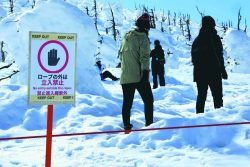
Tourists Ignore Safety Barriers Near Famous Zao ‘Snow Monsters’ i...
Popular articles in the past month
-

Producer Behind Pop Group XG Arrested for Cocaine Possession
-

Japan PM Takaichi’s Cabinet Resigns en Masse
-

Man Infected with Measles Reportedly Dined at Restaurant in Tokyo...
-

Israeli Ambassador to Japan Speaks about Japan’s Role in the Reco...
-

Videos Plagiarized, Reposted with False Subtitles Claiming ‘Ryuky...
-

Prudential Life Insurance Plans to Fully Compensate for Damages C...
-

Woman with Measles Visited Hospital in Tokyo Multiple Times Befor...
-

iPS Treatments Pass Key Milestone, but Broader Applications Far f...
Top Articles in Society
-
Producer Behind Pop Group XG Arrested for Cocaine Possession
-
Man Infected with Measles Reportedly Dined at Restaurant in Tokyo Station
-
Woman with Measles Visited Hospital in Tokyo Multiple Times Before Being Diagnosed with Disease
-

Bus Carrying 40 Passengers Catches Fire on Chuo Expressway; All Evacuate Safely
-

Tokyo Skytree’s Elevator Stops, Trapping 20 People; All Rescued (Update 1)
JN ACCESS RANKING
-
Producer Behind Pop Group XG Arrested for Cocaine Possession
-
Japan PM Takaichi’s Cabinet Resigns en Masse
-
Man Infected with Measles Reportedly Dined at Restaurant in Tokyo Station
-
Israeli Ambassador to Japan Speaks about Japan’s Role in the Reconstruction of Gaza
-
Videos Plagiarized, Reposted with False Subtitles Claiming ‘Ryukyu Belongs to China’; Anti-China False Information Also Posted in Japan