
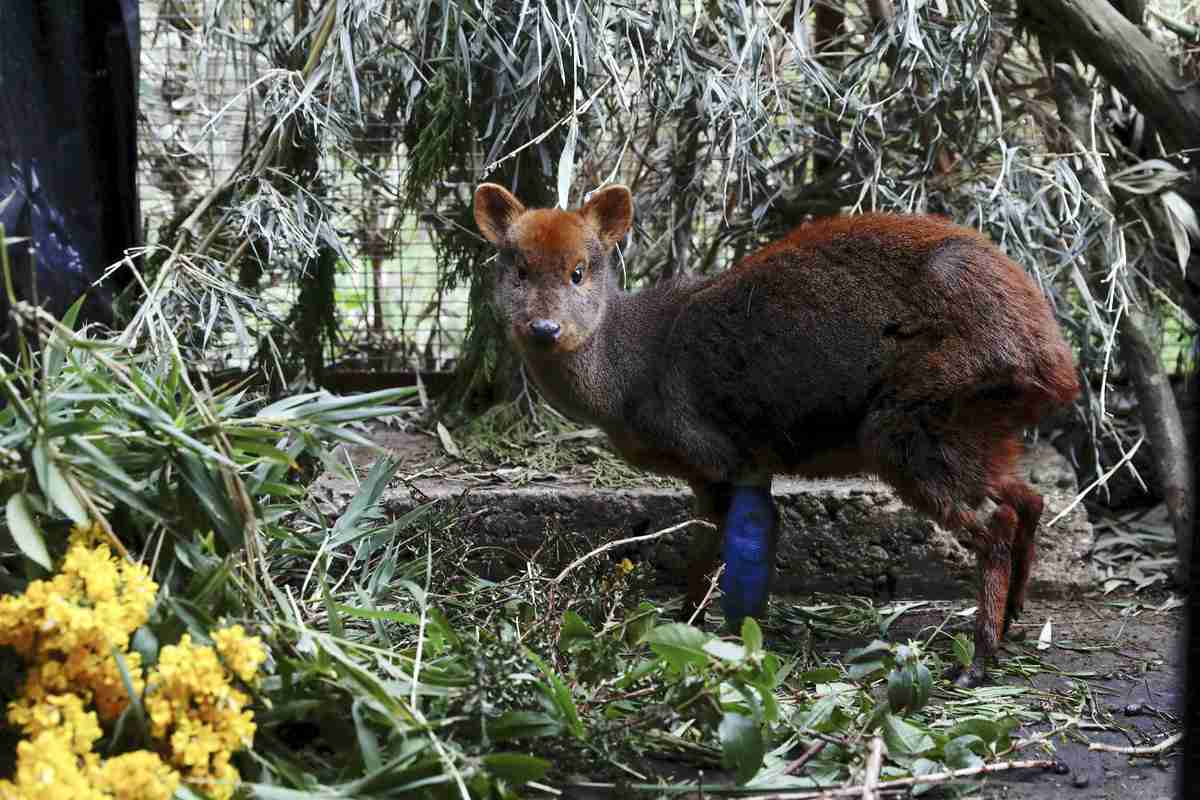
An injured pudu, the world’s smallest deer, stands inside an enclosure at the Chiloe Silvestre wildlife center in Chiloe, Chile. Photos were taken on Aug. 31.
17:49 JST, September 17, 2025
SANTIAGO (Reuters) — Standing no taller than a house cat, the pudu — the world’s smallest deer — is inching closer to endangered status on Chile’s southern Chiloe archipelago, threatened by a rising toll of car collisions and dog attacks, according to veterinarians and conservationists.
Chiloe lies just off the coast of southern Chile and is home to dense forests, small rural communities and a fragile population of pudus that conservationists say is rapidly shrinking.
Dozens of pudus have been reported killed or injured on Chiloe’s main island this year. The Chiloe Silvestre wildlife center has treated 18, with half injured by dogs and a third hit by vehicles, according to head veterinarian Javiera Lopez.
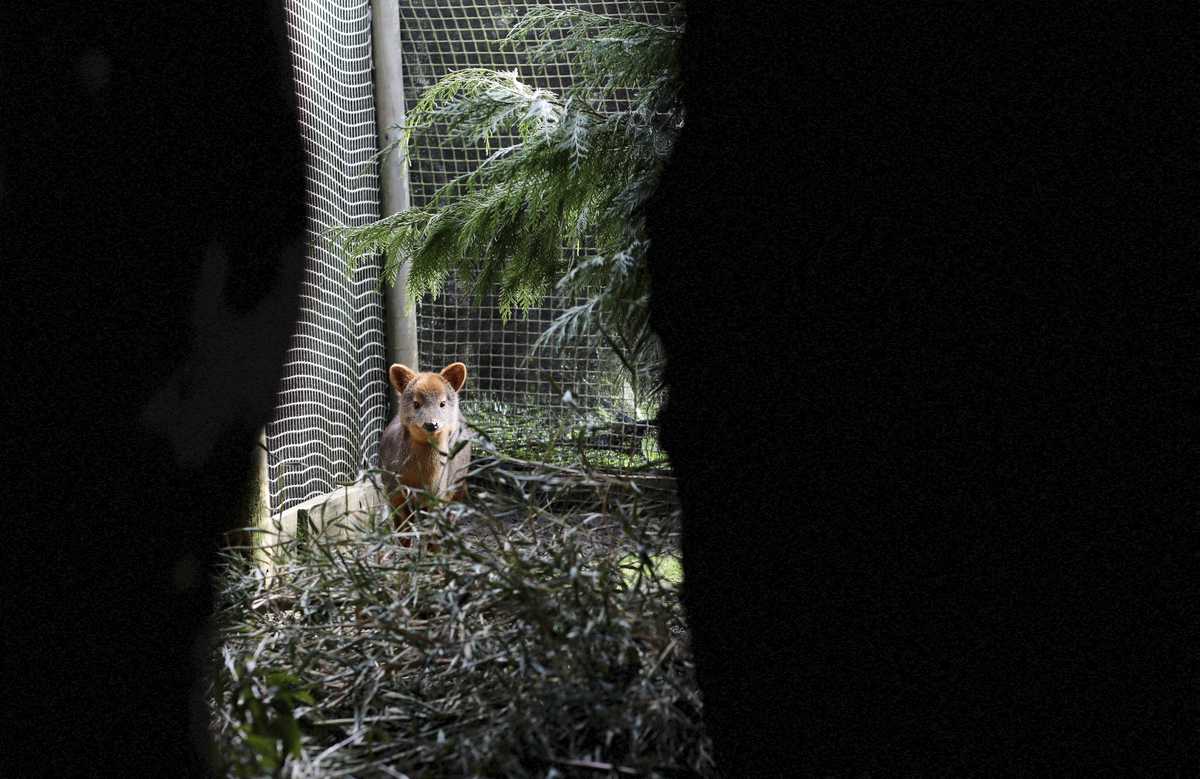
Chilco, a rescued pudu, stands inside an enclosure while undergoing rehabilitation and adaptation after being deemed unable to return to his natural habitat.
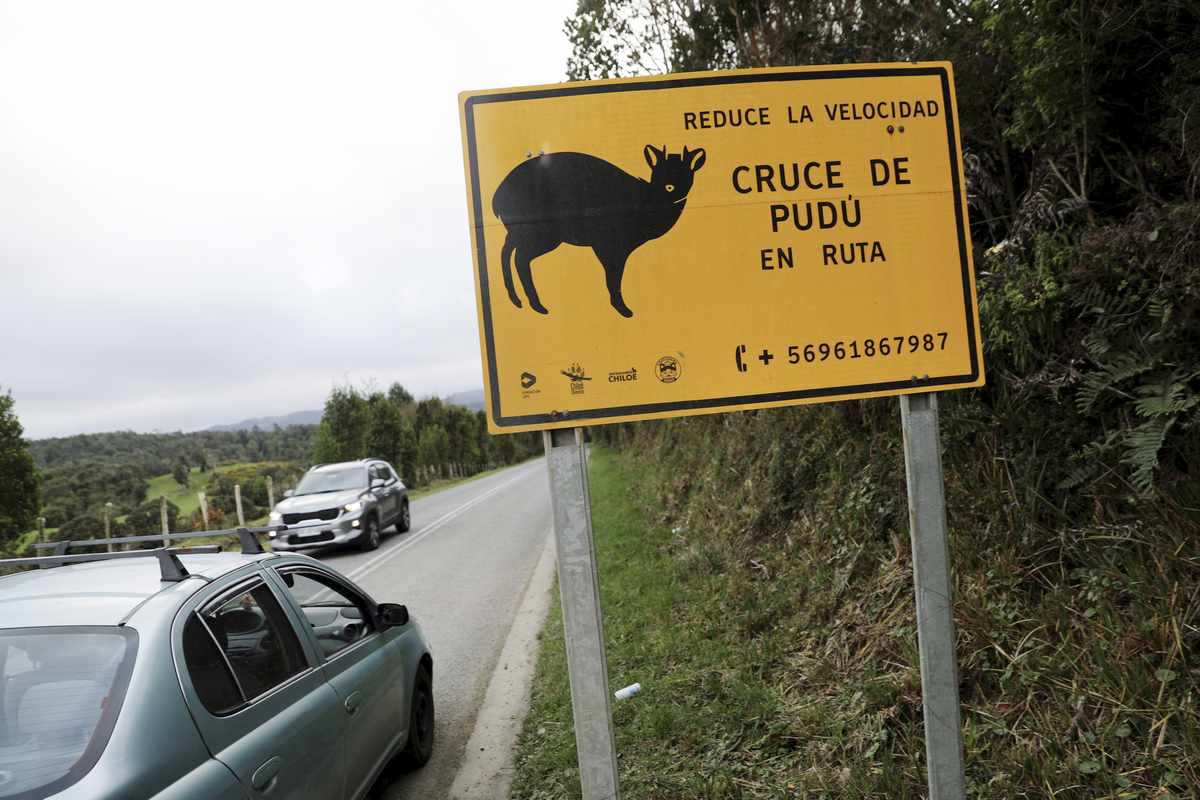
A sign reading “Reduce speed. Pudu crossing on route,” stands next to a road.

Chilco is offered food.
“Around 50 pudus arrive injured each year, which is a high number for such a vulnerable species,” Lopez said.
“It’s only a matter of time before they’re reclassified as ‘endangered’ and eventually ‘critically endangered.’”
Javier Cabello, veterinarian and founder of the Chiloe Silvestre NGO, said the pudu’s tiny size makes it especially vulnerable.
“They’re only 45 centimeters tall — compare that to an elk or deer, which can grow to over two meters,” Cabello said.
With their wide eyes, delicate legs and timid nature, pudus are no match for speeding cars or aggressive dogs. Pregnant females are particularly at risk in winter and spring.
According to a government conservation report, there’s no official count of the southern pudu, which is found in the wild in Chile and Argentina. The total population is estimated to be around 10,000, with a large number living on Chiloe Island.
Natalia Duran, from the animal health unit at Chile’s National Zoo, said the island’s pudu population was declining, although the population on the mainland remained stable.
“That’s why, as a zoo, our educational role and our role in teaching people can still contribute to protecting the remaining population of this very charismatic little deer,” she said.
Proposals that have been put forward to help the pudus include road signs, speed bumps and a new ‘Pudu Law’ to curb free-roaming dogs in rural areas.








Most Read
Popular articles in the past 24 hours
-

Artisans from Disaster-Hit Areas Work Together to Keep Memories o...
-

Japan Tourist Spot's Capsule Toys Made from Recycled Materials Pr...
-

Japan’s Space One Kairos 3rd Flight Rocket Launched, but Mission ...
-

Person Apparently Caught in Avalanche on Mt. Kamifurano in Hokkai...
-

NTT Docomo to Discontinue 3G Service in March
-

Space One's No. 3 Kairos Rocket Terminates Mid-Flight
-

Former Unification Church: Proceed Steadily with Liquidation to P...
-

LCC Greater Bay Airlines to Launch Regular Service on Fukuoka-Hon...
Popular articles in the past week
-

Tokyo Spends Big on Children, Wins Over Parents
-

South Korea Tightens Rules on Foreigners Buying Homes in Seoul Me...
-

Japan’s Miura, Kihara Announce Withdrawal from Figure Skating Wor...
-

2 Unpublished Early Novellas by Japan's Kenzaburo Oe Discovered, ...
-

Strait of Hormuz Closure Shakes Markets; Prolonged Closure Could ...
-

Nidec Chairman Resigns Amid Accounting Scandal at Major Japanese ...
-

Tourists Ignore Safety Barriers Near Famous Zao ‘Snow Monsters’ i...
-

Iran Situation: Japan Must Exert Diplomatic Efforts without Merel...
Popular articles in the past month
-

Producer Behind Pop Group XG Arrested for Cocaine Possession
-

Japan PM Takaichi’s Cabinet Resigns en Masse
-

Man Infected with Measles Reportedly Dined at Restaurant in Tokyo...
-

Israeli Ambassador to Japan Speaks about Japan’s Role in the Reco...
-

Videos Plagiarized, Reposted with False Subtitles Claiming ‘Ryuky...
-

Prudential Life Insurance Plans to Fully Compensate for Damages C...
-

Woman with Measles Visited Hospital in Tokyo Multiple Times Befor...
-

iPS Treatments Pass Key Milestone, but Broader Applications Far f...
Top Articles in Science & Nature
-
iPS Treatments Pass Key Milestone, but Broader Applications Far from Guaranteed
-

Record 700 Startups to Gather at SusHi Tech Tokyo in April; Event Will Center on Themes Like Artificial Intelligence and Robotics
-

iPS Cell Products for Parkinson’s, Heart Disease OK’d for Commercialization by Japan Health Ministry Panel
-

Japan to Ban Use of Power Banks on Airplanes
-

Total Lunar Eclipse Visible for Some in Japan, While Clouds Block View in Tokyo
JN ACCESS RANKING
-
Producer Behind Pop Group XG Arrested for Cocaine Possession
-
Japan PM Takaichi’s Cabinet Resigns en Masse
-
Man Infected with Measles Reportedly Dined at Restaurant in Tokyo Station
-
Israeli Ambassador to Japan Speaks about Japan’s Role in the Reconstruction of Gaza
-
Videos Plagiarized, Reposted with False Subtitles Claiming ‘Ryukyu Belongs to China’; Anti-China False Information Also Posted in Japan