

A peacock spreads its feathers in a forest in Sigiriya, Sri Lanka, on March 14.
16:52 JST, April 4, 2025
DAMBULLA, Sri Lanka (Reuters) — Sri Lanka began a wildlife census on March 15 to count monkeys, peacocks and giant squirrels, aiming to manage their populations as farmers complain of agricultural losses.
Agriculture accounts for 8% of the country’s economy and employs 8.1 million people, government data showed.
Sri Lanka is the fourth-largest coconut products exporter globally and produces about 3 billion cashews and other nuts annually, according to the Exports Development Board.
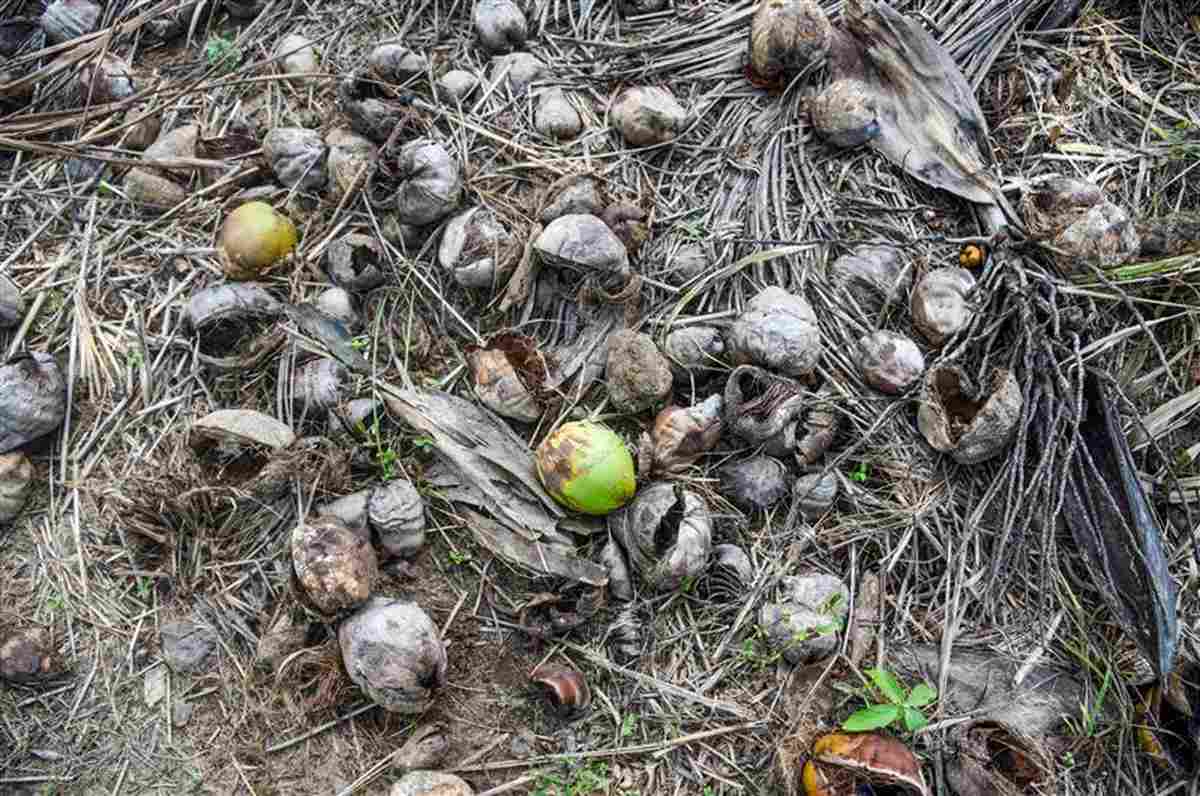
Coconuts eaten by monkeys lie on the field of farmer Edirisinghe Arachchilage Gnanasena in Dambulla, Sri Lanka.
But coconut production, along with vegetable and fruit cultivation, has been hit due to crop destruction by monkeys, peacocks and giant squirrels, a top government official said.
“The problem has become so bad people are giving up farming. We are losing about 20% of total agricultural production. It is estimated that 90 million coconuts are lost every year,” Namal Karunaratne, Deputy Minister of Agriculture and Livestock, told Reuters.
“The census is the first step to understanding the density of these animals in farming areas so we can formulate proper policies to manage them.”

Gnanasena carries an air gun as he patrols the field.
The census comes after an incident in February in which a monkey caused a nationwide blackout and power cuts lasting for three days.
Edirisinghe Arachchilage Gnanasena, a 72-year-old farmer, counted 45 monkeys, six giant squirrels and nine peacocks in the five minutes allocated for the census. His three-hectare plot of farmland in Dambulla, a city in central Sri Lanka, has been struggling with crop losses for years.
With an air gun across his shoulder and lead pellets in a plastic bag, Gnanasena spends hours patrolling the neat rows of coconut, mango and banana plants he has carefully grown.
But tribes of monkeys still strip trees of hundreds of coconuts and pick mangoes, while peacocks swallow long beans whole, Gnanasena said.
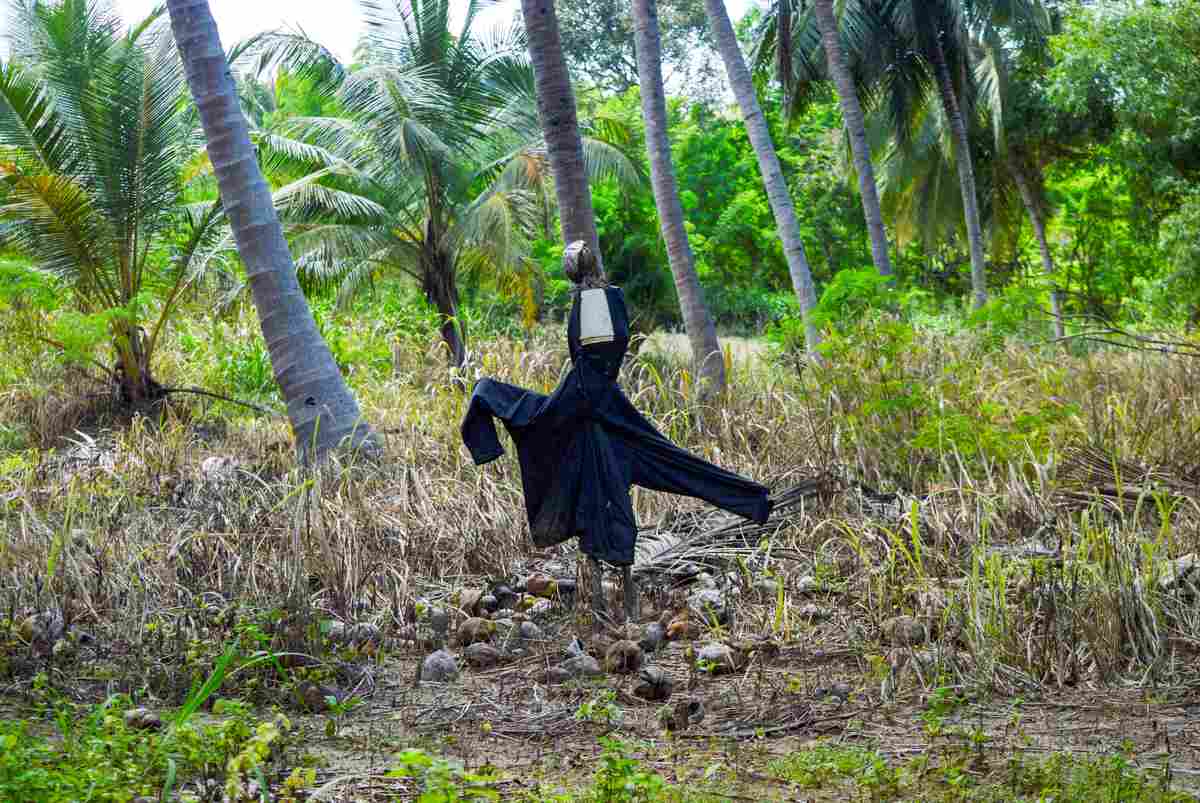
A scarecrow is seen in Gnanasena’s field.
“Monkeys are used to the air gun, so I light firecrackers to scare them off. But they always come back.”
Farmers attribute the rising numbers of monkeys, peacocks, porcupines and wild boars in the area to habitat loss.
“I hope this census leads to long-term solutions. That is what we want,” he added.
“This is not the fault of the animals. It is the fault of the humans.”







Most Read
Popular articles in the past 24 hours
-

Ransomware Attacks Hitting Japan's Small, Midsize Firms
-

German Journalist Traces Footsteps of Great-Grandfather Who Was P...
-

10 Foreign Tourists Sustain Injuries After Fire at Capsule Hotel ...
-

World Baseball Classic: Venezuela Beats Japan in Nail-biting Back...
-

Rapid Services on JR Chuo Line Suspended; Accident at Kokubunji S...
-

Rapid Services Resume on JR Chuo Line; Suspension Caused by Accid...
-

World Baseball Classic: Red Sox’s Abreu Hits 3-run Homer, Giving ...
-

World Baseball Classic: Venezuela Beats Japan in Back-and-Forth Q...
Popular articles in the past week
-

Japan Figure Skating Legend Yuzuru Hanyu Is Proud Disaster Surviv...
-
15 Measles Patients Confirmed in Tokyo in Past 6 Days; 1 May Have...
-

Massive Sewer Pipe Found Jutting Out of Highway in Osaka
-

Japan Govt to Tighten Requirements to Receive Permanent Residency...
-

Power Outage Forces About 980 Passengers in Yokohama to Walk to T...
-

JR Tokai Breaks Ground on Yamanashi Maglev Station; Will Be Part ...
-

Parents in Japan to Get Instagram Notifications When Teens Repeat...
-

Imperial Family Watches World Baseball Classic Game Against Austr...
Popular articles in the past month
-

Producer Behind Pop Group XG Arrested for Cocaine Possession
-

Japan PM Takaichi’s Cabinet Resigns en Masse
-

Man Infected with Measles Reportedly Dined at Restaurant in Tokyo...
-
Japan Figure Skating Legend Yuzuru Hanyu Is Proud Disaster Surviv...
-

iPS Treatments Pass Key Milestone, but Broader Applications Far f...
-

Sanae Takaichi Elected Prime Minister of Japan; Keeps All Cabinet...
-

South Korea Tightens Rules on Foreigners Buying Homes in Seoul Me...
-

Nepal Bus Crash Kills 19 People, Injures 25 Including One Japanes...
Top Articles in Science & Nature
-
iPS Treatments Pass Key Milestone, but Broader Applications Far from Guaranteed
-

Record 700 Startups to Gather at SusHi Tech Tokyo in April; Event Will Center on Themes Like Artificial Intelligence and Robotics
-
Parents in Japan to Get Instagram Notifications When Teens Repeatedly Search for Suicide Content
-
iPS Cell Products for Parkinson’s, Heart Disease OK’d for Commercialization by Japan Health Ministry Panel
-

Japan to Ban Use of Power Banks on Airplanes
JN ACCESS RANKING
-
Producer Behind Pop Group XG Arrested for Cocaine Possession
-
Japan PM Takaichi’s Cabinet Resigns en Masse
-
Man Infected with Measles Reportedly Dined at Restaurant in Tokyo Station
-
Japan Figure Skating Legend Yuzuru Hanyu Is Proud Disaster Survivor and Gold Medalist, Vows to Continue Support Efforts
-
iPS Treatments Pass Key Milestone, but Broader Applications Far from Guaranteed