
Japan’s Budget May Be Passed Within FY25, as Ruling Parties Prepare to Shorten Deliberation Schedule
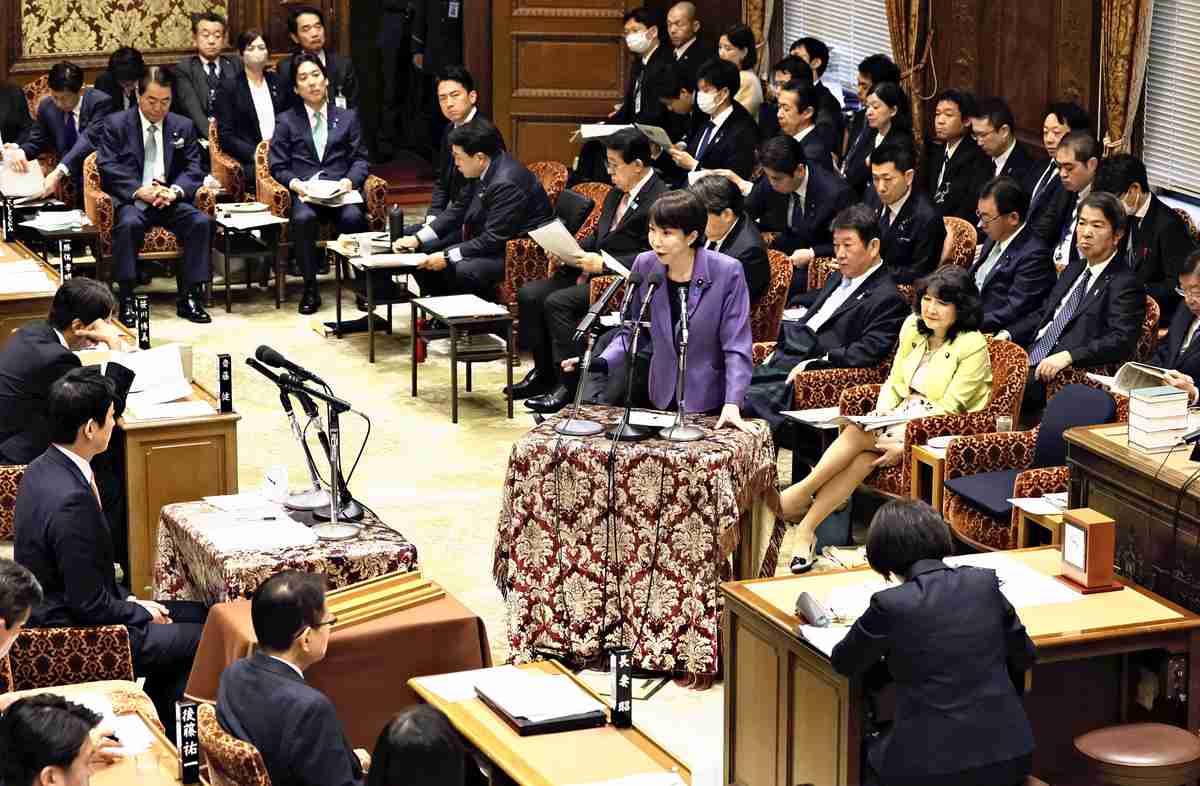
Prime Minister Sanae Takaichi speaks at the House of Representatives Budget Committee at the Diet on Friday.
15:39 JST, February 28, 2026
The House of Representatives Budget Committee began substantial debate on the fiscal 2026 budget on Friday, about one month later than usual.
Prime Minister Sanae Takaichi has expressed her determination to pass the budget within this fiscal year, and the ruling coalition is poised to significantly shorten the deliberation schedule. Opposition parties are demanding sufficient time for deliberations, but measures to counter moves by the “giant” ruling coalition are limited.
“To avoid hindering the people’s daily lives, we’d like to engage in deliberations sincerely so that the budget will one way or another get passed within this fiscal year,” Takaichi said at a committee meeting.
Junya Ogawa, leader of the Centrist Reform Alliance, repeatedly pressed her, saying, “We want your commitment not to steamroll matters on the premise of passing it within the fiscal year.”
“The Diet’s operations are decided by the Diet itself,” Takaichi replied.
The government and ruling parties initially thought to compile a provisional budget and have the actual budget be passed by the end of April. Takaichi herself said at a press conference in January, when she expressed her intention to dissolve the lower house, “It might be necessary to compile a provisional budget.”
In 1990, when then Prime Minister Toshiki Kaifu dissolved the lower house in January, the budget was passed in June.
However, following the landslide victory in the lower house election by the Liberal Democratic Party, which she leads as president, Takaichi became determined to pass the budget within this fiscal year. This was apparently due to her concerns that delays in implementing measures, including measures against rising prices, could affect people’s daily lives.
The nature of the victory also strengthened Takaichi’s position within the LDP, creating an “era of dominance.” As such, the ruling coalition has begun to adjust its schedule on the budget.
Yuichi Goto of the CRA said, “[Takaichi’s] responsibility is to instruct her party to prepare for a provisional budget, even if it is done only informally.” However, Takaichi said, “I have nothing to say about a provisional budget at this stage.”
Measures to shorten deliberations
While the basic interpellation that kicked off on Friday is scheduled to be held for three days as customary, the ruling coalition is holding discussions with the opposition parties toward shortening the subsequent schedule.
Specifically, the ruling parties are considering reducing the time for intensive debates, attended by Takaichi, and for general questioning sessions, attended by Cabinet members. In the lower house, they aim to limit the total deliberation time, usually 70 to 80 hours, to around 60 hours, the shortest period on record.
Besides this, proposals have emerged within the ruling coalition not to hold subcommittee discussions, where details of the budget items of individual ministries would be discussed. There is also a plan to hold regional public hearings — where lawmakers travel to local areas to gather opinions from experts — on weekends, so as to secure time during weekdays for deliberations.
The government and ruling coalition have drawn up a schedule where the budget is passed through the lower house by March 13, and the basic interpellation in the House of Councillors Budget Committee is concluded before the Japan-U.S. summit in Washington, slated for March 19.
Backlash from opposition parties
Opposition parties have been intensifying their criticism to such moves.
At a meeting of the board of directors of the lower house budget committee held on Friday, the opposition demanded the usual deliberation time and the holding of subcommittee meetings, but the ruling parties refrained from a response.
After the meeting, Ken Saito, the ruling parties’ chief director from the LDP, told reporters, “We will make efforts toward [passing the budget withing this fiscal year].”
Akira Nagatsuma, the opposition parties’ chief director from the CRA, called for careful deliberation on the budget, pointing out the record-high general account budget of approximately ¥122 trillion.






Most Read
Popular articles in the past 24 hours
-
Tokyo Spends Big on Children, Wins Over Parents
-
Japan’s Miura, Kihara Announce Withdrawal from Figure Skating Wor...
-
Japan's Opposition Parties Largely Absent from Social Security-Re...
-

Hokkaido's Shiretoko Peninsula Offers Unique Drift Ice Walking To...
-
Showa-era Towers in Kansai’s Big Cities Become Social Media Sensa...
-

Tourists Ignore Safety Barriers Near Famous Zao ‘Snow Monsters’ i...
-

Tokyo’s ‘Strawberry War’ Intensifies as Producers Vie to Become ‘...
-

Neil Sedaka, The Singer-Songwriter Behind Dozens of Hits of The 1...
Popular articles in the past week
-

Producer Behind Pop Group XG Arrested for Cocaine Possession
-

Nepal Bus Crash Kills 19 People, Injures 25 Including One Japanes...
-

Tokyo Skytree's Elevator Stops, Trapping 20 People; All Rescued (...
-
Milano Cortina 2026: Japanese Gold Medalist Figure Skater Miura S...
-

Japan’s Major Real Estate Firms Expanding Overseas Businesses to ...
-

Reciprocal Tariffs Ruled Illegal: Judiciary Would Not Tolerate Pr...
-

Japanese High School Student Aims to Share Kaiten History Through...
-

Milano Cortina 2026: Miura-Kihara Duo, Other Japanese Figure Skat...
Popular articles in the past month
-
Producer Behind Pop Group XG Arrested for Cocaine Possession
-

Japan PM Takaichi’s Cabinet Resigns en Masse
-

Man Infected with Measles Reportedly Dined at Restaurant in Tokyo...
-

Israeli Ambassador to Japan Speaks about Japan’s Role in the Reco...
-

Videos Plagiarized, Reposted with False Subtitles Claiming ‘Ryuky...
-

Man Infected with Measles May Have Come in Contact with Many Peop...
-

Prudential Life Insurance Plans to Fully Compensate for Damages C...
-

Woman with Measles Visited Hospital in Tokyo Multiple Times Befor...
Top Articles in Politics
-
Japan PM Takaichi’s Cabinet Resigns en Masse
-

Sanae Takaichi Elected Prime Minister of Japan; Keeps All Cabinet Appointees from Previous Term
-

Japan’s Govt to Submit Road Map for Growth Strategy in March, PM Takaichi to Announce in Upcoming Policy Speech
-

LDP Wins Historic Landslide Victory
-

LDP Wins Landslide Victory, Secures Single-party Majority; Ruling Coalition with JIP Poised to Secure Over 300 seats (UPDATE 1)
JN ACCESS RANKING
-
Producer Behind Pop Group XG Arrested for Cocaine Possession
-
Japan PM Takaichi’s Cabinet Resigns en Masse
-
Man Infected with Measles Reportedly Dined at Restaurant in Tokyo Station
-
Israeli Ambassador to Japan Speaks about Japan’s Role in the Reconstruction of Gaza
-
Videos Plagiarized, Reposted with False Subtitles Claiming ‘Ryukyu Belongs to China’; Anti-China False Information Also Posted in Japan