
Japanese PM Takaichi Tells Finance Minister Katayama to Speed Up Discussion toward Consumption Tax Cut
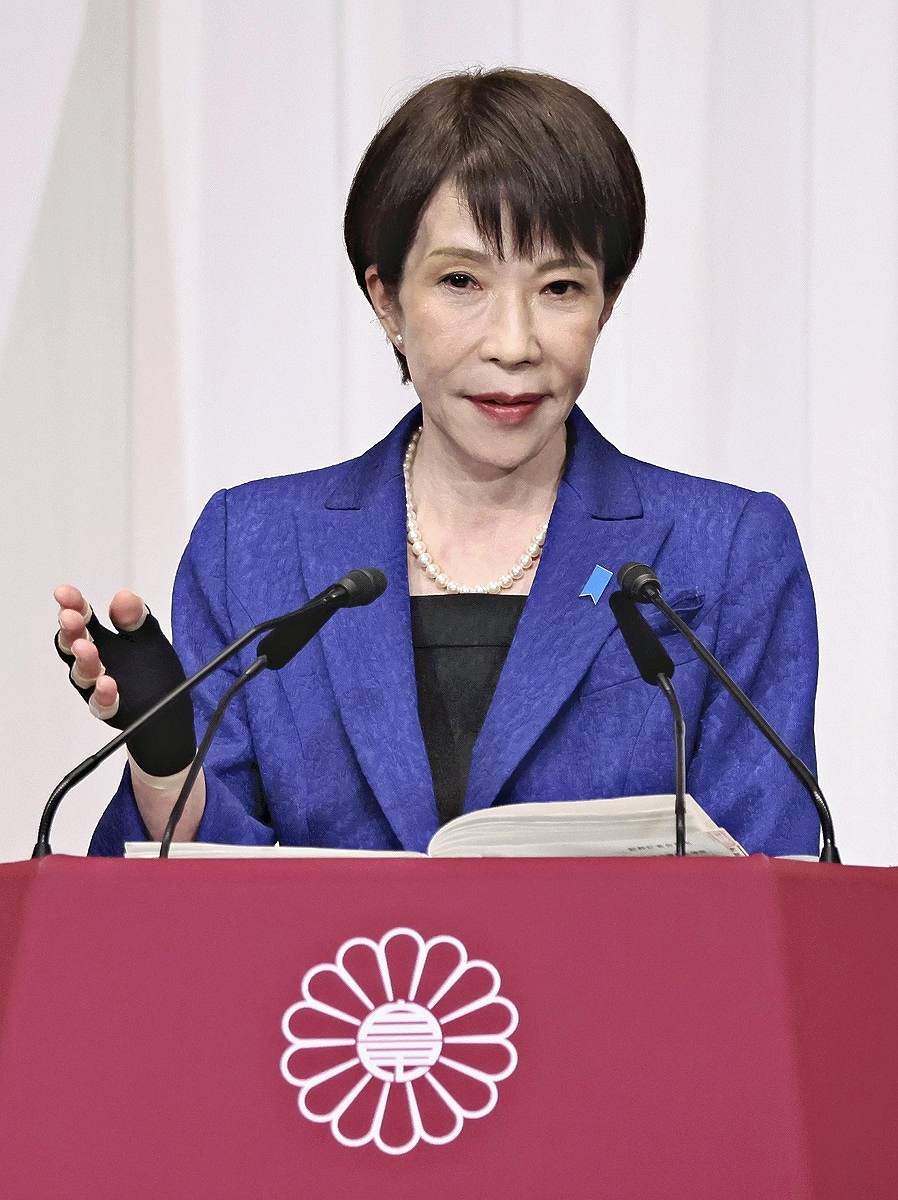
Prime Minister Sanae Takaichi speaks at a press conference at Liberal Democratic Party headquarters on Monday in Tokyo.
14:41 JST, February 14, 2026
Prime Minister Sanae Takaichi, during a Thursday meeting held at the Prime Minister’s Office, directed Finance Minister Satsuki Katayama and senior ministry officials to speed up talks targeted at realizing a consumption tax cut, it was learned Friday.
The government is tentatively planning to look for ways to secure financial resources to pay for the tax cut during an inter-party national council in June and then to pass the necessary bills during the autumn extraordinary Diet session.
According to multiple senior government officials, Takaichi, on Thursday, talked with Katayama and other ministry officials about the introduction of a system of “tax credits with cash payments,” which would combine income tax cuts and cash payments, and about ways to implement the consumption tax cut as a bridging measure until this system could be established.
At the meeting, Takaichi expressed the view that some within the ministry had been taking a cautious approach to cutting the consumption tax. She directed these people to “hurry up and get things ready,” in view of will of the people as shown by the results of the recent House of Representatives election. A senior ministry official said on Friday, “We are now fully set [on pursuing a consumption tax cut].”
The government plans to discuss both the tax credit and cash payment system and the consumption tax cut at the national council.
Chief Cabinet Secretary Minoru Kihara said at a press conference on Friday, “We’d like to set up the council as soon as possible and quickly proceed with the discussions.”
The biggest challenge will be finding a way to secure financial resources to replace the ¥5 trillion a year that will be lost from reducing the food consumption tax rate to zero. At a press conference on Friday, Katayama said, “We must arrange things so that we can get an interim report ready by June, before summer.”
Within the Prime Minister’s Office, discussions are progressing, with the aim of enacting all the necessary bills during the autumn extraordinary Diet session and implementing the tax cut some time next year.
As a tax cut of this kind imposes certain burdens on businesses, such as requiring them to modify their computer systems, the government in the past has set preparation periods of one and a half years or more between the time when the related laws were promulgated and when they were put into force.
Similar issues are also expected to emerge this time, making the timing of this tax cut’s implementation another point of concern.


Related Tags

Most Read
Popular articles in the past 24 hours
-

Ibaraki Pref.'s 1st Foreign Bus Driver Hired in Tsukuba
-

Trump Fires Homeland Security Secretary Noem after Mounting Criti...
-
Japanese Nationals in 4 Gulf Countries to Be Evacuated with Chart...
-

China’s National People’s Congress Opens: Military Expansion Cont...
-

Hanamaruki to Sell Liquid 'Shio-Koji' Seasoning to U.S. Consumers
-

Strawberry Prince’s Rinu Discusses His Dream of Voice Acting, Suc...
-
Japan Foreign Minister Confirms Two Japanese Detained in Iran
-

CARTOON OF THE DAY (March 6)
Popular articles in the past week
-

South Korea Tightens Rules on Foreigners Buying Homes in Seoul Me...
-
2 Unpublished Early Novellas by Japan's Kenzaburo Oe Discovered, ...
-

Strait of Hormuz Closure Shakes Markets; Prolonged Closure Could ...
-
Tourists Ignore Safety Barriers Near Famous Zao ‘Snow Monsters’ i...
-

Iran Situation: Japan Must Exert Diplomatic Efforts without Merel...
-

Amid Strait of Hormuz Blockade, Shipping Companies Scramble to Ge...
-
Measles Patient Visited Hospital in Bunkyo Ward, Tokyo, Metropoli...
-
Ibaraki Pref.'s 1st Foreign Bus Driver Hired in Tsukuba
Popular articles in the past month
-

Producer Behind Pop Group XG Arrested for Cocaine Possession
-

Japan PM Takaichi’s Cabinet Resigns en Masse
-

Man Infected with Measles Reportedly Dined at Restaurant in Tokyo...
-

Videos Plagiarized, Reposted with False Subtitles Claiming ‘Ryuky...
-

Prudential Life Insurance Plans to Fully Compensate for Damages C...
-

Woman with Measles Visited Hospital in Tokyo Multiple Times Befor...
-

iPS Treatments Pass Key Milestone, but Broader Applications Far f...
-

Sanae Takaichi Elected Prime Minister of Japan; Keeps All Cabinet...
Top Articles in Politics
-
Japan PM Takaichi’s Cabinet Resigns en Masse
-
Sanae Takaichi Elected Prime Minister of Japan; Keeps All Cabinet Appointees from Previous Term
-

Japan’s Govt to Submit Road Map for Growth Strategy in March, PM Takaichi to Announce in Upcoming Policy Speech
-

LDP Wins Landslide Victory, Secures Single-party Majority; Ruling Coalition with JIP Poised to Secure Over 300 seats (UPDATE 1)
-

LDP Wins Historic Landslide Victory
JN ACCESS RANKING
-
Producer Behind Pop Group XG Arrested for Cocaine Possession
-
Japan PM Takaichi’s Cabinet Resigns en Masse
-
Man Infected with Measles Reportedly Dined at Restaurant in Tokyo Station
-
Videos Plagiarized, Reposted with False Subtitles Claiming ‘Ryukyu Belongs to China’; Anti-China False Information Also Posted in Japan
-
Prudential Life Insurance Plans to Fully Compensate for Damages Caused by Fraudulent Actions Without Waiting for Third-Party Committee Review