
Japan, S. Korea Could Reap Major Benefits from Close Ties, Says Group of Experts
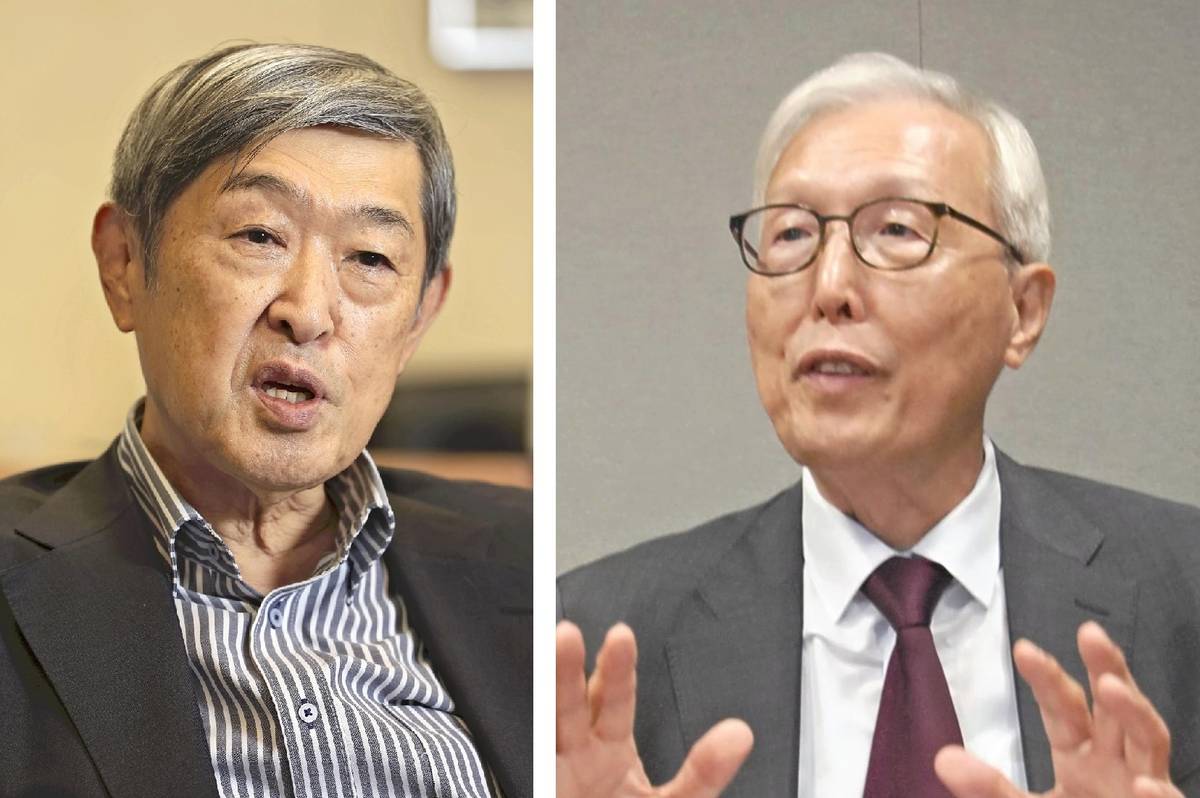
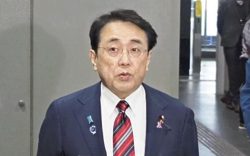
Shinichi Kitaoka, left, and Shin Kak Soo
13:05 JST, September 18, 2025
A group of Japanese and South Korean experts has put forth a proposal on the future of the two countries’ relations to mark the 60th anniversary of normalized ties.
The proposal, titled “Japan-South Korea strategic partnership” and issued by the Japan-Korea Vision Group, centers on cooperation in security and economic fields. It also touches on expanding people-to-people exchanges. The group is chaired by Shinichi Kitaoka, professor emeritus of the University of Tokyo, and Shin Kak Soo, former South Korean ambassador to Japan.
Regarding security, the proposal notes that Japan and South Korea face common challenges such as North Korea’s nuclear and missile development and the expanding influence of China and Russia. It emphasizes that Japan and South Korea must build multilateral frameworks for cooperation, including with the United States and Australia, and enhance coordination with NATO member states to maintain the international order.
In the economic sphere, it states that both Japan and South Korea face challenges like declining birth rates, an aging population and rapid population decline, adding that the benefits of cooperation between the two countries could be significant.
It also mentions the importance of South Korea’s possible membership in the Comprehensive and Progressive Agreement for Trans-Pacific Partnership (CPTPP) and cooperation in science and technology fields like artificial intelligence and semiconductors.
Additionally, the proposal states that people-to-people exchanges play a vital role in deepening mutual understanding, and calls for simplified travel procedures between the countries and support for university student exchanges.
The proposal was formulated through discussions among 20 Japanese and South Korean experts, including Keio University Prof. Junya Nishino and Choi Eunmi, a research fellow of the Asan Institute for Policy Studies. It also incorporates opinions from university students in both countries.





Most Read
Popular articles in the past 24 hours
-

6 Injured at Naked Festival in Japan’s Okayama Prefecture; Police...
-

Reciprocal Tariffs Ruled Illegal: Judiciary Would Not Tolerate Pr...
-

Fiji Defense Minister Hopes Japan Will Support Stabilization of P...
-

Space One Delays Launch of No. 3 Kairos Rocket; Company to Announ...
-

Japanese Film, Anymart, Wins Critics’ Award at International Film...
-
3rd Japan Pacific Islands Defense Dialogue to Begin in Tokyo on S...
-

India, Brazil Sign Mining Pact As Modi Targets $20 Billion Trade ...
-

I Am Surprised by My Mother’s Increased Drinking
Popular articles in the past week
-

Japan PM Takaichi’s Cabinet Resigns en Masse
-

Man Infected with Measles Reportedly Dined at Restaurant in Tokyo...
-

Sanae Takaichi Elected Prime Minister of Japan; Keeps All Cabinet...
-

Japan's Govt to Submit Road Map for Growth Strategy in March, PM ...
-

Bus Carrying 40 Passengers Catches Fire on Chuo Expressway; All E...
-

Milano Cortina 2026: Figure Skaters Riku Miura, Ryuichi Kihara Pa...
-
Japan, U.S. Name 3 Inaugural Investment Projects; Reached Agreeme...
-

U.S. Firm to Build Training Hub in Fukushima N-plant for Debris R...
Popular articles in the past month
-
Japan PM Takaichi’s Cabinet Resigns en Masse
-

Japan Institute to Use Domestic Commercial Optical Lattice Clock ...
-

Israeli Ambassador to Japan Speaks about Japan’s Role in the Reco...
-
Man Infected with Measles Reportedly Dined at Restaurant in Tokyo...
-

Videos Plagiarized, Reposted with False Subtitles Claiming ‘Ryuky...
-

Man Infected with Measles May Have Come in Contact with Many Peop...
-

Prudential Life Insurance Plans to Fully Compensate for Damages C...
-

Woman with Measles Visited Hospital in Tokyo Multiple Times Befor...
Top Articles in Politics
-
Japan PM Takaichi’s Cabinet Resigns en Masse
-
Sanae Takaichi Elected Prime Minister of Japan; Keeps All Cabinet Appointees from Previous Term
-
Japan’s Govt to Submit Road Map for Growth Strategy in March, PM Takaichi to Announce in Upcoming Policy Speech
-

LDP Wins Historic Landslide Victory
-

LDP Wins Landslide Victory, Secures Single-party Majority; Ruling Coalition with JIP Poised to Secure Over 300 seats (UPDATE 1)
JN ACCESS RANKING
-
Japan PM Takaichi’s Cabinet Resigns en Masse
-
Japan Institute to Use Domestic Commercial Optical Lattice Clock to Set Japan Standard Time
-
Israeli Ambassador to Japan Speaks about Japan’s Role in the Reconstruction of Gaza
-
Man Infected with Measles Reportedly Dined at Restaurant in Tokyo Station
-
Videos Plagiarized, Reposted with False Subtitles Claiming ‘Ryukyu Belongs to China’; Anti-China False Information Also Posted in Japan